Presidents Innovation Forum 2025: Reimagining the Future of Higher Education
December 6, 2025


As Artificial Intelligence (AI) can now teach, grade, and offer personalized advising, how should the role of faculty, the value of a university degree, pedagogical methods, and assessment evolve? This was the central question explored by national and international university leaders at the Presidents Innovation Forum: Reimagine Higher Education in The Era of AI, hosted by VinUniversity on December 6.
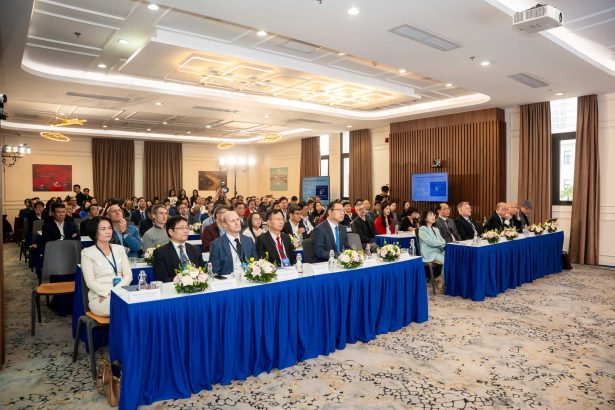 Presidents Innovation Forum 2025 at VinUniversity
Held as part of VinFuture Week 2025, the Forum brought together nearly 100 university leaders from Vietnam and abroad, education experts, industry representatives, and “AI-native students,” creating a strategic dialogue space on the future model of the university in the age of artificial intelligence.
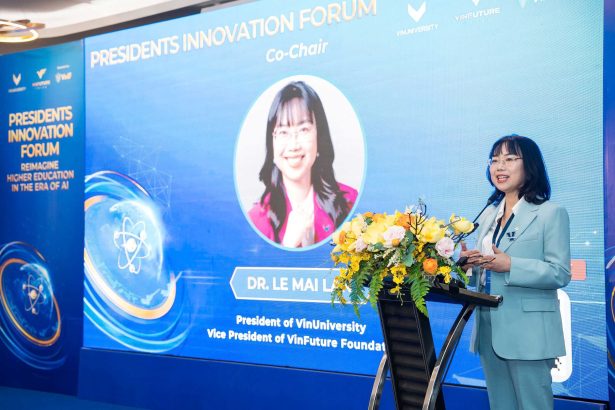 Opening Remarks by Dr. Le Mai Lan, President of the University Council at VinUniversity
What Should Universities Keep, Let Go, and Reinvent in the Age of AI?
A core question raised throughout the Forum was: Can AI replace universities? What should universities retain, abandon, or reinvent as AI enters campuses without even “knocking on the door”?
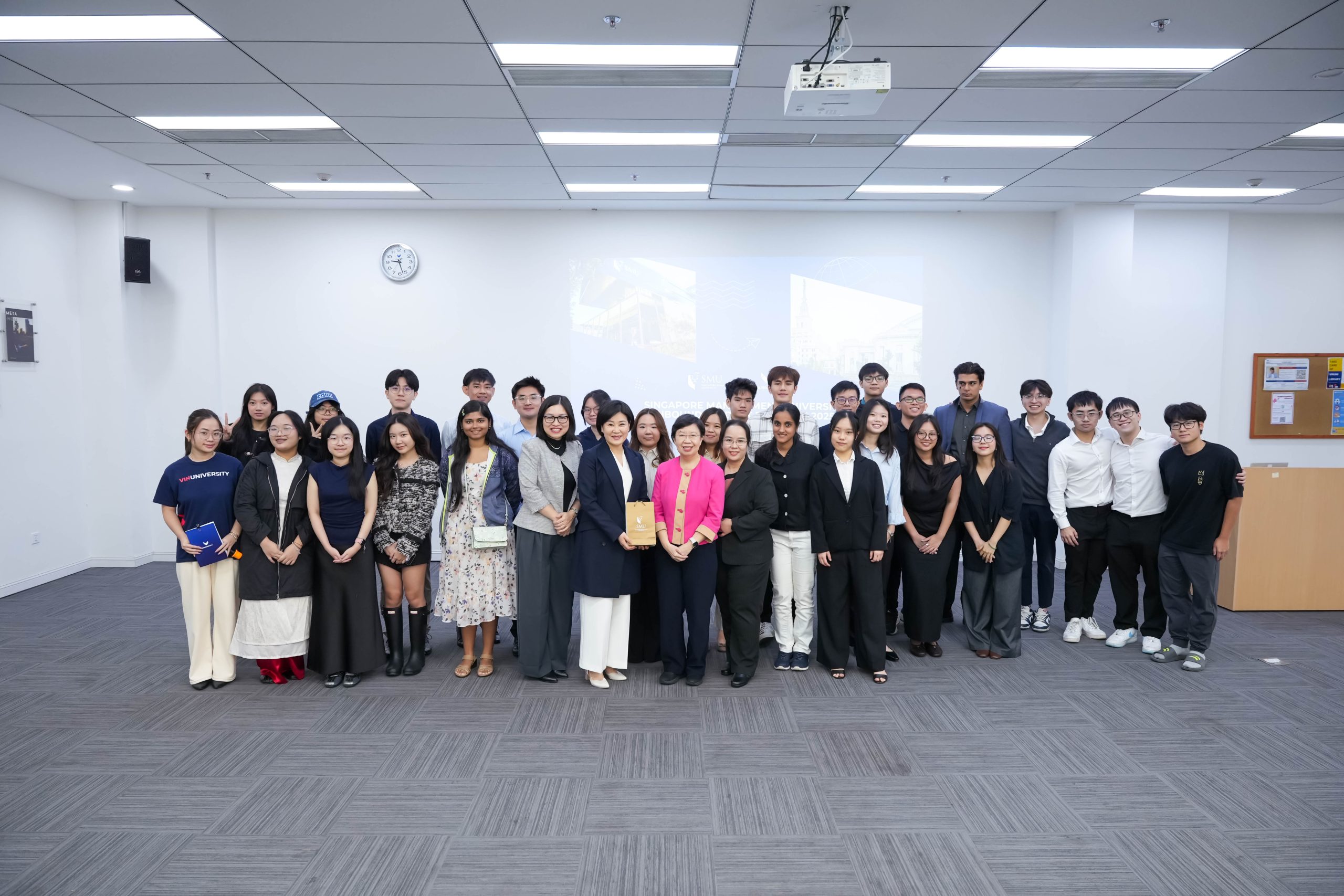
Professor Lily Kong, President of the Singapore Management University (SMU), emphasized:
“AI can absolutely replace universities if institutions limit themselves to delivering knowledge or issuing degrees. This forces us to redefine the value of higher education. Universities must be places where critical and integrative thinking is cultivated, where individuals develop problem-solving abilities, personal integrity, and the capacity to act with purpose.”
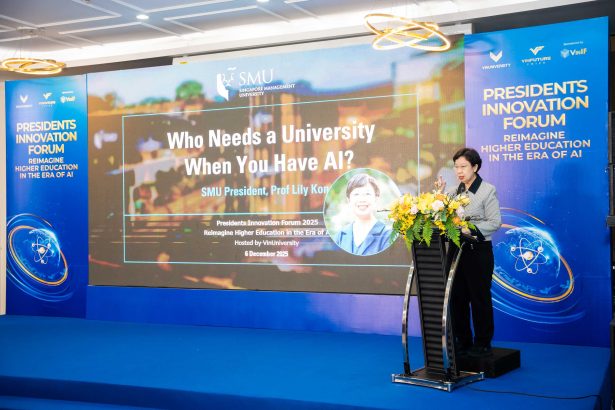 Professor Lily Kong – President of Singapore Management University, Keynote Speaker
According to Professor Kong, universities must reaffirm their unique strengths: fostering critical thinking, ethics, the ability to ask the right questions – qualities AI cannot replicate. To do this, universities must transform holistically: eliminate passive learning; integrate AI as a learning tool; promote interdisciplinary thinking; innovate competency-based assessment; develop flexible lifelong learning credentials; and enhance collaboration with industry. Universities cannot compete with AI in data processing, but they can lead in wisdom, character, and responsibility.
Redefining Credentials: From Scores to Real Competence
Professor Simon See, Global Head of the NVIDIA AI Technology Center, remarked: “We don’t hire Degrees; we hire Competence.” In an era of unprecedented technological acceleration, machines can process data, but only humans with lived experience and foundational knowledge can interpret problems at their core. This is why many employers prioritize practical experience over fresh diplomas, challenging the value of traditional degrees.
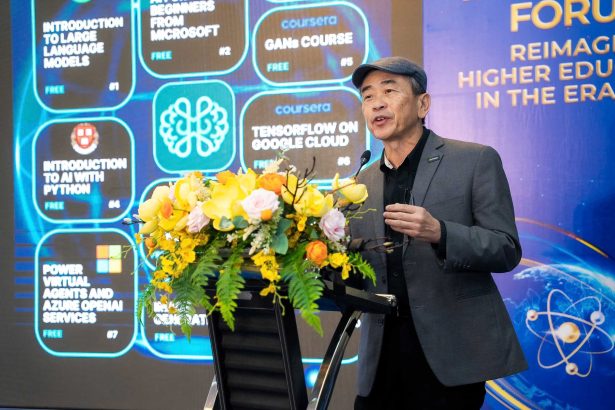 Industry Perspectives from Professor Simon See
A “re-credentialing” approach was introduced through the work underway at Hanoi University of Science and Technology (HUST). Associate Professor Huynh Quyet Thang, President of HUST, shared that credentials must be continuously updated to reflect real competencies, skills, and achievements.
Proposed tools include modular/stackable credentials, AI-enabled evaluation, and continuous verification, ensuring students not only learn but can demonstrate their ability to apply and solve problems.
The New Role of Faculty
“When AI can teach, grade, and support student advising – what, then, is the role of faculty?” This question, raised by Associate Professor Hoang Minh Son (President of Vietnam National University, Hanoi) and Professor Stephen Boyle (Vice President (Education) of Monash University Malaysia), presents both a challenge and an opportunity for the academic profession.
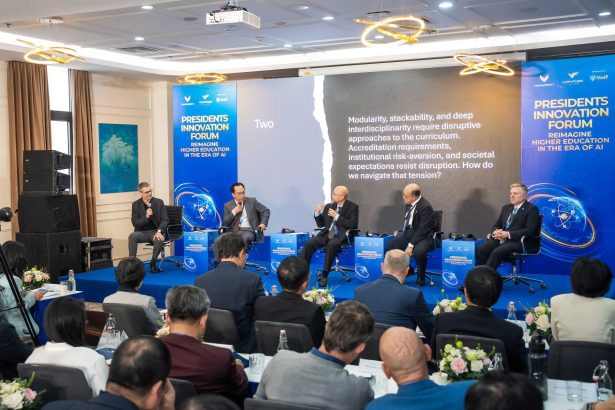 Panel: Re-credentialing the Degree & Faculty
In the age of AI, faculty are no longer one-way knowledge transmitters. They must become learning architects, designing experiences that nurture curiosity, encourage reflection, expand perspective, and cultivate ethics and emotional intelligence.
AI may produce answers in seconds, but only humans can cultivate understanding.
What and How Should We Assess When AI Is Everywhere?
Professors Scott Thompson-Whiteside (Pro Vice Chancellor and General Director, RMIT Vietnam) and Mai Thanh Phong (President, University of Technology, Vietnam National University, Ho Chi Minh City) shared how institutions are redefining assessment: moving beyond traditional exams to focus on what students can do, not just what they can remember. Authentic assessments – including oral defenses, live builds, and AI-supported simulations – are being adopted to measure real-world application.
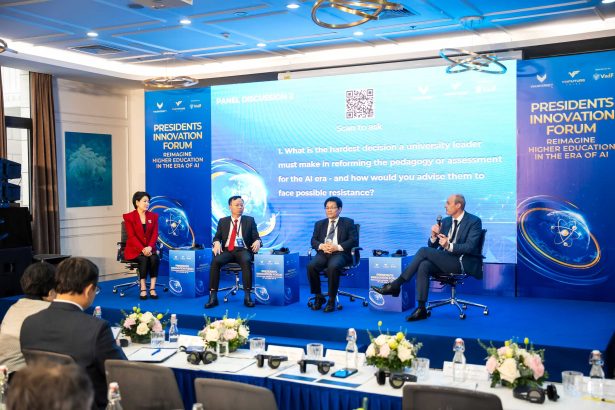 Panel: Pedagogy and Assessment
From Ideas to Action: Five Commitments to Shape the Future of Higher Education
A highlight of the Forum was the “Leadership Sprint: Think Deeply, Decide Quickly,” applied for the first time in a university leadership setting. Groups of university leaders, students, faculty representatives, and VinUniversity leadership were invited to surface a “hard truth,” propose an actionable idea, and call for collective action.
This activity aimed to transform insights into tangible steps that can accelerate meaningful change in higher education collaboration.
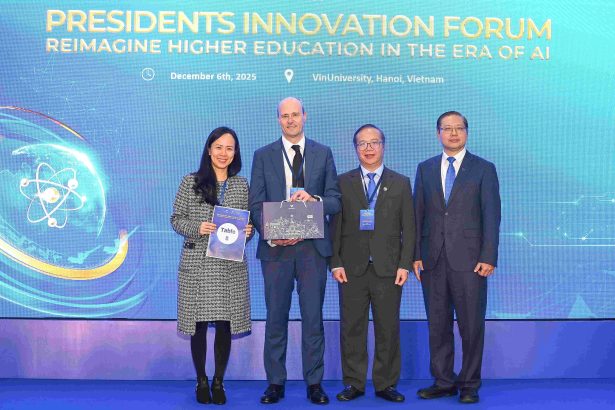 Prof. Tan Yap-Peng, Provost of VinUniversity, Presents Recognition Awards
Professor Lily Kong summarized the five shared commitments agreed upon by the universities: (1) Teach what AI cannot; (2) Redefine credentials based on trust, not just transcripts, (3) Transform faculty into learning architects; (4) Operate universities as living laboratories; (5) Keep humans at the center.
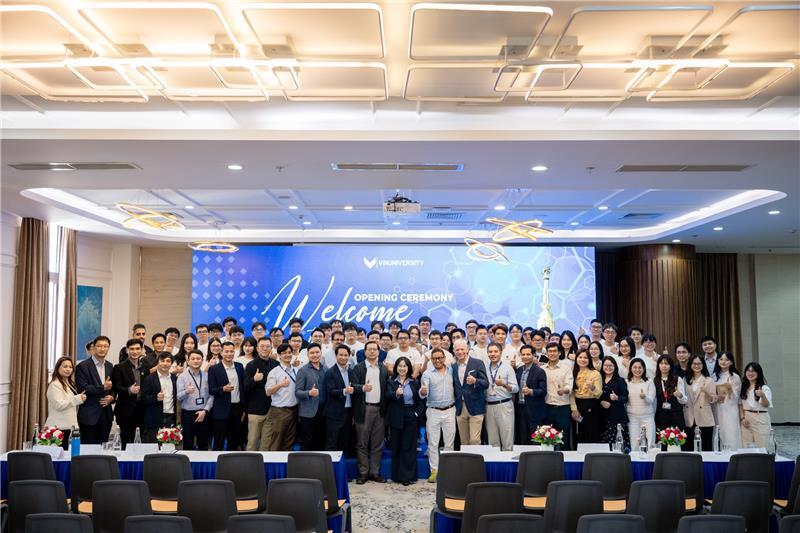
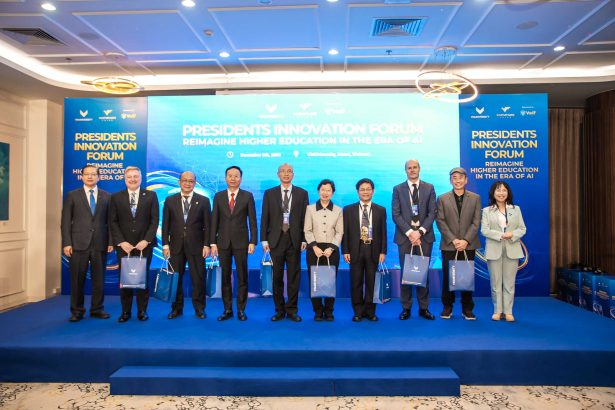 Speakers and Organizers Group Photo
The Presidents Innovation Forum 2025 reaffirmed VinUniversity’s aspiration to connect university leaders, industry, and policy makers, driving genuine innovation to elevate Vietnamese higher education toward global standards, aligned with the spirit of VinFuture Week: knowledge, technology, and education for the future of humanity.