“How AI Is Redefining Talent and Education”: An Expert Dialogue at VinUniversity
January 22, 2026


The rapid advancement of artificial intelligence is stretching and reshaping familiar boundaries from how we learn and work to how human capability is assessed. Building on key messages highlighted at the Presidents’ Forum on Innovation within VinFuture 2025, and in celebration of VinUni’s 6th anniversary, the central question is no longer what AI can do, but how education must evolve to help learners become resilient, responsible, and capable of creating sustainable value in the AI era.
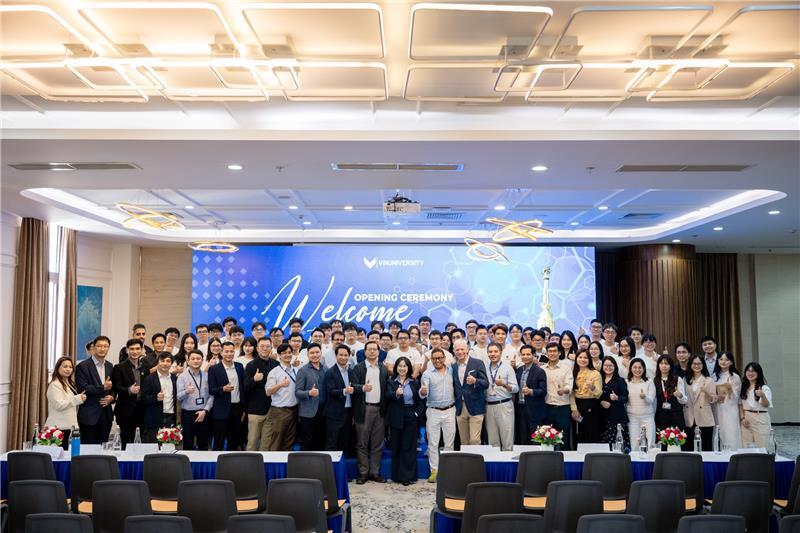
From this reflection, on the morning of January 22, 2026, VinUni successfully hosted the panel discussion “How Is AI Redefining Talent and Education?”, attracting nearly 100 faculty members, students, postgraduate learners, researchers, and experts from the fields of technology, education, and innovation.
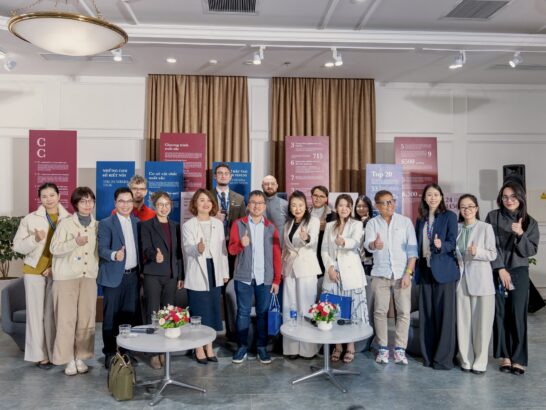
The online panel discussion “How AI Is Redefining Talent and Education,” held on January 22 at VinUniversity
Opening the program, Dr. Phung Thi Viet Bac delivered welcoming remarks to distinguished guests and reaffirmed VinUni’s strong commitment to its educational mission of nurturing future leaders amid the profound transformations brought about by the AI era.
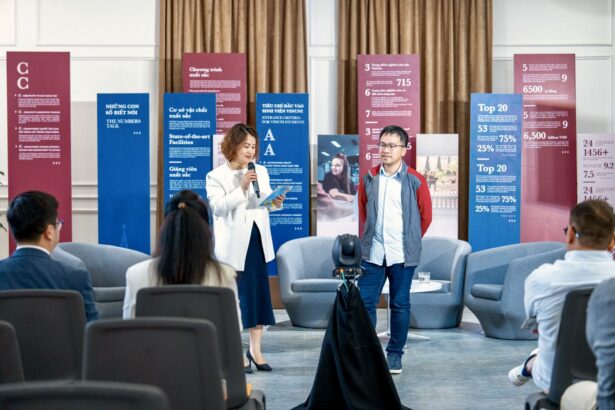
Dr. Phung Thi Viet Bac delivered welcoming remarks to distinguished guests
In the keynote address, Dr. Luong Minh Thang – Senior Scientist and Research Director at Google DeepMind shared the “red alert” moment at Google following the emergence of ChatGPT, along with the unprecedented 100-day deployment of Bard at remarkable speed within a major technology corporation. Through this narrative, he illustrated that AI is not merely transforming products but is fundamentally reshaping organizational operations and redefining global workforce competency standards.
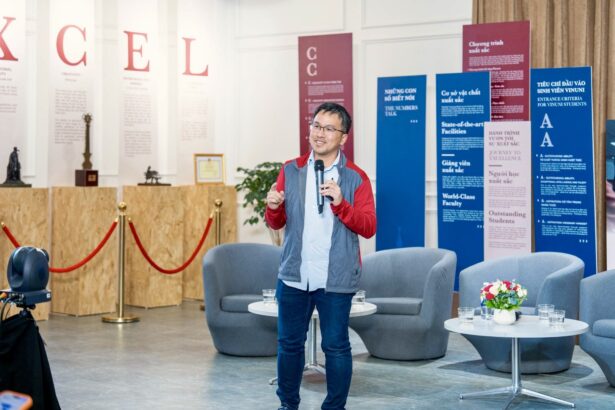
Dr. Luong Minh Thang – Senior Scientist and Research Director at Google DeepMind
Moving beyond industry insights, the discussion turned to a core question for the next generation of AI: how can machines truly reason, rather than simply respond quickly? Dr. Thang explained that systems such as AlphaGeometry and AlphaProof are built by combining two complementary strengths – AI models capable of generating novel ideas and rigorous rule-based systems that verify correctness. This approach enables AI not only to “guess answers,” but also to self-validate its reasoning, reduce errors, and move closer to human-like mathematical thinking.
The subsequent panel discussion focused on the impact of AI on education, talent development, and social responsibility, moderated by Dr. Phung Thi Viet Bac and Dr. Pham Huy Hieu. During the discussion, Dr. Jean DeSombre – Founder of Paragon Global Ventures highlighted a paradox in contemporary education: while academic institutions often reward “following the correct process,” real-world contexts and labor markets require individuals to make decisions under uncertainty and incomplete information. As AI becomes increasingly proficient at producing “polished” answers, education must shift its focus toward cultivating resilience, the ability to learn from failure, and adaptability distinctly human qualities that machines cannot replace.
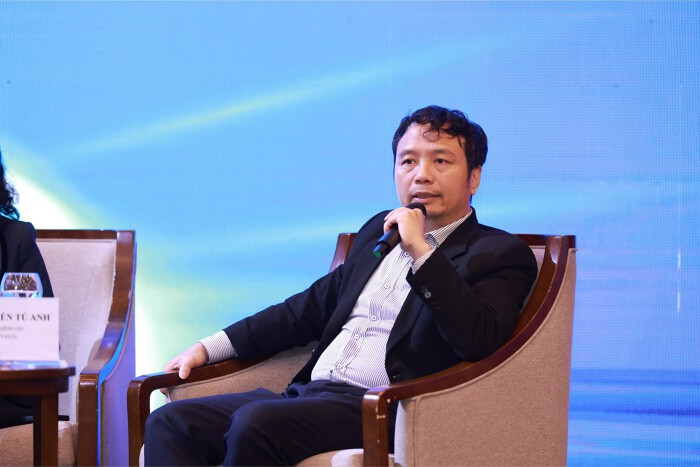
From the perspective of educational leadership and governance, Prof. Dr. Bui Thi Minh Hong – Director of Education Management and Professor of Business Administration at VinUni – emphasized education’s fundamental responsibility in shaping future leaders with systems thinking, collaborative capabilities, and a strong sense of social responsibility. In the AI era, she noted, shared values and a spirit of cooperation become even more critical as technological advancement outpaces human adaptability.
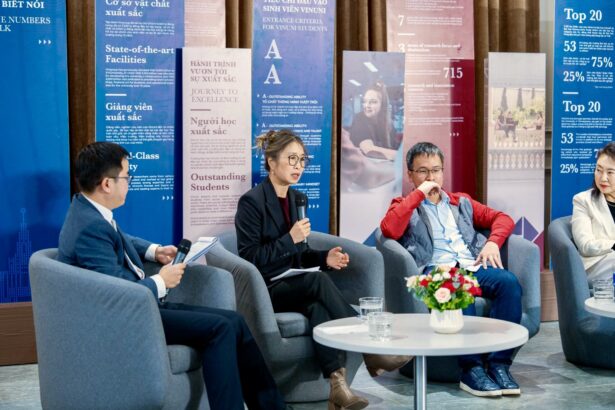
Prof. Dr. Bui Thi Minh Hong – Director of Education Management and Professor of Business Administration at VinUni
Drawing on her experience working within complex systems, Ms. Wendy Uyen Nguyen, M.A., shared that what enables humans to avoid “automation bias” is intuition and lived experience. While AI learns from historical data, humans possess the ability to “read the room,” understand social contexts, and make decisions grounded in human values. These further underscore the growing importance of project-based learning, internships, and community engagement where learners confront real-world challenges firsthand.
One topic that drew significant attention was competency assessment in the AI era. As essays and written assignments become increasingly susceptible to automation, speakers emphasized a renewed focus on oral examinations and more creative evaluation formats such as hackathons, product development, presentations, and debates-settings in which learners must demonstrate authentic thinking and genuine collaborative skills.
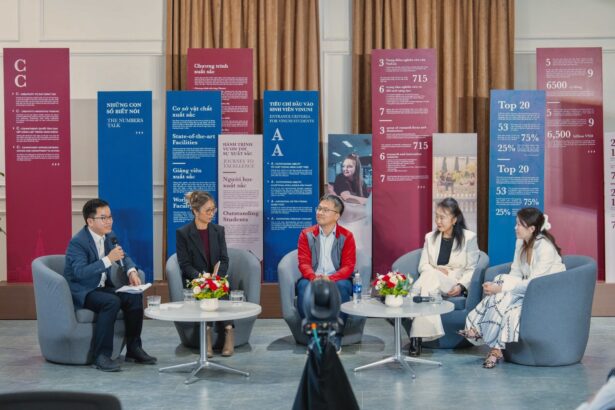
Gain more insights from distinguished speakers with strong footprints in the innovation ecosystem
In closing, the speakers reached a shared consensus: as AI grows more powerful, education must place even greater emphasis on distinctly human capacities from critical thinking, deep reading, and disciplined yet creative writing, to persuasive communication, empathetic listening, collaboration, and social responsibility. Only then can humans not merely adapt to AI, but actively shape the future alongside technology.