Addressing Vietnam’s international education trade deficit: A path to global standing
July 16, 2026


There are no shortcuts to global recognition. The true standing of a nation’s higher education system can only be built through sustained institutional excellence and strategic collaboration. This was the shared consensus at the Masterclass “From Data to Global Standing: Research, Sustainable Development and the Global Presence of Vietnamese Universities,” held in Hanoi on 15 July. The event was jointly organised by Times Higher Education (THE) and VinUniversity.
The Knowledge Import Gap
Speaking at the conference, Ms. Pham Thanh Hao, Vice President of Administration, VinUniversity, highlighted her concerns over Vietnam’s severe imbalance in the import and export of education. Vietnam remains a significant net importer of international education. According to estimates from the OECD and international education organisations, Vietnam’s outbound-to-inbound student mobility ratio currently stands at 11:1. Approximately 250,000 Vietnamese students are studying overseas, while the total number of international students enrolled in Vietnam is only around 20,000.
By comparison, Malaysia has achieved a net export position in international education, with a ratio of 2.5:1. While around 55,000 Malaysian students study abroad, the country attracts approximately 130,000 international students, generating an estimated USD 1.8 billion in annual education revenue. According to Ms. Hao, this gap reflects a much broader difference in the ability to attract global talent.
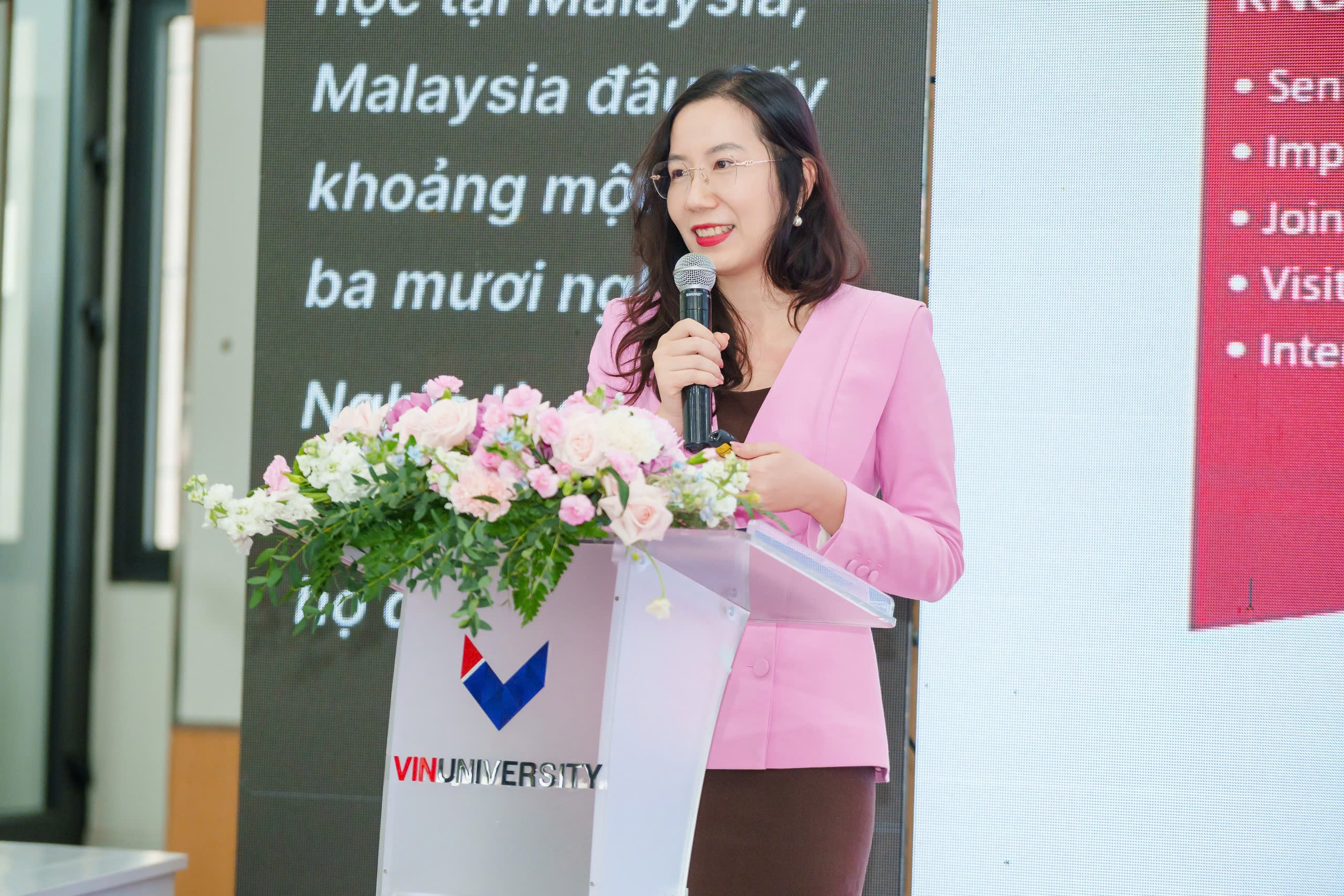
Ms. Pham Thanh Hao, Vice President of Administration, VinUniversity, presenting her talk “From Internationalization to the Global recognition.”
According to Ms. Hao, THE data show that the average proportion of international faculty at Vietnamese universities featured in major global rankings is only 1.3%, while international students account for just 0.5% of total enrolment. By comparison, the corresponding figures are 16.6% and 22.9% in Malaysia, 8.4% and 2.1% in Indonesia, and 4.4% and 1.9% in Thailand. Even Vietnam’s leading public universities—including Vietnam National University, Hanoi; Hanoi University of Science and Technology; and Hanoi Medical University – continue to record virtually zero international students in the datasets used for global rankings.
This substantial gap remains a major barrier preventing Vietnamese universities from improving their International Outlook performance, which accounts for 7.5% of the overall score in the Times Higher Education World University Rankings.
Ambitions and Pitfalls
The aspiration to elevate Vietnam’s higher education system and strengthen its global reputation offers hope for addressing the knowledge import imbalance highlighted by Ms. Hao. According to Assoc. Prof. Nguyen Thu Thuy, Director General of the Department of International Cooperation, Ministry of Education and Training (MOET), Resolution No. 71-NQ/TW on breakthroughs in education and training development has established ambitious targets for 2030. These include having at least one Vietnamese higher education institution ranked among the world’s top 100 universities in selected disciplines, at least eight institutions placed among Asia’s top 200 universities, and recruiting a minimum of 2,000 outstanding international academics to work in Vietnam.
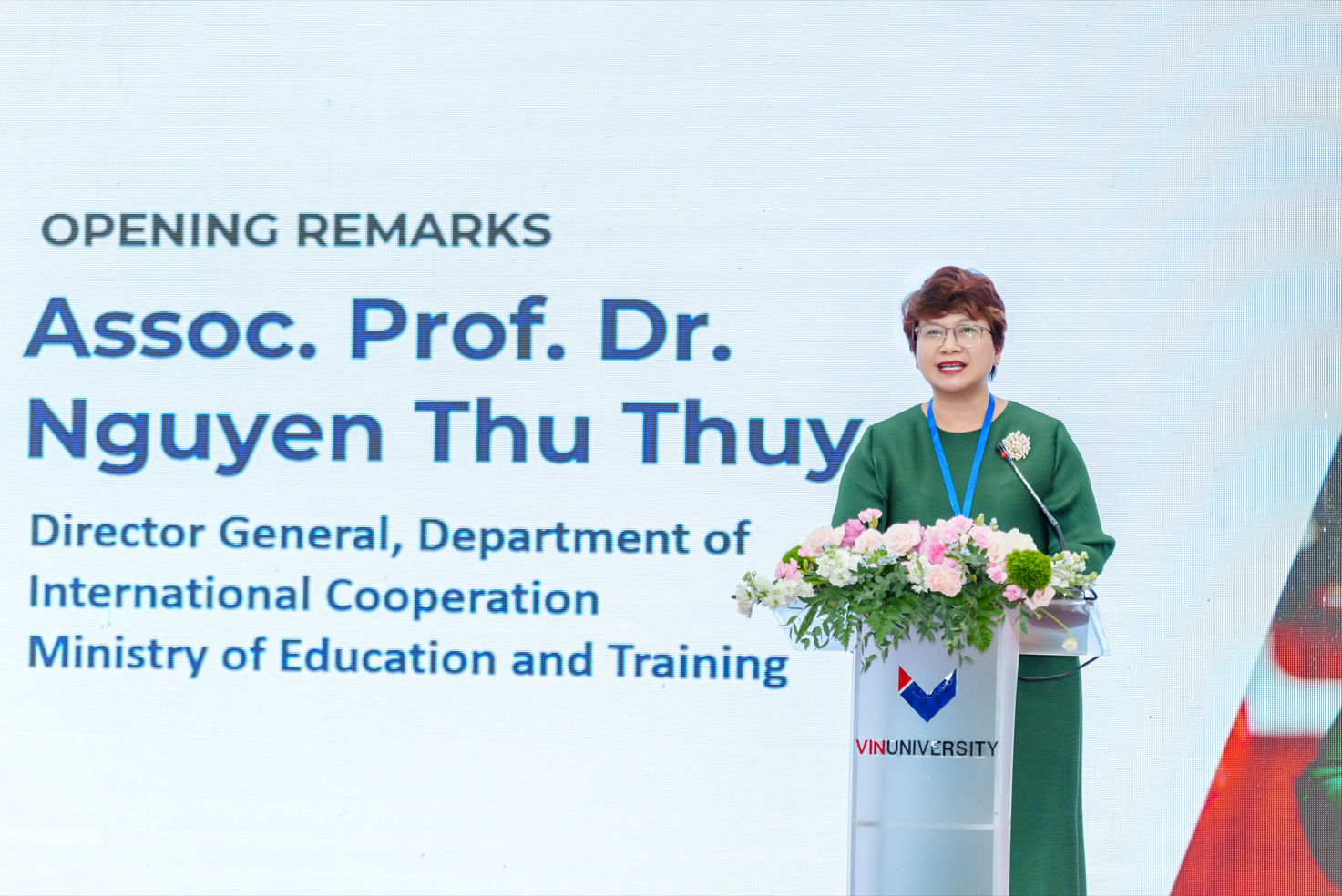
Assoc. Prof. Nguyen Thu Thuy, Director General of the International Cooperation Department, Ministry of Education and Training (MoET), delivering her keynote address on substantively elevating the global standing of Vietnamese higher education.
However, Assoc. Prof. Thuy reaffirmed MOET’s consistent policy that university rankings should never become an end in themselves, and that higher education should not be developed merely to compete for positions on global league tables. “When approached appropriately, reputable global rankings serve as valuable benchmarking tools that enable universities to better understand their strengths, identify areas for improvement, and assess the gap between their current performance and regional as well as international standards,” she said.
Prof. Nghiem Xuan Huy, Director of the Institute of Digital Education and Assessment, Vietnam National University, Hanoi, who has spent nearly a decade leading university ranking initiatives, offered practical insights drawn from first-hand experience. He cautioned against the unintended consequences of the “ranking game” a growing concern within the higher education community. According to him, forms of ranking gaming have become increasingly diverse and sophisticated. “Shortcuts may deliver rapid and dramatic improvements in rankings, but they are never sustainable. Only genuine quality can provide the foundation for long-term development,” he emphasised.
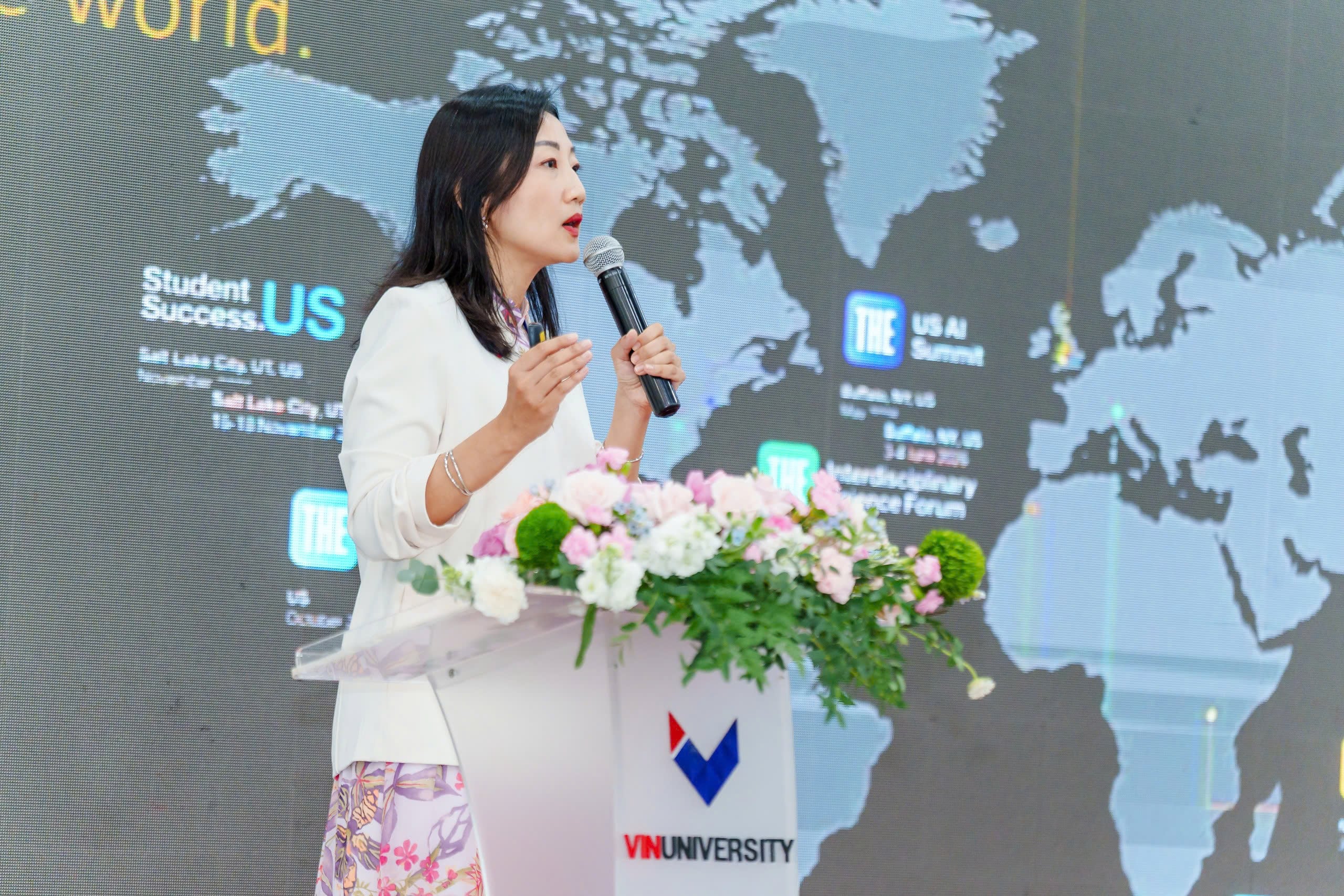
Ms. Mei Mei Lim, President of the Times Higher Education (THE) Asia-Pacific, delivering the opening remarks of the event.
Ms. Mei Mei Lim, President, Times Higher Education (THE), Asia-Pacific, revealed that THE has recently updated its ranking methodology by introducing three new metrics, alongside more stringent technical safeguards and enhanced risk indicators designed to detect and prevent excessive self-citation for ranking advantage. These measures are intended to ensure that the rankings continue to reflect the fundamental values of academic integrity and genuine research quality.
Strategic Thinking and the Courage to Make Trade-offs
According to higher education leaders and experts at the conference, achieving meaningful global standing and deep internationalisation ultimately depends on the quality of strategic leadership. Dr. Le Mai Lan, Chair of the University Council of VinUniversity, challenged university leaders with three fundamental questions. Among them, the question of strategic pathway demands exceptional courage and long-term commitment. Dr. Lan argued that, when managing finite resources, every strategic priority inevitably requires difficult trade-offs in staffing, funding, and time. “If a leader tries to prioritise everything – treating every issue as equally urgent – then in reality, nothing is truly a priority,” she said.

Dr. Le Mai Lan, President of VinUniversity, delivering the opening speech at the event.
For example, VinUniversity has made a deliberate strategic trade-off by remaining firmly committed to a highly selective and intentionally small-scale model. Rather than expanding its undergraduate portfolio, the University has capped total enrolment at fewer than 3,500 students, directing substantial financial resources towards recruiting world-class faculty while increasing the proportion of postgraduate students (master’s and doctoral) to 40% of its student body.
The reward has been a world-class learning experience, supported by an international faculty representing 40% of the academic workforce. The trade-off, however, is a significantly higher cost of education and a relatively small graduating class of only around 500 students each year. VinUniversity has also embraced the operational challenges that accompany a diverse international community, including establishing Halal dining facilities, multi-faith prayer rooms, and significantly expanding efforts in internal communications and community engagement.
The Formula for Global Standing: Internal Strength, External Support and Collective Action
But how can an entire nation overcome its international education trade deficit when the resources of individual universities are inevitably limited? According to Dr. Le Mai Lan, achieving national-level transformation requires universities to operate within a collaborative ecosystem that creates collective momentum. “Internal strength provides the foundation, external support enables us to accelerate, and collective action is what ultimately builds a nation’s global standing,” she said.
A compelling example of this philosophy of collective action is the EV Charging Research Alliance, highlighted by Dr. Lan during the conference. Rather than working independently, VinUniversity, Hanoi University of Science and Technology, and the National University of Singapore (NUS) joined forces to establish a research consortium focused on optimising the cost and energy efficiency of electric vehicle charging stations, supported by approximately USD 250,000 in research funding.
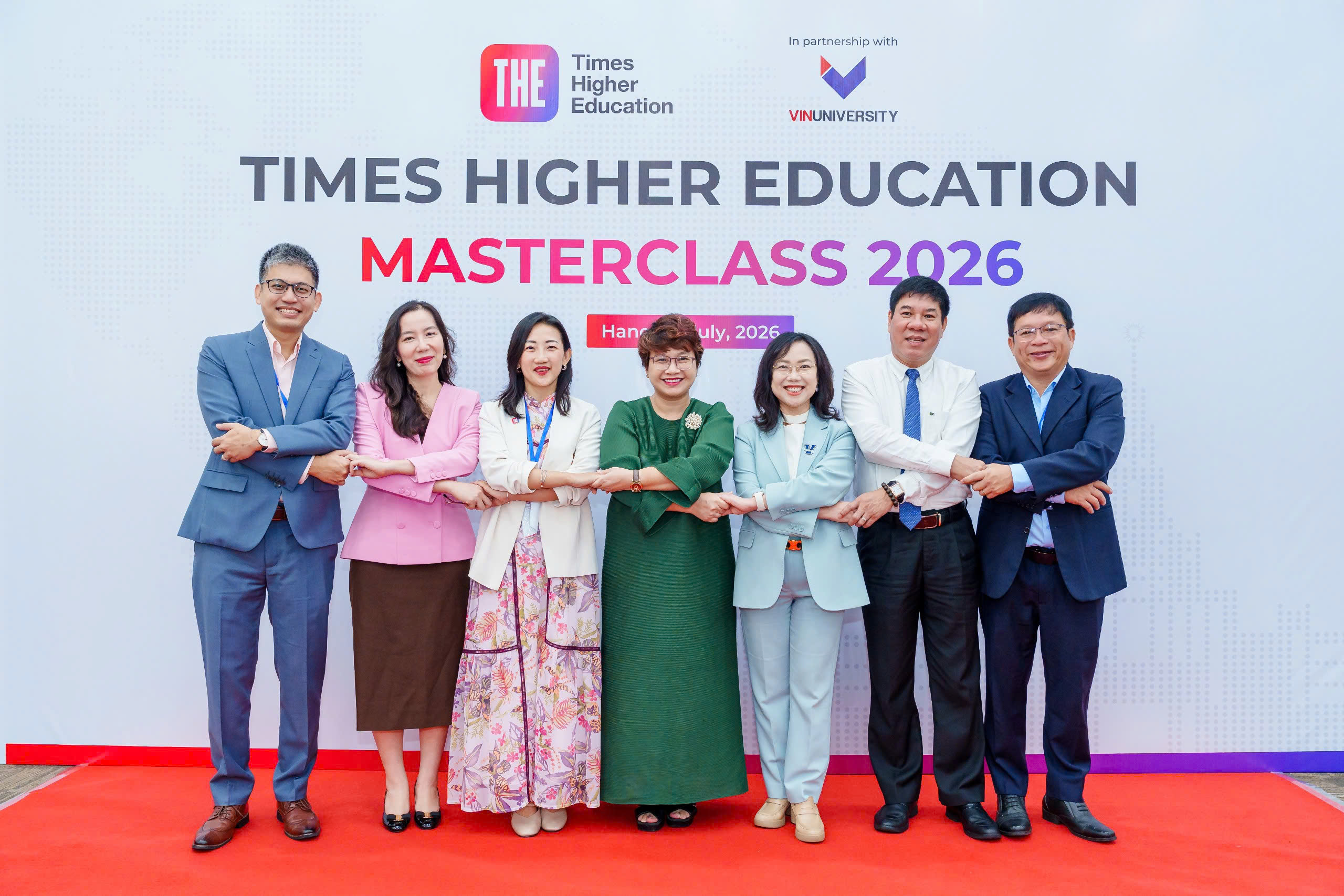
Representatives from the Ministry of Education and Training, Times Higher Education, VinUniversity, and Vietnamese universities at the Masterclass.
The alliance’s success lay in the complementary strengths that each institution brought to the partnership. NUS contributed its world-class research facilities and leading academic expertise, including a Nobel Prize-winning professor. Hanoi University of Science and Technology provided a team of highly experienced, application-oriented researchers, while VinUniversity contributed its advanced laboratories together with access to invaluable real-world datasets from VinFast, V-Green, and Vingroup.
The collaboration has delivered outcomes far beyond high-impact international publications. It has also led to the creation of Voltera, a technology spin-off that is attracting strong interest from venture capital investors.
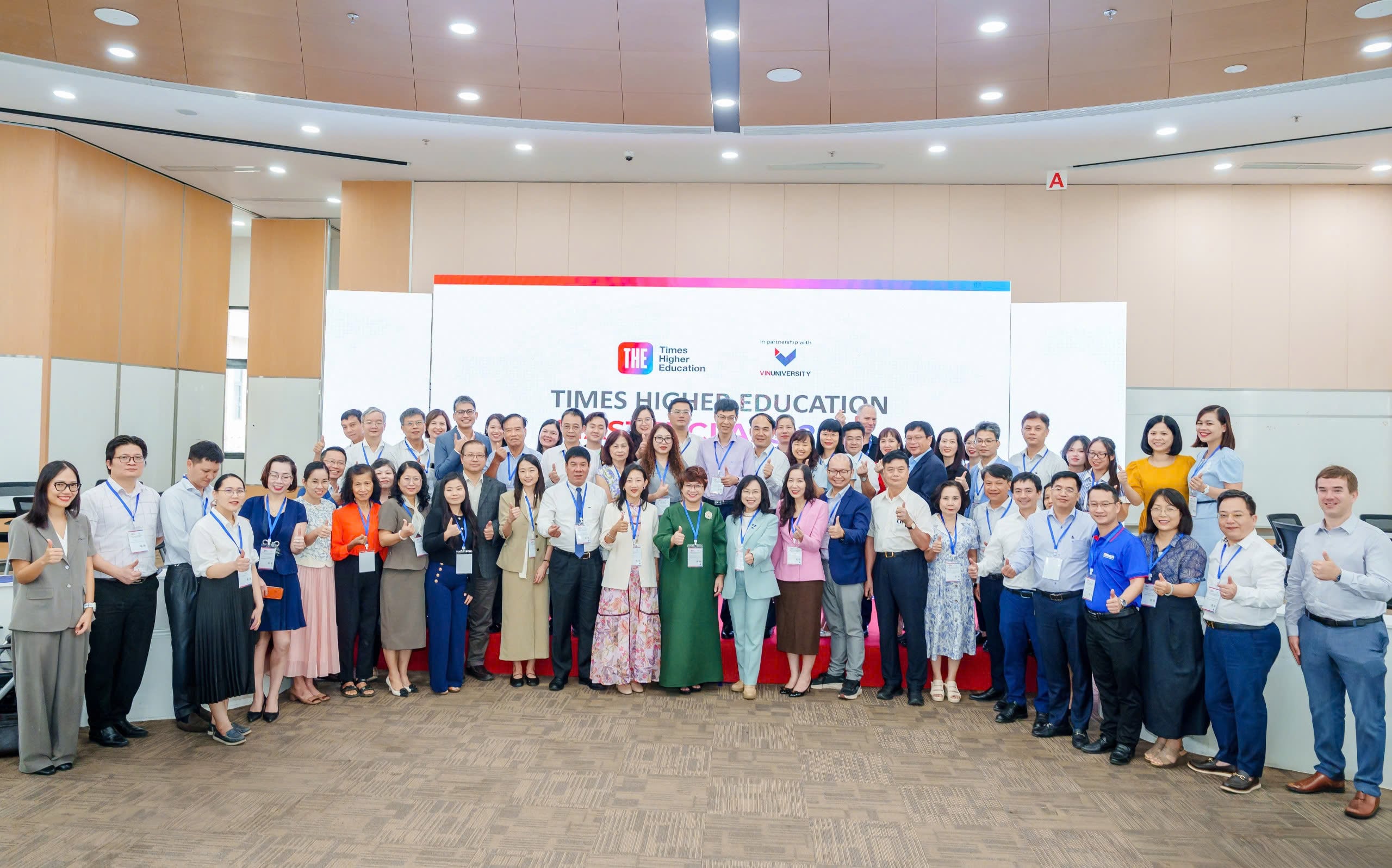
The Masterclass “From Data to Global Position: Research, Sustainable Development & the Global Presence of Vietnamese Universities” was jointly organized by VinUniversity and Times Higher Education (THE).
Dr. Mai Lan emphasised that “This collaboration does not diminish the competitive advantage of any participating university. On the contrary, it strengthens the reputation of every institution involved. When one Vietnamese university succeeds, it is a shared achievement and the strongest possible signal that elevates the global reputation of Vietnam’s entire higher education system.”
This philosophy resonated strongly with Ms. Mei Mei Lim, who echoed the same sentiment in her closing remarks: “When the tide rises, all boats rise with it.” Drawing on the experience of rapidly advancing higher education systems across the region, Ms. Lim emphasised that universities within a country must view one another as partners in national development, proactively collaborating rather than engaging in fragmented domestic competition.
