VinUni Connects Global Vietnamese Scientific Community, Fostering “Intellectual Remittance” for National Development
June 12, 2026


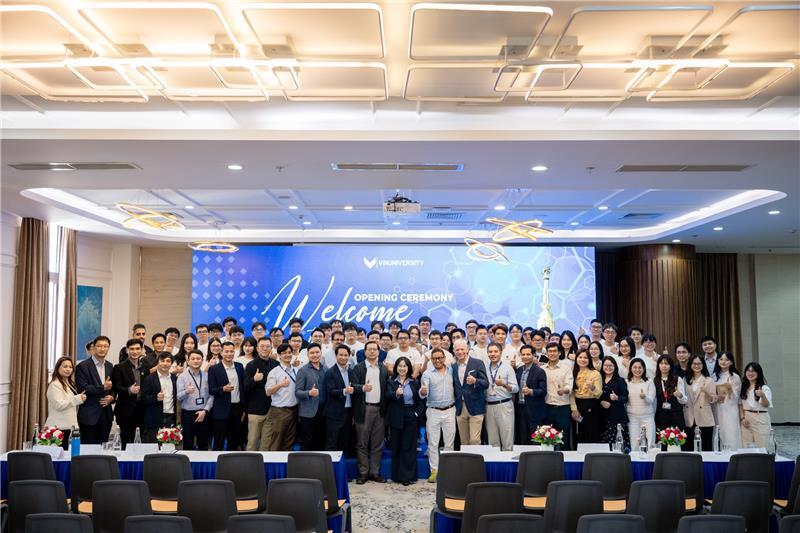
Within the framework of the 1st International Conference on Materials Innovation and Technology, on June 10, 2026, the National Foundation for Science and Technology Development (NAFOSTED), the Vingroup Innovation Foundation (VinIF), and VinUni co-hosted the “Homecoming for Vietnamese Scientists” program. The event was attended by leaders from various ministries, government agencies, universities, research institutes, and businesses, alongside more than 200 domestic and overseas Vietnamese scientists. Associate Professor Hoang Minh Son, Minister of Education and Training, attended the program and delivered a keynote address outlining talent attraction policies aimed at elevating national capacity.
Creating an Ecosystem for Scientific Talent to Return and Contribute
Speaking at the event, Minister of Education and Training Hoang Minh Son acknowledged and highly appreciated the initiative of VinUni and VinIF in establishing a specialized forum to connect and leverage the intellect of the global Vietnamese scientific community. The Minister emphasized, “We need to set a broader goal, not just finding solutions to attract scientists back, but working together to build an ecosystem attractive enough for talent to stay and make long-term contributions to the country’s development.”
The Minister also shared five key pillars to enhance the attraction and utilization of intellectual resources: aligning with national development strategies; empowering scientists to serve as catalysts in education and research; building a favorable research ecosystem; promoting research with practical impact; and developing a global Vietnamese intellectual network through digital connection and collaboration platforms.

Minister of Education and Training Hoang Minh Son delivers the keynote address with the topic: “From Talent Attraction Policies to Enhancing National Scientific Capacity”
“Homecoming”: Ensuring Talent Does Not Return as Isolated Individuals
Guided by the Minister’s direction, during the panel discussions, representatives from NAFOSTED, university delegates, and scientists shared experiences and contributed initiatives for talent attraction.

Panel Discussion 1: “Attracting Talent: From Strategic Thinking to Practical Solutions – Lessons from Institutions”
Dr. Le Mai Lan, President of the VinUni University Council, noted that the objective is not for scientists to return as “isolated individuals,” but to form “a network, a community, and an intellectual force with shared aspirations and talent, returning, staying, and collectively developing the nation.” According to her, the intense competition from highly attractive talent cultivation programs in Singapore, China, South Korea, and the Middle East is palpable. Therefore, VinUni’s lesson is that university leadership must personally engage in global recruitment campaigns, targeting high-density talent hubs. Within nine months of implementing the VinUni500 program, the university received over 5,000 applications, conducted approximately 500 interviews, and successfully recruited 124 scientists, of whom around 60% are of Vietnamese origin and nearly 50% hail from the world’s top 100 universities.

Dr. Le Mai Lan – Vice Chairwoman of Vingroup, President of VinUniversity University Council, speaking at the panel Discussion: “Attracting Talent: From Strategic Thinking to Practical Solutions – Lessons from Institutions”
Representing Vietnam National University, Hanoi (VNU), Professor Tran Thi Thanh Tu, Director of the Science and Innovation Department, shared that a key lesson learned is the need to translate talent attraction projects into specific research assignments linked to strategic technologies and applied challenges. By 2025, VNU approved 38 projects, each aiming to attract at least one outstanding scientist from a top 500 global university. This approach connects scientists with a specific research group, project, and clear objectives right from the start. Meanwhile, Professor Le Anh Tuan, President of Hanoi University of Science and Technology, noted that universities require more flexible financial mechanisms to compete more effectively in the global race for talent.

Prof. Le Anh Tuan – President, Hanoi University of Science and Technology (HUST), speaking at the panel Discussion: “Attracting Talent: From Strategic Thinking to Practical Solutions – Lessons from Institutions”
From the perspective of an overseas Vietnamese scientist, Professor Nguyen Nam-Trung, Director of the Nano Technology Institute, Griffith University (Australia), observed that while compensation policies are important, they are not the sole factor determining talent attraction, and engaging with Vietnam does not necessarily require a full-time return. According to him, institutional frameworks should focus on granting academic autonomy and empowering scientists to proactively secure research resources from foundations and corporate partners. “Top talent will seek out environments where other exceptional minds thrive,” he noted.

Prof. Nguyen Nam Trung – Director of Nano Technology Institute, Griffith University, Australia, speaking at the panel Discussion: “Going Abroad and Returning Home – The Aspiration of Scientists”
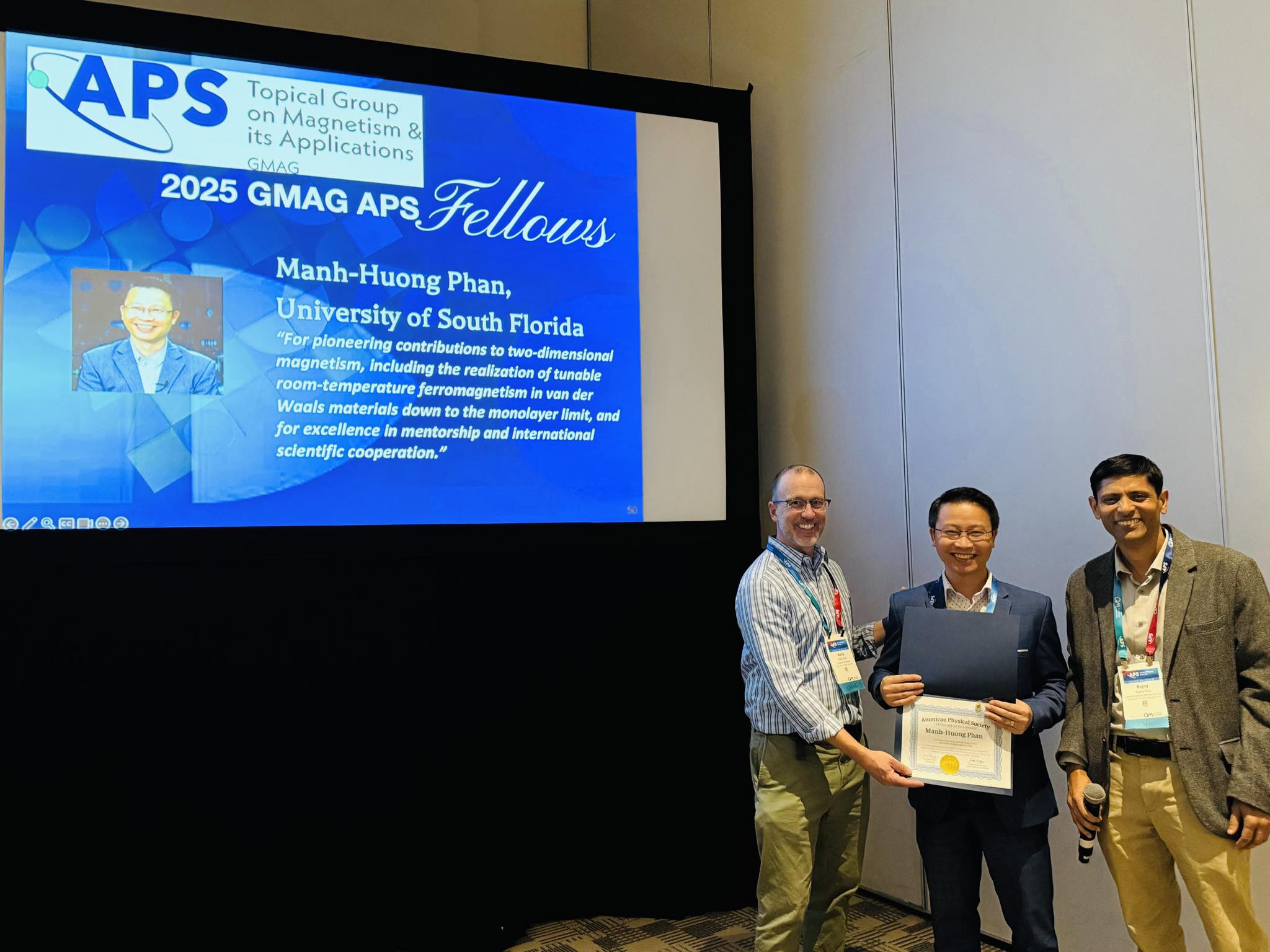
Representing the generation of scientists who chose to return to Vietnam, Professor Phan Manh Huong, Director of the Center for Materials Innovation and Technology (CMIT) at VinUni, shared his journey of nearly 20 years working in the United States prior to his repatriation. According to him, what Vietnam lacks is not brilliant scientists, but rather a robust ecosystem capable of seamlessly bridging the “triple helix” – government, academia/research institutes, and industry – with the global Vietnamese scientific diaspora.

Prof. Phan Manh Huong – Director of VinUni’s Center for Materials Innovation & Technology, speaking at the panel Discussion: “Going Abroad and Returning Home – The Aspiration of Scientists”
From Connection to Action
At Homecoming 2026, VinUni concurrently announced two key initiatives: the launch of the Global VINIF Fellows Network and the Vietnam Global Network for Digital Materials (VGN-DM) to foster long-term collaboration between the global Vietnamese scientific diaspora and the domestic research ecosystem.

Network Launch Ceremony of the Vietnam Global Network for Digital Materials (VGN-DM)
In particular, VGN-DM aims to build digital materials capabilities for Vietnam by connecting domestic and international Vietnamese scientists working in advanced materials, data science, computational simulation, and artificial intelligence applications in materials research. In its initial phase, VGN-DM has partnered with VinIF to implement the Scientific Talent Research Camp 2026.

Scientific Talent Research Camp, organized by VinIF, with the support of CMIT
Against the backdrop of intensifying technological competition, these concerted efforts are expected to attract scientists of Vietnamese origin to return and contribute to their homeland, helping to shape a global Vietnamese scientific network and establishing a foundation for research and innovation that drives sustainable national development.