Why universities must rethink their purpose in the age of AI – and how VinUniversity is responding
March 27, 2026


As artificial intelligence reshapes economies and industries, a growing consensus among global leaders is emerging: AI is not simply a technological challenge. It is organizational.
That distinction sits at the heart of a recent analysis by Professor Chee Yeow Meng, Provost of the Singapore University of Technology and Design (SUTD), written in the context of Singapore’s Budget 2026 and its national AI strategy. His argument is pointed: Singapore’s advantage does not lie in building the largest AI models, but in deploying AI effectively. That kind of deployment requires more than just a technology purchase; it asks for an organizational change.
The examples he offers are instructive:
Prof. Chee indicates these cases as “failures to redesign work”, not “failures of AI”.
For Prof. Chee, two capabilities therefore become decisive: disciplined design and speed of innovation. There must be discipline in design, ensuring that AI is embedded into how decisions are made, how responsibilities are allocated, and how humans and machines interact in everyday operations. There must also be discipline in execution, so that transformation moves quickly enough to translate experimentation into real advantage rather than remaining trapped in pilots. And equally important is discipline in capability-building: organizations must continually invest in people, equipping workers with the skills and understanding needed to work alongside AI, so that the benefits of technological progress expand opportunity rather than displace it.
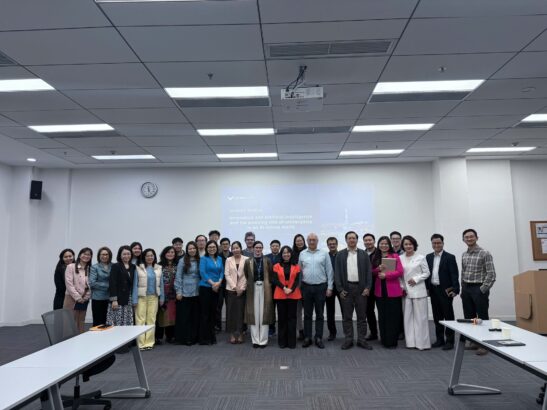
Professor Chee Yeow Meng at VinUniversity for a sharing session on “Innovation and Artificial Intelligence, and the evolving role of universities in an AI-driven world.”
In the context of education, higher education institutions have historically served as gatekeepers of knowledge, networks, and credentials. Yet in the AI era, these foundations are shifting rapidly. Knowledge is no longer scarce; it is abundant and instantly accessible. Digital platforms and AI systems are expanding access to expertise, while global talent networks increasingly extend beyond the boundaries of physical campuses.
That pressure has prompted a fundamental rethinking of the purpose of universities. In a recent speech, VinUniversity Provost Tan Yap Peng centers on capabilities that remain distinctly human in the AI era: judgment, first-principles thinking, creativity, ethical reasoning, and what he calls “learning velocity” – the ability to learn quickly, unlearn outdated mindsets, and relearn continuously. The goal for universities, as he frames it, is not to produce AI specialists who simply operate tools, but AI-empowered experts – engineers, social scientists, medical doctors, and business leaders with deep domain mastery who use AI as a multiplier.
Achieving this requires universities to rethink their own structures and practices. Teaching must move beyond passive learning toward problem-driven exploration. Research must increasingly address interdisciplinary and high-impact challenges. And institutions themselves must integrate AI across teaching, research, and operations to improve both capability and agility.
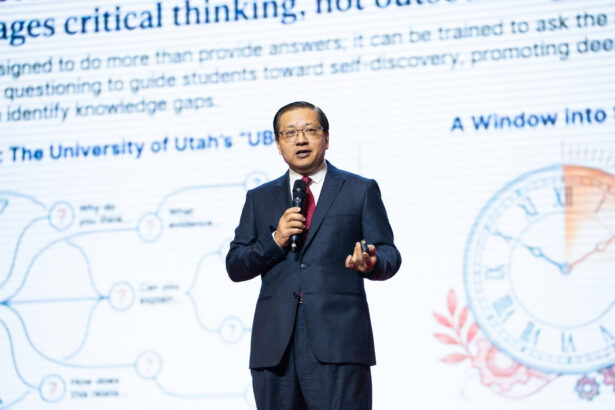
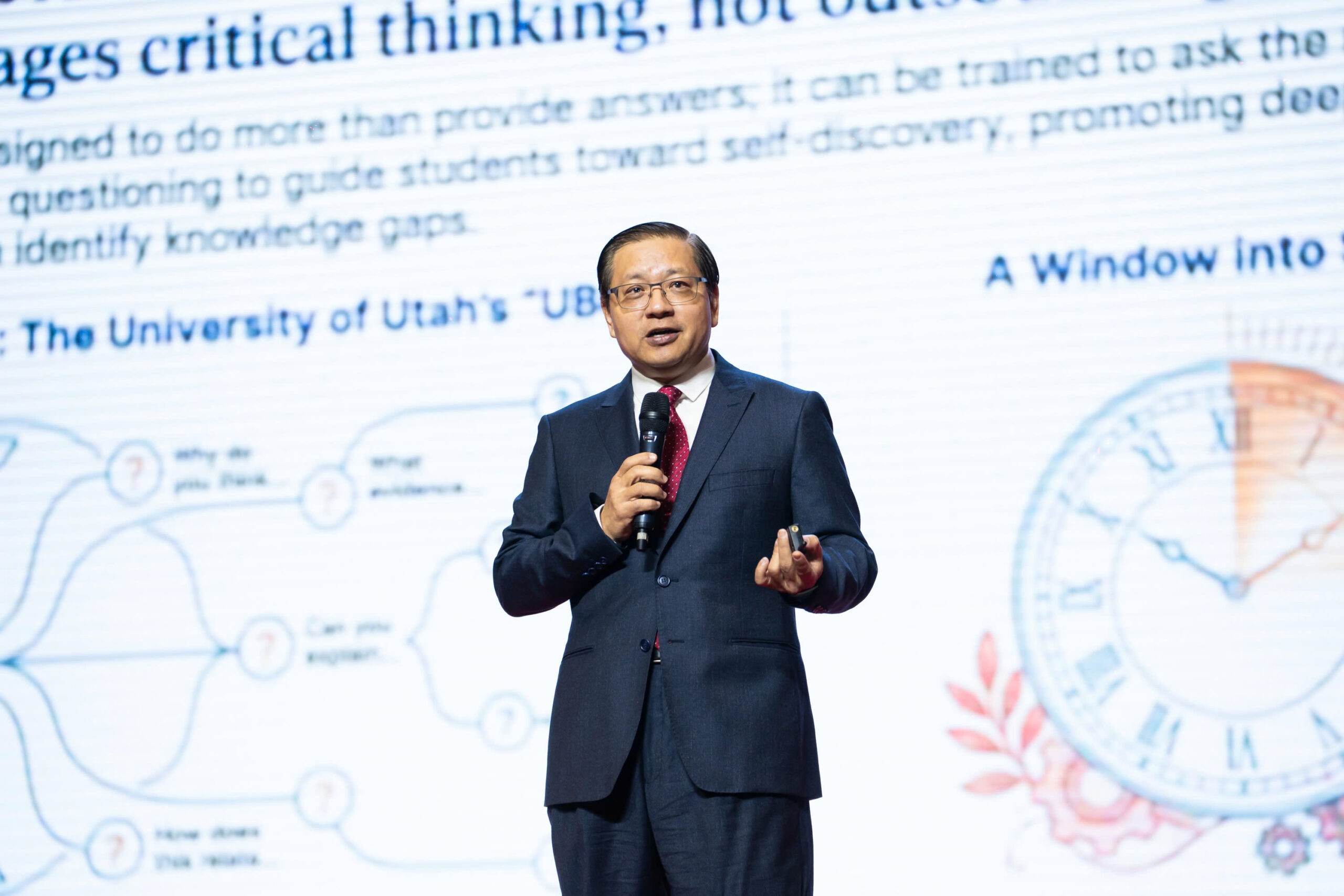
Professor Tan Yap Peng – Provost, VinUniversity
Both provosts are, in different ways, making the same argument: the bottleneck is not the technology. It is the human and institutional capacity to absorb it, reshape around it, and move faster with technology as the catalyst.
At VinUniversity, this transformation is anchored in a broader vision: building a human-centered, AI-powered university. Importantly, this vision leverages one of VinUni’s structural advantages as a young institution – greater agility and fewer legacy constraints. As Prof. Tan noted, “Being new and cautious is fatal. Being new and bold is powerful.”
Guided by this perspective, VinUni has outlined three key directions for moving forward:
The provosts of SUTD and VinUni are looking at the same landscape from different vantage points. The conclusion they reach is consistent: the institutions that matter in the AI era will not be those that adopted AI the earliest. They will be the ones that redesigned fastest, learned continuously, and built the human capacity to lead – not just use – machine intelligence.
Read more about Prof. Chee’s piece: https://www.businesstimes.com.sg/opinion-features/speed-organisational-change-and-innovation-critical-success-national-ai-strategy
Read more about Provost Tan’s speech and VinUniversity’s next priorities: https://vinuni.edu.vn/what-happens-to-universities-when-ai-could-know-everything-vinuniversity-provost-lays-out-the-universitys-next-priorities/
—————-
VinUniversity and the Singapore University of Technology and Design (SUTD) are strengthening their partnership through a growing range of academic exchanges and collaborative opportunities. Since 2024, VinUni has hosted more than 100 SUTD students and faculty through short-term immersion programs that promote cross-cultural learning and joint exploration of innovation. Looking ahead, the two institutions aim to launch a semester exchange program in 2027, allowing VinUni students to experience SUTD’s design-led innovation ecosystem in Singapore. In parallel, collaboration with the SUTD Career Development Centre is expanding access to research internship opportunities, creating additional pathways for students from both universities to engage in hands-on research and innovation.