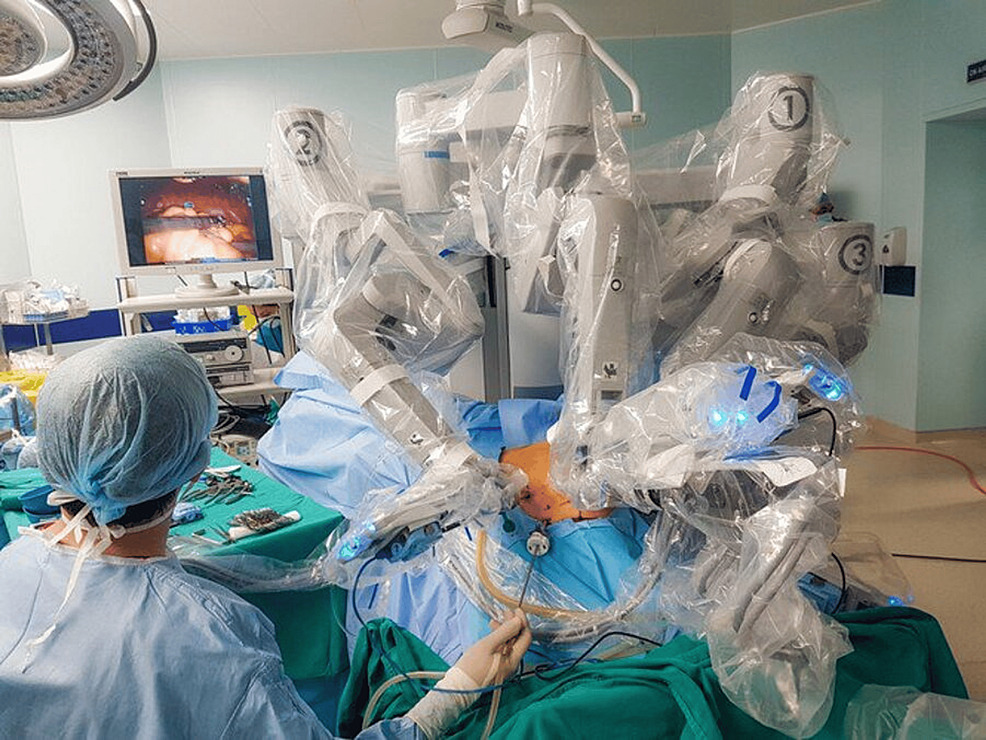
What is a PhD degree? Meaning, purpose, and value
February 19, 2026


In the hierarchy of academic achievement, the Doctor of Philosophy (PhD) stands at the summit. Yet, despite its prestige, the degree remains shrouded in mystery for many. Is it simply “more school”? Is it just a stepping stone for a professorship? Or is it something fundamentally different?
For aspiring scholars and innovators, asking “what is a PhD degree” is the first step toward a life of discovery. It is not merely a certificate of knowledge; it is a license to create it. In a world increasingly driven by specialized data and complex algorithms, the value of a PhD has transcended the university walls, becoming a coveted asset in top-tier tech firms and research labs.
This guide goes beyond the dictionary definition to explore the lived reality of doctoral study, how it differs from other degrees, and how elite institutions like VinUniversity with a curriculum validated by Cornell University are crafting the next generation of scientific leaders.
To the outside world, a PhD looks like an extension of student life. Viewed from the inside, however, it is a radical departure from everything that came before. It is a transition from being a consumer of information to becoming a producer of knowledge.
The most common confusion arises when students ask what is the difference between a masters degree and a PhD. A master’s degree is typically about mastery: learning existing theories, tools, and best practices to apply them in professional contexts. It is about deepening what is known.
A PhD, conversely, is about the unknown. It is a commitment to identifying a gap in human knowledge however small and filling it. A PhD candidate does not wake up asking, “What will I learn today?” but rather, “What question has no one answered yet?” This shift requires a fundamental change in mindset, moving from passive absorption to active, often grueling, inquiry.

A Master’s degree is typically about mastery: learning existing theories, tools, and best practices
Because the goal is novelty, the path is never clear. In undergraduate or master’s studies, the syllabus is a map; if you follow it, you arrive at the destination (graduation). In a PhD, there is no map. You are dropped into a dense forest of information and told to build a road out.
This uncertainty is the defining feature of the degree. You will formulate hypotheses that fail, write code that crashes, and conduct experiments that yield inconclusive results. This is not a sign of failure; it is the nature of research. A PhD trains you to navigate this ambiguity, fostering a resilience and intellectual agility that is rare and highly valued, whether in academia or in the R&D departments of global corporations.
Successful PhD candidates are rarely made overnight. The specific mode of thinking required for doctoral success critical, independent, and rigorous is often cultivated years in advance, starting at the undergraduate level.
The traditional view is that research begins in graduate school. However, modern educational philosophy argues that the bachelor’s degree should be the training ground. Students who are exposed to research culture, early reading papers, critiquing methodologies, and handling raw data enter PhD programs with a massive advantage.
Instead of spending their first doctoral year learning the basics of the scientific method, these students hit the ground running. They understand that science is a conversation, and they have already learned how to listen. This early exposure demystifies the process, transforming the PhD from an intimidating mountain into a climbable peak.

Modern educational philosophy argues that the bachelor’s degree should be the training ground
The true value of a strong undergraduate foundation lies in teaching students how to think. Standard education often rewards memorization. Research education rewards skepticism.
Future PhDs learn to look at a textbook not as absolute truth, but as the current consensus waiting to be challenged. They learn to identify biases in data, flaws in logic, and limitations in algorithms. This critical faculty is the engine of innovation. Without it, a student may be able to pass exams, but they will struggle to contribute anything new to their field. This intellectual maturity is the prerequisite for the daily grind of doctoral life.
If you remove the graduation ceremony and the title, what is a PhD degree in practice? It is a job. It is a daily routine of collaboration, isolation, reading, and writing, punctuated by moments of breakthrough.
Science is rarely a solitary endeavor. A significant portion of a PhD student’s life is spent in dialogue. You work closely with supervisors who act as mentors, critics, and guides. This relationship is unlike the teacher-student dynamic; it is an apprenticeship.
Beyond the supervisor, you interact with a cohort of peers other PhD students who are struggling with similar challenges. You attend lab meetings, present findings at seminars, and engage with the broader research community. These interactions refine your thinking, forcing you to defend your ideas against rigorous questioning. It is in these heated debates that raw ideas are forged into solid research.
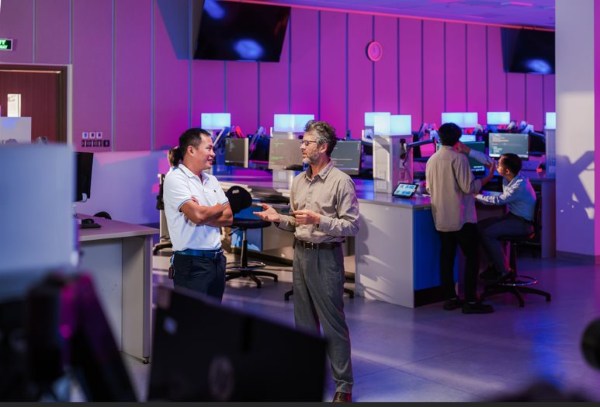
A significant portion of a PhD student’s life is spent in dialogue
The unglamorous reality of a PhD is that it involves a lot of reading and writing. You must become an expert in your niche, which means consuming thousands of pages of prior literature. This ensures that your “new” idea hasn’t already been done by someone else ten years ago.
Then comes the writing. A dissertation is not written in a month; it is written every day for years. It involves drafting, deleting, restructuring, and polishing. This process teaches you to organize complex thoughts into coherent arguments, a skill that is transferable to any high-level leadership role. The ability to distill chaos into clarity is the hallmark of a PhD.
While the philosophy of a PhD is universal, the mechanics differ by field. A PhD in Computer Science (CS) has its own unique texture, blending mathematical abstraction with engineering practicality.
In the Humanities, research might mean analyzing texts. In Biology, it might mean wet-lab experiments. In Computer Science, the laboratory is the code and the data.
A CS PhD creates knowledge by designing new algorithms that run faster, building models that predict more accurately, or creating systems that are more secure. It is constructive. You are not just observing the world; you are building tools to model and change it. Whether it is Generative AI, Green Computing, or Smart Health, the output is often a tangible proof-of-concept that demonstrates a theoretical breakthrough.

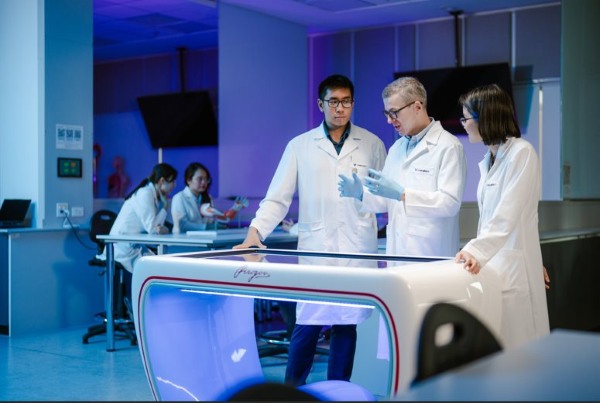
In the Humanities, research might mean analyzing texts
However, writing working code is not enough. A PhD requires contribution. You must prove that your method is statistically significantly better than the state of the art.
This is measured through rigorous benchmarking and peer review. Your work must be published in top conferences (like CVPR, ICML, or NeurIPS) or journals. The “currency” of a CS PhD is the impact of your ideas, often measured by how many other researchers cite your work to build their own. It is a rigorous validation process that confirms you have indeed added a brick to the wall of knowledge.
For students in Vietnam and the region, VinUniversity offers a strategic pathway designed to nurture this high-level research capability from the very beginning.
The journey begins at the undergraduate level. The Bachelor of Science in Computer Science at VinUniversity is not a standard coding bootcamp; it is an academic launchpad.

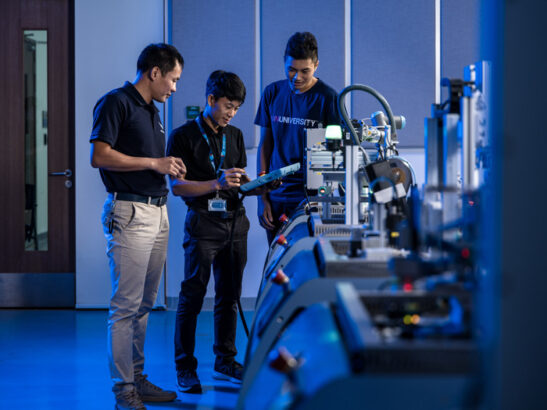
The Bachelor of Science in Computer Science at VinUniversity
For those ready to commit to the highest level of scholarship, the PhD program at VinUniversity offers a world-class environment.

The PhD program at VinUniversity offers a world-class environment
So, what is a PhD degree? It is more than a diploma. It is a testament to resilience, a certification of critical thinking, and a contribution to the collective intelligence of humanity. Whether you aspire to be a professor or a visionary tech leader, the PhD is the ultimate training ground.
The value of this degree is immense, but it requires a solid foundation and a supportive environment. By choosing a research-oriented pathway like the one at VinUniversity, you are not just earning a degree; you are joining a global conversation that shapes the future. Start your journey of discovery today: https://vinuni.edu.vn/