VinUni Banner

What does a Computer Scientist do: Career paths and insights

January 2, 2026

The contemporary technological era is defined by an accelerating pace of digital innovation, fundamentally steered by the foundational work of Computer Scientists. Understanding what does a Computer Scientist do today goes far beyond application development, encompassing strategic system design, theoretical research, and the ethical governance of increasingly complex technologies such as next-generation artificial intelligence and ubiquitous sensing platforms. 

Succeeding in this highly demanding, high-stakes environment necessitates an education that rigorously merges deep foundational theory with a strategic global perspective and ethical leadership training. In Southeast Asia, institutions such as VinUniversity are proactively addressing this global talent demand, rapidly establishing world-class academic standards, validated through crucial international academic partnerships to cultivate the next generation of technology leaders poised to define the future of computing.

1. What does a Computer Scientist do: Roles, skills, and impact

Highly skilled computer science professionals are the intellectual architects who devise the underlying computational principles, theoretical models, and complex algorithms that underpin every major technological system, from global financial networks to advanced medical diagnostic tools.

1.1 Definition of a computer scientist

A Computer Scientist (CS) is a professional dedicated to the systematic study of computation, its applications, and its theoretical limits. Unlike Information Technology (IT) professionals, who manage and implement existing systems, or Software Engineers, who primarily use available tools to build software, the Computer Scientist’s work is foundational and theoretical.   

Key characteristics of a Computer Scientist:

  • Focus: Defines the computational principles, theoretical models, and complex algorithms underlying all software and systems.   
  • Scope: The discipline serves as the foundation for fields including Machine Learning, Artificial Intelligence (AI), networking, computing systems, and computational theory.   
  • Theoretical core: Concentrates on mathematical models, data analysis and security, algorithms, and computational theory.   

Leads the exploration and advancement of new tools and processes, conducting theoretical investigations in areas like numerical analysis and computational complexity theory. Ultimately, by mastering this theoretical and foundational knowledge, the Computer Scientist is uniquely positioned to become the leader who advances the core tools and processes of tomorrow, ensuring enduring career relevance.

A Computer Scientist is a professional dedicated to the systematic study of computation

A Computer Scientist is a professional dedicated to the systematic study of computation

1.2 Importance in the modern technology landscape

Computer Scientists are indispensable, driving innovation across every major sector and addressing highly complex global challenges. The impact of Computer Science is seen across these critical areas:

  • Strategic innovation: Leads the adoption of cutting-edge technologies like AI, Human-Computer Interaction, and advanced game theory.   
  • Mission-critical applications: Designs core systems for financial modeling, fraud detection, bioinformatics, computational biology, and advanced robotics.   
  • Sustainability & hardware: Develops energy-efficient microelectronics such as stacking components on a single chip to combat the burgeoning electricity consumption associated with intensive computing tasks like Generative AI.   

Research is critical for reducing the technology field’s environmental footprint, given the carbon emissions associated with large-scale AI training. This convergence with physical science is also reflected in advanced research foci such as Computational Biology and Digital Material Science. Therefore, the Computer Scientist’s expertise is the crucial link between theoretical possibility and global, sustainable technological reality.

1.3 Key skills and qualifications required

Success in Computer Science requires a blend of deep technical mastery and sophisticated professional skills. Below are the core skills and qualifications commonly required:

  • Technical skills
    • Programming proficiency: Strong ability in languages such as Python, Java, C++, JavaScript, or similar, depending on the specialization. Programming is a foundational requirement for most computer science roles.
    • Algorithms and data structures: Solid understanding of algorithm design, complexity, and efficient data organization.
    • Mathematics and statistics: Knowledge of discrete mathematics, linear algebra, probability, and statistics to support problem-solving and modeling.
    • Computer systems knowledge: Familiarity with operating systems, computer architecture, databases, and networking concepts.
    • Software development skills: Experience with software engineering principles, version control systems, testing, and debugging.
    • Emerging technologies: Awareness of fields such as artificial intelligence, machine learning, cloud computing, cybersecurity, or data science, depending on career focus.
  • Analytical and problem-solving skills
    • Ability to break down complex problems into manageable components.
    • Logical thinking and systematic reasoning to design effective computing solutions.
    • Strong attention to detail when analyzing data, code, or system behavior.
    • Communication and collaboration skills
    • Ability to clearly explain technical concepts to non-technical stakeholders.
    • Experience working in team-based or cross-functional environments.
    • Written communication skills for documentation, reports, and research publications.
  • Educational qualifications
    • Bachelor’s degree in Computer Science or a closely related field is typically the minimum requirement.
    • Master’s or PhD degrees are often required for research-intensive, academic, or advanced industry roles.
    • Additional certifications such as cloud platforms, cybersecurity, or data analytics can be beneficial for specialized positions.

In summary, understanding what a computer scientist does starts with recognizing the core skills behind the role. Strong technical foundations, analytical thinking, and continuous learning enable computer scientists to adapt to evolving technologies and perform effectively across diverse professional settings. These skills form the basis for the wide range of roles and responsibilities explored in the next section.

Success in Computer Science requires a blend of deep technical mastery and sophisticated professional skills

Success in Computer Science requires a blend of deep technical mastery and sophisticated professional skills

2. Typical roles and responsibilities of a Computer Scientist

Computer scientists work across a wide range of roles, from research to development, illustrating what can a Computer Scientist do in today’s digital economy. Here are some of the most common responsibilities:

2.1 Research and development

Research and Development (R&D) forms the conceptual engine of technological advancement within the Computer Science domain, pushing the limits of current technological capabilities. Key activities and focus areas in R&D include:

  • Strategic focus: Professionals concentrate on the long-term, strategic future of computing, often exploring problems to develop new theories and models.   
  • Core activities: Generating innovative ideas, validating technical feasibility, creating Minimum Viable Products (MVPs) and prototypes, and experimenting with emerging technologies.   
  • Strategic research areas: Includes Artificial Intelligence and Machine Learning, Blockchain technologies that decentralized applications, supply chain traceability, and advanced algorithms like real-time data analysis, new cryptographic algorithms for quantum security.   
  • Career entry: R&D roles, such as Computer and Information Research Scientists, typically demand a Master’s degree or higher due to the need for advanced foundational theory.   

This strategic, high-level work is critical for securing long-term organizational stability and competitive advantage through innovation.

2.2 Software and systems development

The Computer Scientist’s role in systems development is characterized by a focus on high-level architecture, foundational efficiency, and the creation of enabling tools, differentiating it from that of a Software Engineer. Primary responsibilities include:

  • Primary tasks: Determining organizational computing needs, defining high-level system requirements, and developing new computing languages, software systems, and specialized tools.   
  • System integrity: Ensuring technology solutions deliver robust performance and maintain consistent usability across various devices and platforms.   
  • Security by design: Utilizing deep knowledge of system structure to implement crucial, preventative cybersecurity measures, rather than relying solely on reactive defense.   
  • Educational foundation: Undergraduate programs specifically prepare graduates for this architectural focus via curriculum threads like Systems and Architecture, covering various computational paradigms.   

By architecting systems with security and efficiency as core principles, Computer Scientists establish inherently more resilient digital environments, transforming organizations from reactive to proactive security postures.

The Computer Scientist’s role in systems development is characterized by a focus on high-level architecture

The Computer Scientist’s role in systems development is characterized by a focus on high-level architecture

2.3 Data analysis and modeling

With the growth of Big Data, Machine Learning, and Artificial Intelligence, the Computer Scientist frequently operates as a Data Scientist, designing data modeling processes and creating complex predictive algorithms. Core responsibilities in this high impact area involve:

  • Core responsibilities: Determining relevant data, collecting, cleaning, and categorizing large datasets, and applying advanced techniques such as ML, statistical modeling, AI to validate and update models.   
  • Strategic goal: Identifying underlying trends, predicting future outcomes, and presenting quantifiable findings to stakeholders for strategic decision making.   
  • Measurable impact: Enhancing operational efficiency like supply chain optimization, minimizing financial exposure such as fraud detection, and accelerating innovation through data-driven experimentation.   

The practical application of computational theory, the ability to create and validate algorithms is what distinguishes the foundational Data Scientist and establishes a critical link between the Computer Science curriculum and commercial success.

2.4 Collaboration with cross-functional teams

The increasing complexity and pervasive nature of technology demand that Computer Scientists engage in deep collaboration with cross-functional teams to integrate solutions seamlessly into realworld business, scientific, or social contexts. Key aspects of collaboration include:

  • Collaboration scope: Includes working with engineers, industry specialists, medical researchers, computational biologists, and business strategists.   
  • Role as computational diplomat: Translating complex technical possibilities and limitations into practical constraints and objectives that domain experts can clearly understand.   
  • Critical application: Essential in sensitive areas like Smart Health or developing systems to meet strict ethical and legal standards.   

This interdisciplinary cooperation ensures that computational solutions are not only technically robust but also socially responsible and contextually compliant, maximizing impact and building trust in the technology.

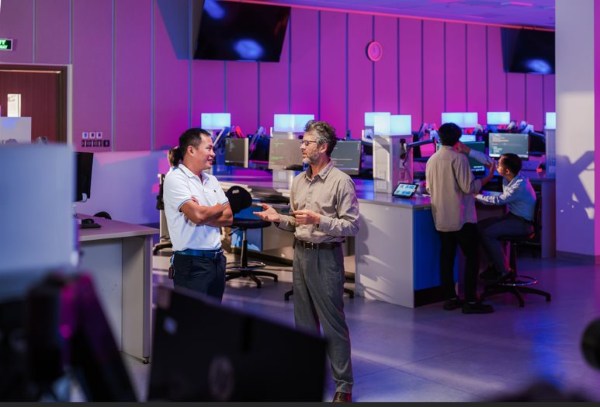
The increasing complexity and pervasive nature of technology demand that Computer Scientists engage in deep collaboration with cross-functional teams

The increasing complexity and pervasive nature of technology demand that Computer Scientists engage in deep collaboration with cross-functional teams

3. Education pathways for Computer Scientists

Computer science education follows a structured pathway that builds technical competence and supports long-term career development, from undergraduate study to advanced research and continuous learning.

3.1 Undergraduate education

Undergraduate Computer Science (CS) degrees provide foundational knowledge across four core areas:

  • Programming: Core skills such as Object-Oriented Programming, Software Development.
  • Algorithms & data structures: Focus on computational efficiency and problem-solving.
  • Mathematics: Includes Discrete Math, Calculus, and Linear Algebra.
  • Computer systems: Covers Operating Systems, Databases, and Networks.

Together, these core areas equip students with the essential skills and knowledge to begin a successful career in computer science.

3.2 Graduate education

Graduate CS education allows computer scientists to specialize (Master’s) or focus on research (PhD). Key components include:

  • Master’s programs: Offer advanced coursework in specializations like AI, Data Science, or Cybersecurity.
  • Research: Opportunities for supervised research and thesis/dissertation work (central to PhD programs).
  • Advanced skills: Development of deeper expertise in theory, system design, and emerging technologies.

In essence, graduate studies transform foundational knowledge into specialized expertise and research capability.

It is essential to look at the educational pathways that shape the Computer Scientists expertise

It is essential to look at the educational pathways that shape the Computer Scientists expertise

3.3 Continuous learning

Continuous learning is crucial for Computer Scientists due to the fast pace of technological change. Key methods include:

  • Professional certifications: Obtaining credentials in high-demand areas (e.g., Cloud Computing, Cybersecurity, Data Analytics, or AI).
  • Online courses and workshops: Using platforms for specialized, short-term technical training.
  • Conferences and seminars: Attending events to stay current with new research, industry tools, and emerging trends.

Ultimately, these practices ensure Computer Scientists remain competitive and relevant in an evolving field.

4. VinUniversity programs for aspiring Computer Scientists

VinUniversity is strategically positioned to develop globally competitive Computer Scientists by offering programs built on rigorous international academic validation and a unique focus on entrepreneurial and ethical leadership.

4.1 Computer Science Bachelor’s Degree at VinUniversity

The Bachelor of Science in Computer Science program at VinUniversity is designed to cultivate high-achieving individuals prepared for diverse career paths, including technical leadership, top-tier graduate programs, or entrepreneurial ventures globally. The integrated curriculum includes:

  • Curriculum structure: Combines core theoretical and specialized professional education (89 credits) with substantial general education (31 credits) focused on holistic development.   
  • Mandatory development: General education includes compulsory courses in Entrepreneurship and Innovation, Leadership Thinking, Ethics, and Citizen Responsibility.   
  • Practical exposure: Requires 640 non-credit hours dedicated to Internship or Study Abroad experience, ensuring hands-on application skills and global awareness.   
  • Outcomes: Graduates develop an entrepreneurial mindset, critical thinking, ethical commitment, and effective communication skills for interdisciplinary teams.   

This integrated curriculum ensures graduates are not just technically proficient but are also ethically conscious leaders prepared to navigate the complexities of advanced technology development.

The Bachelor of Computer Science program at VinUniversity is designed to cultivate high-achieving individuals prepared for diverse career paths

The Bachelor of Computer Science program at VinUniversity is designed to cultivate high-achieving individuals prepared for diverse career paths

4.2 PhD in Computer Science at VinUniversity

The PhD in Computer Science program at VinUniversity is structured to cultivate world-class research talent and advance knowledge creation, supported by exceptionally generous institutional resources and global academic collaboration.

Key program features and quality assurance:

  • Curriculum validation: A cornerstone of the program’s quality assurance is the validation of its curriculum and high standards by an Ivy League institution, Cornell University.
  • Expert supervision: Students benefit from supervision by world-renowned professors, many of whom are actively cited among the top 2% of the world’s most cited scholars across all scientific disciplines, and are often co-supervised by leading overseas academics from partner universities.
  • International environment: The program offers an international learning environment with a curriculum delivered 100% in English.
  • Modern facilities: Students have access to modern facilities, including the Superlab and specialized rapid prototyping labs.  

The program’s research focus is highly strategic, targeting breakthroughs in technology that have the potential to create positive and significant global impacts. Core research disciplines include:

  • Environmental Intelligence
  • Smart Health and Precision Medicine
  • Fundamentals of Artificial Intelligence and Optimization
  • Computational Biology
  • Digital Material Science    

This dedication to solving grand challenges ensures that the research produced is immediately relevant and competitive on an international scale.

To attract and retain elite research candidates, the program offers an unparalleled financial package:

  • Scholarship: All PhD students receive a 100% scholarship covering all tuition fees throughout their education, valued at $40,000 USD per year.   
  • Stipend: A substantial stipend of $10,000 USD per year is provided when students serve as a Research Assistant or Teaching Assistant.   
  • Global Mobility: PhD students have the funded opportunity to conduct research for 1 to 2 years at a partner university under the Vingroup scholarship program, which covers tuition, living expenses, health insurance, and airfare for qualified students.   

The coursework is rigorous, featuring advanced topics essential for cutting-edge research, such as Advanced Machine Learning, Computer Vision, Robotics, Blockchain Technologies, Cryptography, and Big Data Analytics.

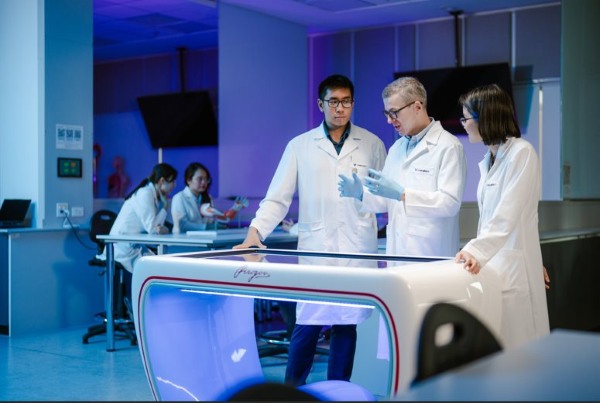
The PhD in Computer Science program at VinUniversity is structured to cultivate world-class research talent

The PhD in Computer Science program at VinUniversity is structured to cultivate world-class research talent

4.3 Advantages of studying at VinUniversity

Studying Computer Science at VinUniversity offers a distinct blend of globally benchmarked academic rigor and localized strategic advantages:

  • Global quality assurance: The curriculum, particularly at the postgraduate level, maintains standards validated by a leading Ivy League institution, ensuring that the VinUniversity degree is internationally competitive.   
  • Entrepreneurial focus: Mandatory general education and dedicated courses in entrepreneurship and leadership cultivate graduates capable of founding or leading technology ventures, rather than simply filling technical roles.   
  • Unparalleled research environment: PhD students benefit from quality faculty and facilities, coupled with a financial and mobility package designed to allow them to focus exclusively on breakthrough discovery without financial constraint.   
  • Strategic alignment: The research focus on areas like Smart Health and Environmental AI ensures that academic output is aligned with solving complex national and global grand challenges, enhancing the relevance and impact of the graduates’ contributions.   
  • International experience: The requirement for mandatory internships or study abroad at the undergraduate level and funded international research exchanges at the PhD level guarantees early exposure to global standards, practices, and networks.

5. Career opportunities and future outlook

Computer science graduates have access to a wide range of career opportunities across industries such as technology, finance, healthcare, education, and manufacturing. For those exploring what to do with a Computer Science degree, common roles include software developer, data scientist, systems analyst, artificial intelligence engineer, and cybersecurity specialist. These positions allow professionals to apply computing knowledge to solve realworld problems in diverse organizational contexts.

The future outlook for computer scientists remains strong, driven by ongoing demand for digital transformation, artificial intelligence, cloud computing, and data-driven decision making. According to labor market data, employment for computer science-related roles is projected to grow faster than the average for most occupations. This positive outlook, combined with competitive salaries and global career mobility, makes computer science a sustainable and attractive long-term career path.

Key compensation metrics include:

  • High value in research roles in the US: Computer and Information Research Scientists command a high median annual wage of $140,910 (May 2024).   
  • Average US compensation: The average annual pay for a general Computer Scientist in the US was approximately $111,343 as of December 2025.   
  • Vietnam average compensation in 2025: The average annual salary for a Computer Scientist in Vietnam is reported to be VND 738,625,688.   
  • Senior compensation in Vietnam: Senior level Computer Scientists with 8+ years of experience in Vietnam earn an average annual salary exceeding VND 925,939,505.   
  • Market trend: The financial value placed on research and specialized roles reinforces the necessity of advanced, graduate level education.
Computer science graduates have access to a wide range of career opportunities across industries

Computer science graduates have access to a wide range of career opportunities across industries

6. Conclusion

VinUniversity offers a curriculum validated by international partners, fostering an essential entrepreneurial mindset

VinUniversity offers a curriculum validated by international partners, fostering an essential entrepreneurial mindset

The Computer Scientist is the key intellectual driver of economic and societal advancement, reflected in strong global job growth and high compensation. Understanding what does a Computer Scientist do highlights why a future-proof career requires an educational pathway grounded in rigorous theoretical mastery, specialized practical expertise, and a globally relevant ethical or entrepreneurial framework.

VinUniversity is strategically positioned to meet this demand. By offering a curriculum validated by international partners, fostering an essential entrepreneurial mindset, and providing unparalleled financial support and global research opportunities especially at the PhD level in high impact fields, VinUniversity is committed to shaping the technology architects of tomorrow.

To start your journey, explore VinUniversity’s official Bachelor’s and PhD in Computer Science programs. Visit the links below to learn more and apply: https://vinuni.edu.vn/


Banner footer