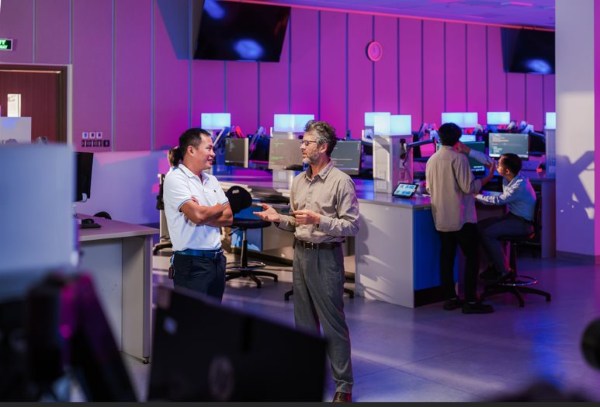
As the world faces growing challenges from climate change, food insecurity, and environmental degradation, the need for sustainable agriculture has never been more urgent. In this context, VinUniversity is a young, innovative, and globally connected university in Vietnam that has emerged as a forward-thinking institution committed to advancing sustainability through education, research, and community engagement.
Through its strong emphasis on interdisciplinary learning, research in environment and agriculture, and partnerships with both local and international organizations, VinUniversity aims to nurture a new generation of leaders capable of shaping a greener and more resilient agricultural future. This article explores what Sustainable Agriculture Master’s programs are, their goals and benefits, and how VinUniversity’s sustainability vision aligns with the global movement toward sustainable farming.
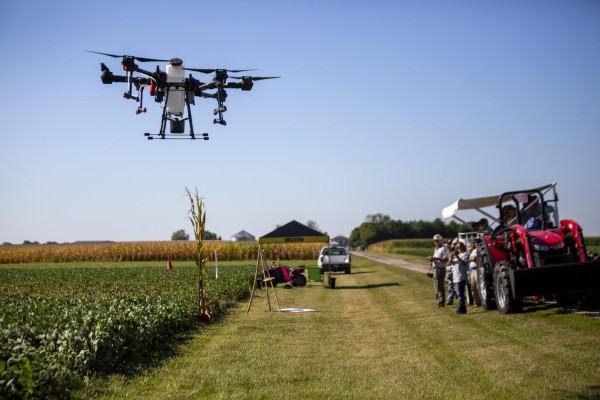
Modern sustainable agriculture integrates technology and ecological principles to maintain productivity while protecting the environment.
1. What Are Sustainable Agriculture Master’s Programs?
1.1. Definition of sustainable agriculture
“Sustainable agriculture” is broadly understood as the practice of producing food, fibre or other agricultural products in ways that meet society’s present needs without compromising the ability of future generations to meet their own needs. It integrates economic viability for farmers, social equity (including rural communities, labour, food access) and environmental stewardship (soil health, biodiversity, resource-use efficiency, climate resilience). In this sense, sustainable agriculture encompasses approaches such as agroecology, organic farming, regenerative agriculture, precision farming with lower environmental footprint, integrated crop-livestock systems, ecosystem services in agricultural landscapes, and supply-chain models that support equitable, localized livelihoods.
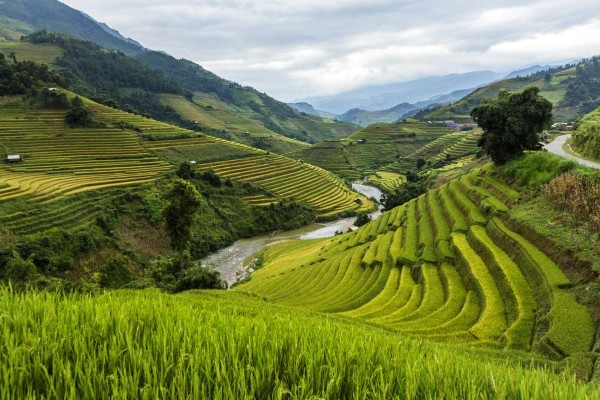
Terraced fields demonstrate sustainable farming methods that prevent soil erosion and protect natural ecosystems.
1.2. The meaning and goals of a master’s degree in this field
A Master’s degree in Sustainable Agriculture (or a related field such as agriculture & sustainability, agro-environmental systems, food systems and sustainability) is typically designed to achieve a number of goals:
- Provide advanced knowledge of the scientific, socio-economic and policy dimensions of sustainable agriculture, e.g., soil science, animal systems, ecosystem services, climate change adaptation, agrifood value chains, rural development, sustainability metrics.
- Equip students with research and analytical skills: enabling them to conduct project-based work, applied research, design and evaluate interventions (e.g., new cropping systems, precision technologies, sustainability assessments) and understand data, modelling, monitoring & evaluation.
- Foster interdisciplinary thinking: sustainable agriculture sits at the interface of biology/agronomy, environmental science, economics, social science (rural livelihoods), technology (agri-tech, digital agriculture) and policy/governance. A master’s programme encourages students to integrate across these domains.
- Prepare graduates for roles that design, manage or evaluate sustainable farming systems, agrifood supply chains, agribusiness innovations, rural development programs, or policy/regulatory environments. In short: to lead or contribute significantly to the transformation of agriculture towards sustainability.
- Promote the mindset of stewardship, systems thinking, innovation and local/global responsibility: graduates are expected not only to apply existing methods but also to innovate, adapt to local contexts and embed sustainability principles.
So in effect, such programs aim to move beyond traditional productivity-only agriculture training and instead embrace broader environmental and social concerns, equipping students to work with new paradigms of agriculture in a changing world (climate change, resource constraints, biodiversity loss, global food security).
1.3. The importance of postgraduate education for green and sustainable farming
Why does a Master’s matter in this field? Several reasons:
- Complexity and interdisciplinarity: As described above, sustainable agriculture involves many dimensions. A postgraduate level gives time and academic depth to address these complexities (rather than undergraduate introductory training).
- Innovation and leadership: Transforming agriculture requires not just practicing known methods but innovating new systems, integrating technology, policy, business models and community engagement. A Master’s gives a platform for innovation, project work and deeper critical reflection.
- Global and local challenges: Agriculture faces major global pressures (climate change, population growth, food security, loss of biodiversity) and localized challenges (smallholder systems, land use, rural livelihoods). Postgraduate training helps professionals think globally and adapt locally.
- Research capacity: A Master’s helps build research capability (especially in countries undergoing transition) so that local challenges can be studied, solutions developed and implemented in context. Universities and institutions increasingly need staff and graduates with that advanced capacity.
- Career breadth: Graduates may move into roles in agribusiness, sustainable farm enterprises, supply-chain management, policy/regulation, consultancy, NGO/development agencies, research institutions, or start-ups in agri-tech or sustainable food systems.
- Credibility and networks: A recognised Master’s opens doors to networks (academic, professional, international) and gives credentials to engage with stakeholders (government, industry, donors) in sustainable agriculture initiatives.
In short, postgraduate education in sustainable agriculture is a key enabler for the shift to greener, more resilient and socially just farming systems, especially in regions such as Southeast Asia where agriculture remains a major economic and development sector.
2. Objectives and Target Learners of the Program
2.1. Educational objectives of Sustainable Agriculture program
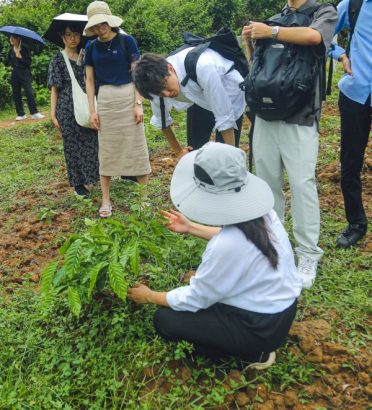
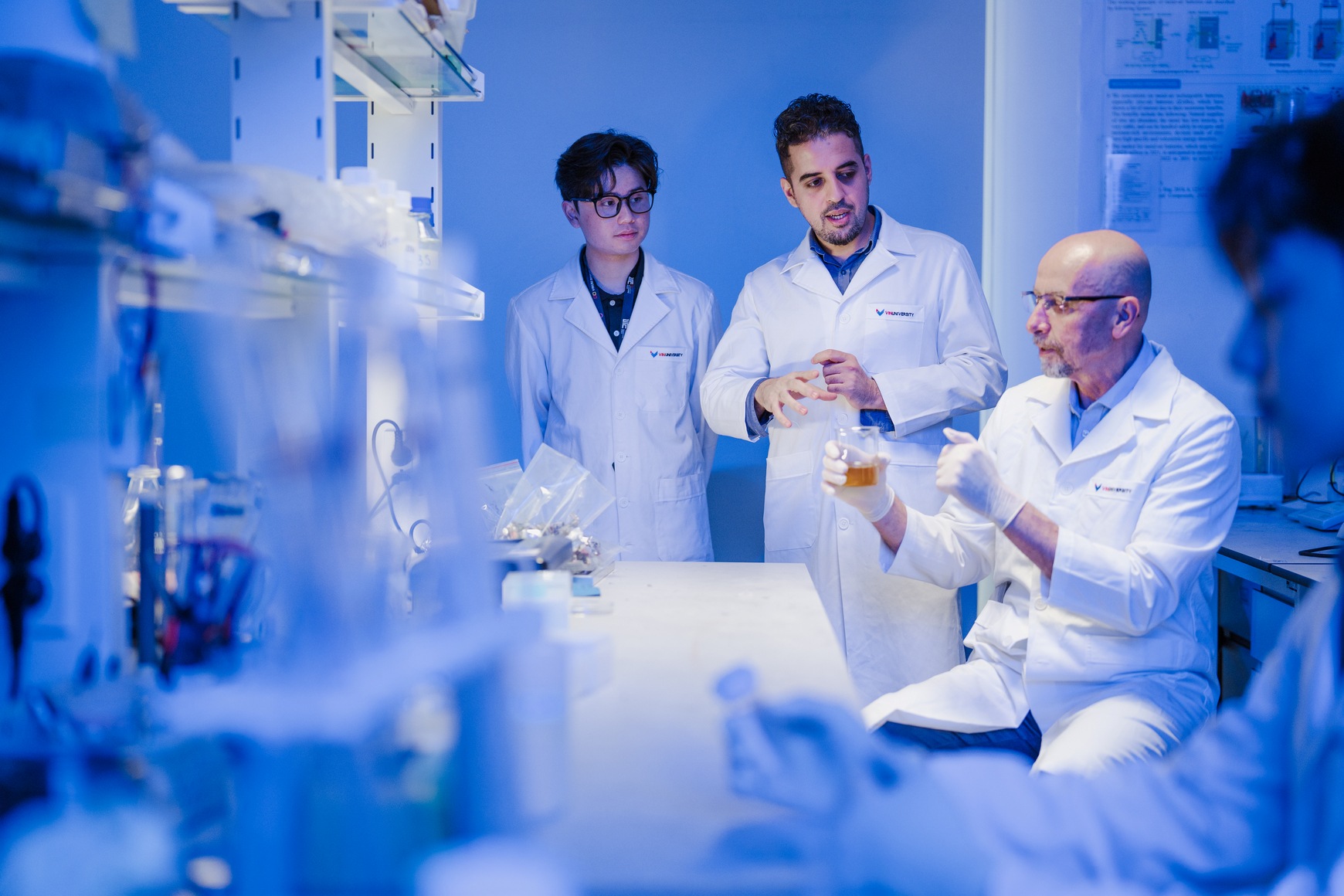
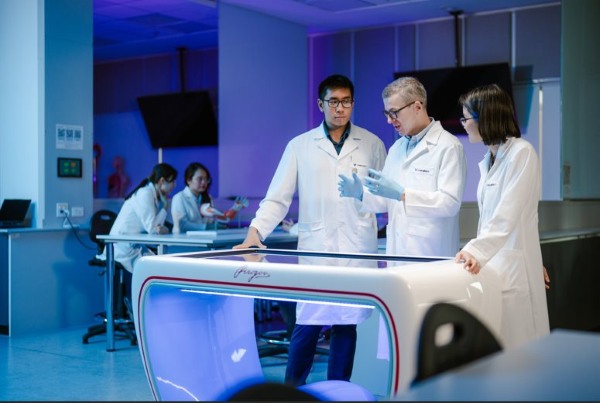
Students and researchers working together on sustainable farming practices to promote environmentally responsible agriculture.
Master’s programs in Sustainable Agriculture around the world are designed with the overarching goal of preparing students to address the complex challenges facing modern food and farming systems. These programs typically aim to:
- Develop interdisciplinary understanding of agriculture, combining biological sciences, environmental management, economics, policy, and technology to foster more sustainable practices.
- Equip learners with research and analytical skills to evaluate and design farming systems that balance productivity with environmental and social responsibility.
- Promote innovation and systems thinking, encouraging students to approach agricultural problems holistically and integrate solutions across supply chains and ecosystems.
- Strengthen leadership and policy capacity, enabling graduates to take on decision-making roles in government, academia, agribusiness, or development organizations.
- Encourage practical and field based learning, connecting classroom theory with real world agricultural practices through internships, research projects, or collaboration with local farming communities.
Through these objectives, such programs strive to create professionals capable of transforming agricultural systems into more resilient, equitable, and climate-conscious models.
2.2. Ideal candidates and admission profiles
Sustainable Agriculture Master’s programs are generally suited for individuals who are passionate about sustainability and wish to make a tangible contribution to the global transition toward greener food systems. Typical candidates may include:
- Graduates in agriculture, environmental science, biology, economics, engineering, or related fields who seek to deepen their expertise in sustainable farming and food systems.
- Working professionals in agribusiness, NGOs, research institutes, or government agencies who wish to strengthen their leadership capacity in sustainability and resource management.
- Innovators and entrepreneurs interested in agri-tech, circular economy solutions, and sustainable value chains.
- Researchers and policy specialists aiming to contribute evidence-based insights to agricultural sustainability, food security, and climate adaptation.
- International learners who seek a global perspective while understanding regional contexts particularly in areas vulnerable to environmental and socio-economic shifts.
Successful candidates typically demonstrate a strong interest in sustainability issues, analytical thinking, and a commitment to applying their knowledge to real world agricultural transformation.
3. Key Benefits of Studying a Sustainable Agriculture Master’s Program
3.1. Advancing academic and research capabilities
A Master’s in Sustainable Agriculture (or closely related specialization) offers several academic and research benefits:
- Deep domain knowledge: Students gain advanced understanding of agro-ecosystems, soil, plant and animal interactions, sustainability metrics, agrifood systems, ecosystem services, and climate adaptation. This moves beyond undergraduate breadth to master-level depth.
- Research training: Many programs include thesis or project components, enabling students to engage in applied research designing experiments, conducting fieldwork, using data analytics, modelling systems, contributing to knowledge in the domain. For example, VinUniversity’s research stream in “Environment, Agriculture & Sustainability” includes cutting-edge applied topics.
- Access to interdisciplinary methods: Students learn from different domains (biology, technology, economics, social sciences) and integrate these into sustainable agriculture solutions. The ability to cross disciplines is increasingly crucial in agricultural innovation.
- Exposure to international standards and networks: In an institution like VinUniversity, which emphasizes global collaboration (e.g., partnerships with top universities) and uses English as the medium, learners gain exposure to global perspectives, transferable skills and networks.
- Innovation mindset: The master’s level enables students to think critically about sustainability challenges, question current paradigms in agriculture and propose innovations or improvements (digital agriculture, circular agriculture, precision farming, agro-ecological restoration).
- Enhanced credentials: A completed Master’s signals to employers, research institutions or stakeholders that the graduate is capable of advanced thinking, analysis and leadership in sustainable agriculture.
3.2. Expanding global mindset and fostering innovation
The global and innovative dimension of a Sustainable Agriculture Master’s is significant:
- Global sustainability challenges: Issues such as climate change, food security, biodiversity loss, land degradation, water scarcity are global in nature; yet responses often need to be localized. A master’s allows students to think globally, then adapt to regional contexts such as Southeast Asia and consider both.
- Exposure to emerging technologies: Modern sustainable agriculture increasingly leverages technologies (IoT, remote sensing, drones, AI, digital twins, blockchain for agri-supply chain transparency). For example, VinUniversity’s research portfolio lists projects such as digital twin platforms for eco-friendly communities, AI forecasting for water quality in aquaculture.
- Entrepreneurship and innovation: Graduates may engage in start-ups or ventures in sustainable agribusiness, agritech, circular food systems, or value-chain innovations. A master’s offers the time and space to ideate, prototype, collaborate across disciplines and build networks.
- International collaboration and exchange: With international faculty, international research partners, professional networks, a well-designed master’s allows for mobility, student exchange, joint projects and global benchmarking. VinUniversity’s partnerships (e.g., with Cornell University and University of Pennsylvania) illustrate its international anchoring.
- Cultivation of sustainability mindset and leadership: Innovation is not only technological but also socio-institutional: redesigning business models, supply chains, policies, communities. A master’s encourages students to question the “business-as-usual” agriculture model and advance new paradigms.
3.3. Career opportunities during and after graduation
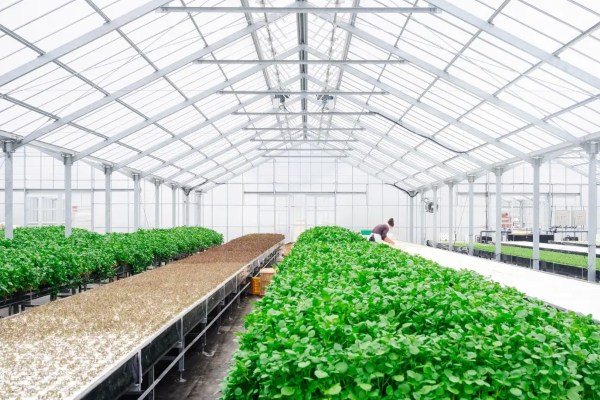
Emerging technologies such as smart sensors and drone monitoring are shaping the future of sustainable and efficient agriculture.
A Master’s in Sustainable Agriculture opens a range of career pathways both during and after graduation:
During the programme
- Internship placements in agribusiness, farming enterprises, food supply chain companies, agri-technology firms, government agencies, NGOs/INGOs, and research institutes.
- Research assistantships or collaborations with university research centres (e.g., VinUniversity’s “Environment, Agriculture & Sustainability” research stream) where students can build their portfolio and network.
- Field projects or consultancy-style engagements: Many master’s programs embed capstone or project modules where students engage with real-world stakeholders (farmers, agribusinesses, rural communities) for solution design, which enhances experience and employability.
After graduation
Graduates may pursue roles such as:
- Sustainability manager/analyst in agribusiness or food industry (ensuring supply chain sustainability, certification, resource efficiency, corporate ESG in agriculture).
- Farm systems specialist or consultant in sustainable/regenerative agriculture enterprises, precision agriculture firms, integrated food systems.
- Researcher or analyst in universities or research institutes focusing on agro-ecosystem resilience, biodiversity in agricultural landscapes, climate-smart agriculture.
- Policy or advisory roles in government agencies (Ministry of Agriculture & Environment, rural development), NGOs/INGOs working on sustainable agriculture, food security, rural livelihoods.
- Entrepreneurship: Founding or working in start-ups in agri-tech, circular food systems, sustainable inputs/farming services, digital agriculture platforms.
- International development roles: Agencies or multilaterals working on food system transformation, climate resilience, sustainable rural livelihoods.
In the Vietnamese or ASEAN context, where agriculture remains a large employment sector and sustainability imperatives are rising (climate change, land degradation, supply-chain integration), this degree can offer special relevance and advantage.
4. VinUniversity’s Vision and Initiatives for Sustainable Development
In this section, we detail how VinUniversity articulates its vision for sustainability, the initiatives it already has, and how its students can benefit tying back to how a Master’s in sustainable agriculture would fit.
4.1. VinUniversity’s commitment to integrating sustainability across education, research, and campus operations
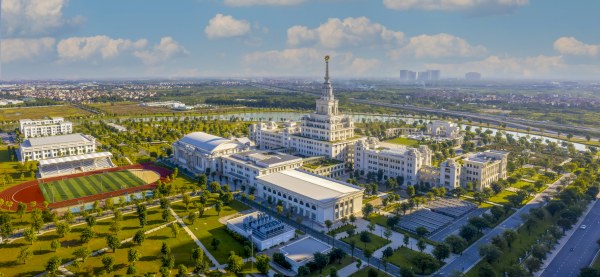
A green and innovative university campus fosters interdisciplinary research and sustainability-driven education.
VinUniversity has clearly defined sustainability as a core strategic pillar. Some highlights:
- On its website: “VinUniversity is committed to becoming a sustainability leader locally and globally through integrated excellence in education, research, governance, operations and community engagement.”
- The “Sustainability Education” page states: “Sustainability is deeply embedded in academic programmes through both dedicated and integrative approaches. Our curriculum equips students with the mindset and knowledge to lead sustainable change across disciplines.”
- Research/operations: The university has a dedicated “Environment, Agriculture & Sustainability” research stream covering carbon stock estimation, aquaculture water-quality forecasting, digital-twin eco-platforms.
- Strategic partnerships: For example, a strategic cooperation with the Ministry of Agriculture & Environment (2025) emphasizes green economy, smart agriculture, and sustainable social development.
- Governance: The Sustainability Committee at VinUniversity includes senior staff and student representatives and oversees the sustainability strategy.
Together, these demonstrate that VinUniversity is not just offering a single course in sustainability but embedding the concept in its mission, campus, research and governance. For a Master’s program in Sustainable Agriculture, this institutional environment offers strong supportive context.
4.2. Sustainability-related opportunities for students

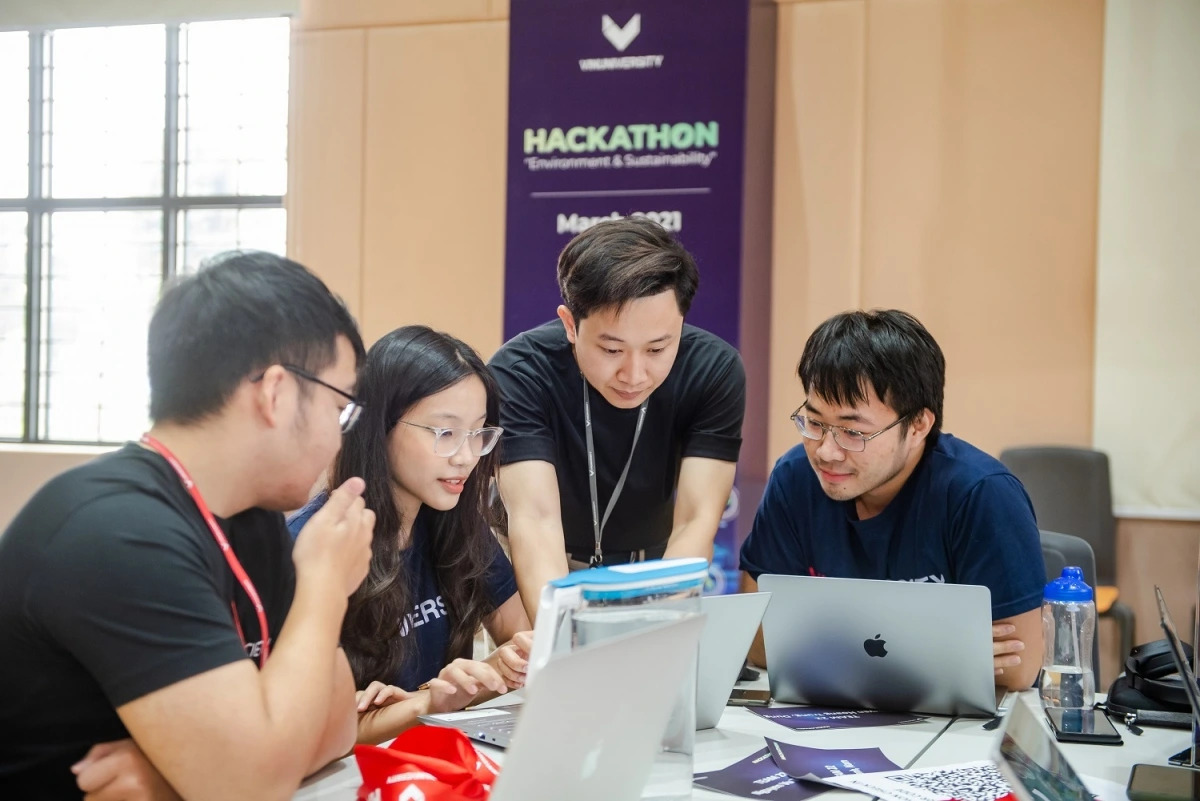
VinUniversity offers a global and sustainable learning environment, empowering students through research, innovation, and real-world engagement.
Students at VinUniversity can benefit from a variety of opportunities:
- Research projects and centres: For instance, the “Environment, Agriculture & Sustainability” research stream allows students to work on applied topics with societal relevance.
- Field-based learning: The “Education” page notes field trips, exchange programs, industry collaboration and competitions as part of sustainability-embedded curricula.
- Interdisciplinary collaboration: Given VinUniversity’s model of global faculty, cross-college collaboration and emphasized interdisciplinary networking (as per the Master’s page).
- International network and partnerships: VinUniversity’s collaborations with top global institutions (e.g., Cornell, Pennsylvania) mean students may access study tours, exchanges and exposure to international best practices.
- Sustainability operations experience: The campus itself is a living lab of sustainability (solar, waste reduction, green landscaping) that students can observe and engage with. This can enrich learning in sustainable agriculture (for example, linking farm landscape, circular systems, campus food systems).
- Policy/industry interface: Given the university’s cooperation with government (Ministry of Agriculture & Environment) and urban sustainability planning (with HIDS for Ho Chi Minh City’s green master plan), students may benefit from real world policy and project engagement.
4.3. Preparing students to become future leaders in sustainability and innovation
VinUniversity’s orientation is clearly toward developing future leaders in sustainability and innovation. Key aspects:
- Vision of developing environmentally conscious future leaders.
- Emphasis on practical, hands-on skills and interdisciplinary networking even in its Master’s programmes.
- The cooperation with the government to apply science & technology in green economy, smart agriculture and social transformation (Ministry of Agriculture & Environment partnership).
- Research initiatives in advanced domains relevant to sustainability such as genomics, digital twins, aquaculture, remote sensing (see their symposium on applied genomics in agriculture SAGA 2025).
- Campus sustainability metrics and operations provide role-modeling of sustainable systems.
For students in a Master’s in sustainable agriculture, this means that the institution provides not just the technical training but also the ecosystem to cultivate leadership: research capability, practical exposure, international networks, and institutional commitment to sustainability. Graduates emerging from such an environment are likely to be well-prepared to lead change in agricultural systems, whether in Vietnam or internationally.
5. Conclusion
5.1. The importance of sustainability education for the future of green agriculture
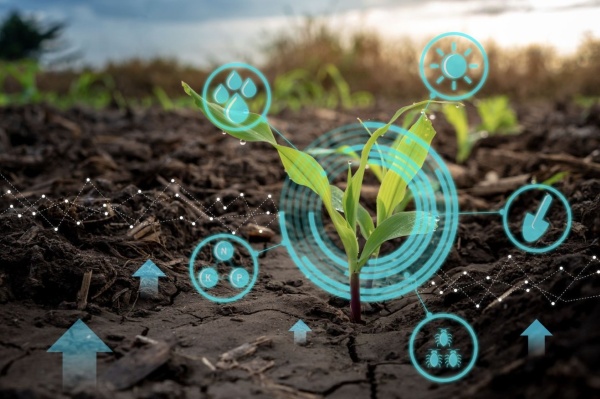
Smart farming for sustainable development.
In a time of mounting environmental and social pressure, agriculture stands at a critical juncture. Traditional models driven solely by yield may no longer be sufficient to meet the twin demands of food security and ecological preservation. Sustainable agriculture integrating productivity, environmental health and social equity is increasingly the imperative.
In this context, education plays a foundational role. Master’s level programs in sustainable agriculture equip the next generation of professionals with the deep knowledge, analytical skills, innovative mindset, and interdisciplinary orientation required to reshape agrifood systems. They offer the academic and practical grounding to design, implement and evaluate sustainable farming systems to leverage technology for precision and resource efficiency to integrate rural livelihoods with environmental stewardship, and to engage in policy, business or entrepreneurship around greener agriculture.
Especially in regions such as Vietnam and Southeast Asia, where agriculture is a major economic sector, the transition toward sustainable agriculture is not optional it is central to climate resilience, ecosystem services, rural development, and global supply-chain integration. Educating professionals in this domain is vital to the broader goals of sustainable development (SDGs), green economy and circular food systems.
5.2. VinUniversity’s pioneering role in promoting sustainable development and responsible leadership
VinUniversity continues to uphold its vision of nurturing young leaders who are not only academically excellent but also socially responsible and environmentally conscious. Through its research initiatives, sustainability focused projects, and interdisciplinary collaboration, the university demonstrates its commitment to sustainable development in Vietnam and beyond.
For those inspired to explore how VinUniversity integrates sustainability into its academic programs, campus life, and global partnerships, we invite you to visit VinUniversity’s official website at https://vinuni.edu.vn/ to learn more about its vision and opportunities for future students and researchers.