

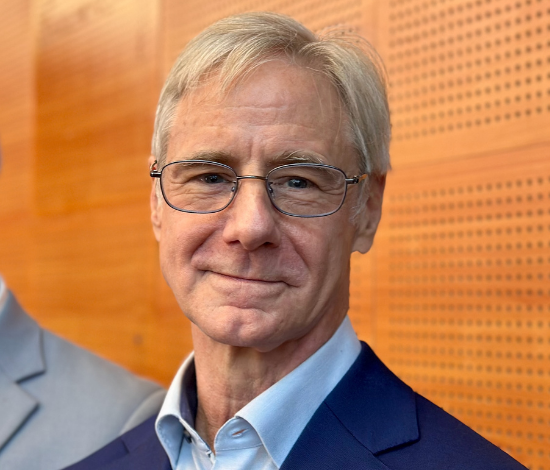
Thomas Parsons, PhD
College of Health Sciences
Professor
Biography
Thomas Parsons’ multidisciplinary career has primarily been based on the study of genetic variation as applied to a wide range of basic topics in evolutionary biology, and in practical applications of social importance. His undergraduate degree was in Physics from the University of Chicago. In 1989, he received a PhD. in Biochemistry from the University of Washington, Seattle, where he discovered and characterized families of genes in plants that are transcriptionally activated in response to insect attack. Also, in his doctoral work, he was the first to demonstrate successful genetic engineering of a hardwood tree.
Based on his love for nature and wilderness, he transitioned from cellular-level studies to organismal-level studies during an extended postdoctoral fellowship at the Smithsonian Institution’s newly founded Laboratory of Molecular Systematics. Working with mentors and colleagues at the Smithsonian Natural History Museum, Parsons was engaged in a range of studies involving phylogenetics, population genetics, and ancient DNA, and for 3 years participated in a series of biological survey expeditions to coastal islands and mainland tropical rainforest on the Caribbean coast of Panama. These “Bocas del Toro” expeditions confirmed the region as one of immense biogeographic interest and rapid evolution, as the location where North and South America land masses have repeatedly met and separated during cycles of Pleistocene glaciation. The thousands of bird tissue samples he collected during those expeditions helped establish the Smithsonian’s biobank repository of tissue samples that have served as the basis of decades of work by numerous scientists who have continued to study this biogeographic system. From those samples, Parsons discovered and characterized a hybrid zone between two species of lek mating birds, showing that sexual selection has driven a male plumage characteristic across the species boundary. This is a rare instance where selection mechanisms for inter-specific gene flow have been elucidated, with recent work in the current genomics era having mapped key genetic regions that are under sexual selection. Parsons remains a Research Associate of the Smithsonian Institution and is actively involved in collaborative work in this unique biogeographic study system, working to understand the effect of climate-driven habitat fragmentation on biodiversity preservation and loss.
Based on his basic research in ancient DNA and mitochondrial DNA (mtDNA) population genetics, Parsons was recruited by the US Armed Forces DNA Identification Laboratory (AFDIL) to help develop a system for DNA identification of skeletal remains from US military personnel missing from the Vietnam war. From 1994 to 2006, Parsons was the principal research scientist at AFDIL during which time he worked in concert with the US FBI and academic labs to define the methods and standards for DNA identification of degraded human remains. These, in continuous development, have been applied widely in criminalistic and missing persons work around the world. Initially focused on maternally inherited mtDNA, Parsons’ work on enhanced ancient DNA extraction helped usher in the application of nuclear DNA permitting unique identification of cases previously considered unsolvable. While at AFDIL, Parsons served on numerous committees, editorial boards, and advisory Boards to advance forensic DNA. For two years after 9/11, Parsons was invited to serve on a National Institute of Justice expert panel that convened regularly in support of methods and data interpretation for DNA identification of the victims of the World Trade Center attack.
In 2006, Thomas Parsons joined the International Commission on Missing Persons (ICMP) as the Director of Science and Technology. During his 15 year tenure in that role, he led a multidisciplinary team of forensic archaeologists, anthropologists, informaticians, and DNA scientists to establish a novel “DNA-led” high throughput recovery and identification system that has resulted in the identification of over 20,000 missing persons worldwide. This system was initially applied to mass grave excavation, anthropological examination, and DNA identification in the former Yugoslavia on many thousands of cases, including identification of ~7000 of the 8000 victims of the 1995 Srebrenica massacre. Subsequently, these methods have been applied to many contexts including large scale disaster victim identification, and ICMP has conducted intensive capacity building programs in dozens of countries, with large scale programs in places like Iraq, Colombia, and Vietnam. Parsons led the provision of forensic evidence and expert witness testimony in 6 major prosecutions at the International Criminal Tribunal for Yugoslavia (ICTY) that saw top political and military officials sentenced to life imprisonment for genocide and other war crimes. In 2017, Parsons was awarded the Biennial Scientific Prize of the International Society of Forensic genetics for his work in technical development and humanitarian applications.
For the last two years, Thomas Parsons has been helping develop large-scale identification of missing Vietnamese soldiers from the American war, where some 300,000 have been recovered but not identified, and another 180,000 have not been recovered. The Vietnam context presents serious challenges with both highly degraded DNA and the requirement for genetic comparison to distant relatives of the missing. The ICMP has developed novel next generation DNA sequencing methods that have been proven effective on Vietnam samples and has partnered with the Vietnam Academy of Science and Technology in a capacity building project to implement those methods, ultimately for widespread use in Vietnam.
Parsons also has ongoing projects relating to biodiversity, conservation genomics, environmental DNA, and wildlife forensics. He is an affiliate of Field Projects International, that has developed field deployable DNA sequencing labs that allow conservation research questions and biodiversity database efforts to be addressed at the point of biodiversity hotspots in direct support of the relevant practitioners. He is also on the advisory board of the Vietnam Center for Technology and Nature Conservation which is engaged in numerous projects where genetic data can be vital for success. At VinUniversity, Parsons aims to develop such genetic resources to empower conservation efforts, enhance international collaboration, and catalog the unique richness and utility of Vietnam’s natural heritage.
• Human genetic variation
• Genomics
• Conservation genetics
• Biodiversity
• Wildlife Forensics
• Environmental DNA
• Molecular Evolution
• Population genetics
• Forensic DNA
• Missing Persons
• Conservation strategies and sustainability
• Bioinformatic
• Genomics
• Conservation
• Forensics
• Practical Applications of DNA Technology
- J. Ruiz-Ramírez, F. Bittner, T.J. Parsons, A. Tillmar, L. Vangeel, G. I, M. Eduardoff, M.A.Peck, A. Ambroa-Conde, A. Mosquera-Miguel, A. Freire-Aradas, M.V. Lareu, C. Phillips, M. de la Puente (2025). Inter-platform evaluation of the MPSplex large-scale tri-allelic SNP panel for forensic identification. FSI:Genetics doi.org/10.1016/fsigen.2025.103233.
- H.C. Lim, K.P. Bennett, N.M. Justyn, M.J. Powers, K.M. Long, S.E. Kingston, W.R. Lindsay, J.B. Pease, M.J. Fuxjager, P.E. Bolton, C.N. Balakrishnan, L.B. Day, T.J. Parsons, J.D. Brawn, G.E. Hill, M.J. Braun. (2024). Sequential introgression of a carotenoid processing gene underlies sexual ornament diversity in a genus of manakins. Science Advances 10, eadn8339.
- C. Cavagnino, G. Runfeldt, M. Sager, R. Estes, A. Tillmar, E. M. Greytak, J. Tyler Thomas, E. Anderson, J. Daniels-Higginbotham, K. Kjelland, K. Sturk-Andreaggi, T. J. Parsons, T. P. McMahon, C. Marshall. (2024). Unearthing who and Y at Harewood Cemetery and inference of George Washington’s Y-chromosomal haplotype. iScience (27) 4 10935.
- J. H. de Vries, D. Kling, A. Vidaki, P. Arp, V. Kalamara, M.M.P.J. Verbiest, D. Piniewska-Rog, T. J. Parsons, A. G. Uitterlinden, M. Kayser. (2022). Impact of SNP microarray analysis of compromised DNA on kinship classification success in the context of investigative genetic genealogy. FSI:Genetics 56:10625.
- Barnert, E., KaT.Sanis, S. H., Mishori, R., Wagner, J. K., Selden, R. F., Madden, D., Berger, D., Erlich, H., Hampton, K., Kleiser, A., la Vaccara, A., Parsons, T. J., Peccerelli, F. A., Piñero, M. H., Stebbins, M. J., Vásquez, P., Warf, C. W., White, T. J., Stover, E., & Veronica Svetaz, M. (2021). Using DNA to reunify separated migrant families. In Science (Vol. 372, Issue 6547, pp. 1154–1156). American Association for the Advancement of Science. https://doi.org/10.1126/science.abh3979
- C. Phillips, J. Amigo, A.O. Tillmar, M. de la Puente, J. Ruiz Ramirez, M.A. Peck, F. Bittner, T.J. Parsons, M.V. Lareu. (2019). A compilation of tri-allelic SNPs from 1000 Genomes data and adoption of the most polymorphic loci into a large-scale human identification panel for massively parallel sequencing. FSI:Genetics 46:102232.
- T.J. Parsons, R. Huel, Z. Bajunović and A. Rizvić. (2019). Large scale DNA identification: The ICMP experience. FSI:Genetics 38:236-244.
- E. Zavala, S. Rajagopal, G Perry, I. Kruzic, Ž. Bašić, T.J. Parsons and M. Holland. (2019). Impact of DNA degradation on massively parallel sequencing-based autosomal STR, iiSNP, and mitochondrial DNA typing systems. FSI:Genetics in press. https://doi.org/10.1007/s00414-019-02110-4.
- Röck A, Irwin J, Dür A, Parsons T, Parson W. (2011). “ SAM: String-based sequence search algorithm for mitochondrial DNA database queries.” FSI:Genetics 5:126-132.
- Jodi A. Irwin, Jessica L. Saunier, Katharine M. Strouss, Kimberly S. Sturk, Toni M. Diegoli, Anita Brandstätter, Walther Parson, Thomas J. Parsons. (2009). “Investigation of point heteroplasmy in the mitochondrial DNA control region: a synthesis of oB.Servations from over 5000 global population samples.” J. Molecular Evol. 68:516-527.
- Jodi A. Irwin, Jessica L. Saunier, Katherine M. Strouss, Toni M. Diegoli, Kimberly A. Sturk, Jennifer E. O’Callaghan, Carla D. Paintner, Carsten Hohoff, Bernd Brinkmann and Thomas J. Parsons. (2008). “Mitochondrial control region sequences from a Vietnamese population sample.” Int. J. Legal Med 122:195-204
- Leslie G. Biesecker, Joan Bailey-Wilson, Jack Ballantyne, Howard Baum, Frederick R. Bieber, Charles Brenner, Bruce Budowle, John M. Butler, George Carmody, P. Michael Conneally, Barry Duceman, Arthur Eisenberg, Lisa Forman, Kenneth K. Kidd, Benoît LeClair, Steven Niezgoda, Thomas J. Parsons, Elizabeth Pugh, Robert Shaler, Stephen T. Sherry, Amanda Sozer, Anne Walsh. (2005). “DNA Identification of Victims from the September 11, 2001 World Trade Center Attack: Scientific Challenges and Policy Implications”” Science 310:1122-1123.
- Parsons, T. J. and Irwin, J.A. (2000). Questioning Evidence for Recombination in Human Mitochondrial DNA. Science. 288: 1931.
- Parsons, T. J., Muniec, D. M., Sullivan, K., Woodyatt, N., Alliston-Greiner, R., Wilson, M., Berry, D. L., Holland, K. A., Weedn, V. W., Gill, P., & Holland, M. M. (1997). A high oB.Served suB.Stitution rate in the human mitochondrial DNA control region. Nature Genetics 15: 363-368.
- Ivanov, P. L., Wadhams, M. J., Roby, R. K., Holland, M. M., Weedn, V. W., and T. J. Parsons (1996). Mitochondrial DNA sequence heteroplasmy in the Grand Duke of Russia Georgji Romanov establishes the authenticity of the remains of T.Sar Nicholas II. Nature Genetics 12: 417-420.
- Parsons, T. J., Olson S. L., and M. J. Braun (1994). Hybrid zones and sexual selection. Science 265: 122-123.
- Parsons, T. J., Olson S. L., and M. J. Braun (1993). Unidirectional spread of secondary sexual plumage traiT.S across an avian hybrid zone. Science 260: 1643-1646.
- Parsons, T. J., Bradshaw H.D. and Gordon, M.P. (1989). Systemic Accumulation of Specific mRNAs in Response to Wounding in Poplar Trees. Proceedings of the National Academy of Sciences USA 86: 7895-7899.
- Parsons, T. J., Sinkar, V.P., Stettler, R.F., Nester, E.W. and Gordon, M.P. (1986). Transformation of Poplar by Agrobacterium tumefaciens. Bio/Technology 4: 533-536.
• 1989: Ph.D. Biochemistry, University of Washington
• 1983: BA Physics, University of Chicago
• 2015: Awarded the Biennial Scientific Prize of the International Society of Forensic Genetics “For his work related to human mitochondrial DNA analysis and the identification of victims of war and disaster.” http://www.isfg.org/About/Scientific+Prize
• 2006: International Society of Forensic Genetics: Special Award for “Humanitarian Applications of Science.”
• 2005: My doctoral student Michael Coble received the 2005 Ralph Hill Brinton Award for work performed under my direction. This is the Armed Forces Institute of Pathology’s annual award for the most significant work published by a young investigator.
• 2002: One of the 10 finalists for the Frank Brown Berry Prize in U.S. Federal Healthcare.
