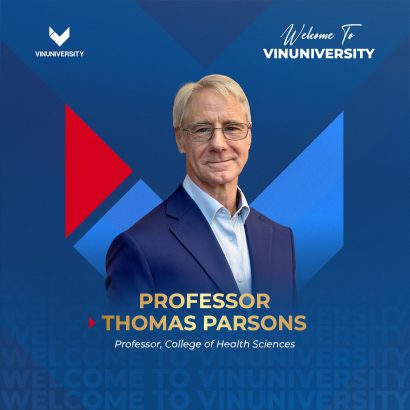
Humans of VinUniversity | Professor Thomas Parsons: When DNA tells the story of life, justice, and hope
January 6, 2026


Guided by a lifelong reverence for life on Earth, Professor Thomas Parsons has spent decades listening to the stories written in DNA – from the evolution of species, to the identities of those lost to history, and now, to the preservation of Vietnam’s natural heritage. Today, he joins VinUniversity as a Professor in the College of Health Sciences, bringing with him a rare journey where science consistently serves humanity.
A career spanning discovery, justice, and global impact
Trained across disciplines, Professor Parsons began his academic path at the University of Chicago, before earning a PhD in Biochemistry from the University of Washington. Early in his career, he made pioneering contributions to genetics, including the first successful genetic engineering of a hardwood tree. His scientific curiosity later took him from laboratories into the wild, as a long-term Research Associate at the Smithsonian Institution, where his work in evolutionary biology, population genetics, and ancient DNA helped shape global understanding of biodiversity and evolution.
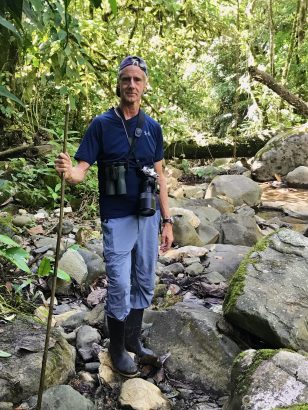
Surveying bird species in the rainforests of Panama as a Research Associate of the Smithsonian Institution.
Beyond discovery, Professor Parsons’ work has carried profound human impact. As a leading scientist at the US Armed Forces DNA Identification Laboratory and later as Director of Science and Technology at the International Commission on Missing Persons, he helped develop DNA technologies that have enabled the identification of more than 20,000 missing persons worldwide, including victims of war crimes and mass disasters. His work has supported families searching for closure and contributed directly to international justice – a legacy recognized by the International Society of Forensic Genetics’ Biennial Scientific Prize.
A growing connection with Vietnam
Over the past two years, Vietnam has become a deeply personal chapter in Professor Parsons’ journey. He has been actively involved in projects to help identify missing Vietnamese soldiers from the American War, addressing some of the most challenging cases of degraded DNA. Through collaboration with Vietnamese scientific institutions, he has also witnessed firsthand the country’s extraordinary – yet under-studied – biodiversity, as well as the urgent threats it faces.
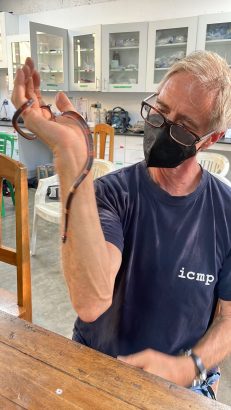
Biodiversity cataloging in an off-grid DNA laboratory in the Peruvian Amazon (Los Amigos Biological Station, Field Projects International).
“Many species and habitats are under imminent threat of loss due to development, exploitation, and climate change. On the other hand, Vietnam still has some of the last great wild places of Southeast Asia and the last refuges of many iconic, critically endangered species.” Professor Parsons shares.
Why VinUniversity – and what he aims to build
It is this intersection of science, humanity, and sustainability that drew Professor Parsons to VinUniversity: “I am strongly drawn to VinUniversity’s vision for scientific and digital innovation to address key societal problems for a future that is healthful, sustainable, and prosperous.” At VinUniversity, he aims to apply genomics and bioinformatics to:
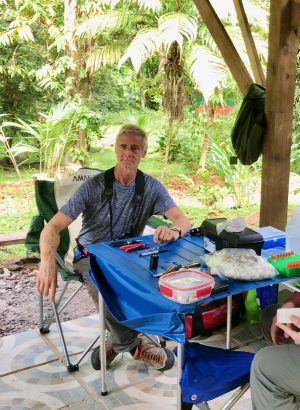
Avian blood sample field collection station, Bocas del Toro, Panama.
“I have been greatly attracted to the mindset I have experienced in the country and especially at VinUniversity – to embrace goals with rigor, youthful enthusiasm, and energetic determination,” Professor Parsons on his decision to join VinUniversity.
A scientist who deciphers life at its most fundamental level, a humanitarian committed to justice, and a scholar deeply connected to Vietnam’s future – welcome Professor Thomas Parsons to VinUniversity. Together, we continue building a future where science serves life, society, and the generations to come.