Entering a doctoral program is a commitment to the unknown. Unlike a Bachelor’s or Master’s degree, where timelines are rigid and syllabi are fixed, a PhD is defined by original contribution, not just attendance. Consequently, the most common question aspiring researchers ask is: “How long is a PhD program?”
The answer is rarely a simple number. While brochures may state “3 to 5 years,” the reality is shaped by your field of study, your starting point (Bachelor’s vs. Master’s), and the research environment you choose.
This guide breaks down the actual timeline of a doctoral degree, the variables that accelerate or delay graduation, and how the rigorous ecosystem at VinUniversity with a curriculum validated by Cornell University is designed to support a steady and efficient progression.
1. How long is a PhD program in practice
To set realistic expectations, we must first distinguish between the “theoretical” duration listed on university websites and the “practical” duration experienced by students.
1.1. Why asking about time is often the first question students have
Asking “how long is a PhD program” is not just about impatience; it is a calculation of opportunity cost. For high-performing students, spending an extra year in academia means one less year of earning an industry salary or building a startup.
- Financial Sustainability: A PhD is a long period of living on a stipend. Students need to know if they can sustain their lifestyle for 4, 5, or 6 years. Knowing the timeline is essential for long-term financial planning.
- Career Trajectory: In fast-moving fields like Computer Science or AI, the technology landscape changes every six months. Students worry that if a program takes too long, their research topic might become obsolete by the time they graduate.
- Life Milestones: Doctoral candidates are often in their mid-20s to early 30s. The duration of the program directly impacts personal milestones such as buying a house, starting a family, or relocating.

For high-performing students, spending an extra year in academia means one less year of earning an industry salary or building a startup
Understanding the “why” behind the question highlights the importance of choosing a program that values efficiency. However, universities themselves have different ways of measuring this time.
1.2. How universities define the length of a doctoral program
There is no global standard for PhD duration. The definition often depends on the educational system (US vs. Europe/Asia) and the entry requirements.
- The US Model (5-7 Years): In the United States, PhD programs are typically longer because they often accept students directly from a bachelor’s degree. The first 2 years are spent on coursework equivalent to a master’s, followed by 3-5 years of research.
- The European/UK Model (3-4 Years): In Europe, students are generally required to hold a master’s degree before applying. Because they enter with advanced knowledge, the PhD focuses almost exclusively on the dissertation, allowing for a shorter timeline.
- The “All-But-Dissertation” (ABD) Status: Universities often define “residency” (time spent taking classes) separately from “candidacy” (time spent writing). Many students finish their residency in 3 years but remain in ABD status for several more years while completing their thesis.
Regardless of the official handbook, the finish line is not a date on a calendar. It is a successful defense. This leads us to the reasons why the timeline is so fluid.
2. Why PhD programs do not have a fixed duration
A PhD ends when you have proven something new. Because scientific discovery is unpredictable, the timeline must be flexible enough to accommodate failures, pivots, and breakthroughs.
2.1. Academic background and preparation before doctoral study
Your starting block determines your finish line. The depth of your prior training is the single biggest predictor of how quickly you can transition from “student” to “researcher.”
- Bachelor’s vs. Master’s Entry: Students entering with a master’s degree often shave 1-2 years off the timeline because they have already completed foundational coursework. However, high-performing bachelor’s graduates in direct-entry programs can sometimes catch up quickly if their undergraduate training was rigorous.
- Technical Proficiency: In fields like Computer Science, knowing how to code is different from knowing how to design an experiment. Students who enter with strong research methodology skills spend less time fixing errors and more time generating data.
- Language and Writing Skills: A significant portion of the PhD is writing. Students who struggle with academic English or technical writing often face delays during the dissertation drafting phase.
Preparation is key but the nature of the research topic itself introduces the most variability.

Academic background and preparation before doctoral study
2.2. Research complexity and how questions evolve over time
Science rarely moves in a straight line. You might spend six months on a hypothesis only to find it is incorrect. This “productive failure” is part of the process but adds time to the clock.
- The Scope of the Problem: Ambitious projects (e.g., “Curing Cancer”) take longer than focused projects (e.g., “Analyzing a specific protein pathway”). Defining a manageable scope early on is critical for graduating on time.
- Data Collection Challenges: For experimental research, you are at the mercy of your data. If a server crashes, a biological culture dies, or a dataset proves biased, you may have to restart months of work.
- Evolution of the Field: In AI, a model considered “state-of-the-art” when you start in Year 1 might be outdated by Year 3. PhD students must constantly adapt their work to remain relevant, which can extend timelines.
Navigating these research challenges is the core of the degree but students must also balance administrative hurdles.
2.3. Coursework, examinations, and publication expectations
A PhD is not just one big paper. It is a series of hurdles, each designed to test a different facet of your scholarly ability.
- Qualifying Exams (Quals): These are comprehensive tests taken in Year 1 or 2. Failing these exams often requires a retake, delaying progress by a semester or more.
- Teaching Requirements: Many universities require PhD students to work as Teaching Assistants (TAs). While valuable, a heavy teaching load takes hours away from research, potentially extending the program’s duration.
- Publication Mandates: Many top-tier programs require students to publish 2-3 papers in reputable journals (like IEEE or ACM venues) before they are allowed to defend. Waiting for peer review can add months of “dead time” to the schedule.
Understanding these variables helps but visualizing the journey phase-by-phase makes the timeline more concrete.

A PhD is a series of hurdles, each designed to test a different facet of your scholarly ability
3. Understanding the PhD journey over time
While every journey is unique, a successful PhD typically follows a three-act structure. Recognizing where you are in this arc helps maintain momentum.
3.1. Early-stage training and development of research direction
The first phase (Years 1-2) is about building the toolbox. It is characterized by high structure and heavy information intake.
- Coursework: Students take advanced seminars to close knowledge gaps. This is where you learn the theoretical limits of your field.
- Literature Review: You spend months reading hundreds of papers to identify a “gap” in human knowledge. This defines your research question.
- The Proposal Defense: This phase concludes when you present your research plan to a committee. Once approved, you officially become a “PhD Candidate.”
With the proposal approved and the foundational knowledge secured, the safety net of coursework is removed. The student now enters the most challenging and solitary phase of the program, where the timeline is dictated entirely by the progress of their experiments.
3.2. Transition into independent and original research
The middle phase (Years 2-4) is the “messy middle.” It is the longest and most unpredictable period, often determining the final answer to “how long is a PhD program” for you personally.
- Experimentation and Iteration: You build models, run simulations, or conduct surveys. This is a loop of trial and error.
- Data Analysis: You make sense of the raw numbers. This is where the “Eureka!” moments and crushing disappointments happen.
- Conference Presentations: You start sharing preliminary results with the scientific community to get feedback and establish your reputation.
Once the data is solidified and the story becomes clear, the chaotic phase of experimentation ends. The focus then shifts to the final, grueling stretch of synthesis, where years of disparate findings must be woven into a single, coherent academic contribution.
Transition into independent and original research
3.3. Completing the dissertation and defending the research
The final phase (Year 4-5+) is about synthesis. It is a test of endurance and writing discipline.
- Writing the Dissertation: You compile years of work into a single coherent document, often 100-200 pages long. This requires immense focus.
- The Defense (Viva Voce): You stand before a panel of experts and defend your work. It is the final examination.
- Revisions: After the defense, the committee usually requests changes. Depending on the severity, this can take from a few weeks to several months.
Navigating this complex timeline is easier when you have a strong foundation. This is where the educational ecosystem matters.
4. Doctoral study preparation and opportunities at VinUniversity
At VinUniversity, the timeline is optimized by seamless integration between undergraduate preparation and doctoral research, supported by global standards.
4.1. Undergraduate preparation through the Bachelor of Science in Computer Science
The most effective way to shorten a PhD is to start preparing during your bachelor’s. The Bachelor of Science in Computer Science program at VinUniversity is designed to do exactly that.
- Curriculum Validated by Cornell University: The program operates under a framework validated by Cornell University. This ensures that the curriculum provides deep exposure to advanced concepts in algorithms and systems usually reserved for higher-level research. Such a rigorous foundation prepares students to transition seamlessly into doctoral studies by closing the knowledge gap between undergraduate and advanced graduate research.
- Industry Immersion: Students do not study in a bubble. The curriculum creates opportunities for students to engage in real-world R&D environments, such as analyzing medical imaging data or optimizing autonomous driving algorithms. This integration provides the essential practical context that complements theoretical learning.
- Research-Centric Mindset: By treating undergraduates as junior researchers, the university fosters the critical thinking skills required for doctoral success long before graduation.
For those who wish to continue their journey, the ecosystem offers a world-class doctoral pathway.
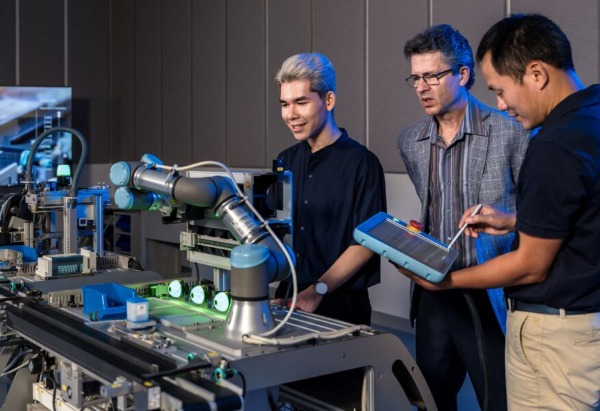
The most effective way to shorten a PhD is to start preparing during your Bachelor’s
4.2. Research mentoring and academic development at VinUniversity
A PhD student is only as good as their mentor. VinUniversity prioritizes a high-touch mentorship model that prevents students from getting lost in the “messy middle.”
- World-Class Faculty: Students are guided by professors who are active researchers in top global networks. Their experience helps students avoid common pitfalls that extend timelines.
- Active Learning Environment: The culture encourages constant feedback and collaboration, ensuring that students are always moving forward rather than stagnating in isolation.
- Global Standards: The milestones for progression are aligned with international norms, ensuring that students remain competitive on a global scale.
This support structure culminates in a specific doctoral program designed for efficiency and impact.
4.3. The PhD in Computer Science at VinUniversity and its expected timeline
The Computer Science PhD at VinUniversity is rigorous yet structured to support timely completion.
- Timeline: The program is typically designed to be completed in 1 to 2 years for students entering with a strong background, though this can vary based on research progress.
- Global Research Network: The program is built within a network of strategic international collaborations, providing PhD candidates with a scholarly environment that aligns with global standards. Students benefit from an ecosystem where they can interact with distinguished faculty and researchers from world-class institutions, fostering a high-level research culture and ensuring international quality benchmarks.
- Financial Freedom: To allow students to focus 100% on research (speeding up graduation), VinUniversity offers comprehensive tuition waivers and competitive monthly stipends. There is also support for overseas research exchanges, allowing candidates to work at partner institutions abroad.
Having the right resources and funding is crucial but they are only enablers. Ultimately, the speed of progression often comes down to the student’s personal habits, strategy, and ability to manage the unstructured nature of doctoral work.

The Computer Science PhD at VinUniversity is rigorous yet structured to support timely completion
5. What helps some PhD students’ progress more efficiently
Why do some students finish in 3 years while others take 7? Often, it comes down to strategy and soft skills.
5.1. Clarity of research focus and quality of supervision
Speed comes from direction. Students who switch topics frequently lose years.
- Early Definition: The most efficient students define their specific research questions within the first year.
- Proactive Supervision: A supervisor who meets weekly and provides rapid feedback is an accelerator. The co-advising model at VinUniversity ensures that if one mentor is busy, another is available.
- Alignment: Ensuring your research interest aligns perfectly with your supervisor’s expertise prevents friction and misunderstandings.
Once the direction is set, the challenge shifts to execution. Focus must be sustained by rigorous discipline, as the lack of daily deadlines in a PhD program can easily lead to procrastination and drift if not managed effectively.
5.2. Time management, resilience, and academic maturity
A PhD is unstructured time. Managing it is a skill in itself.
- Treating it like a Job: Successful students work steady hours. They don’t wait for inspiration; they write code or read papers every day.
- Resilience: When an experiment fails, efficient students mourn for an hour and then plan the next one. They do not let setbacks paralyze them for weeks.
- Knowing When to Stop: Perfectionism is the enemy of completion. Academic maturity is knowing when a result is “good enough” to publish and move on.
Personal discipline is the internal engine but the external environment is the road you travel on. The environment you sit in every day whether it is collaborative and well-resourced or isolated and bureaucratic will ultimately dictate your pace and your success.
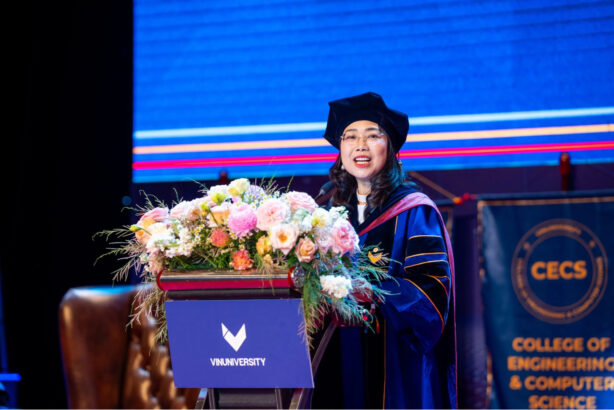
A PhD is unstructured time. Managing it is a skill in itself
5.3. The role of institutional research environment
You cannot run a marathon in a swamp. A supportive environment removes friction.
- Access to Resources: Having access to high-performance computing clusters (like those needed for AI research) without waiting in a queue speeds up experiments.
- Peer Support: Being surrounded by other motivated PhD students creates a culture of accountability and shared knowledge.
- Administrative Support: An efficient university administration handles the paperwork, allowing you to focus solely on science.
Before embarking on this demanding journey, it is essential to look inward. One must set the right mental stage and understand the magnitude of the commitment required to see a doctoral degree through completion.
6. Setting realistic expectations before starting a PhD
The answer to “how long is a PhD program” is ultimately: “As long as it takes you to make a discovery.”
6.1. Understanding the long-term commitment of doctoral research
This is not a degree to “wait out” a bad job market. It requires deep internal motivation.
- Patience: You must be comfortable with delayed gratification. The rewards of a PhD are massive but they come at the end of a long road.
- Passion: You will be studying one tiny slice of the world for years. You must love it enough to obsess over it.
Passion provides the fuel, but the institution provides the vehicle. The final and most critical step is choosing the right partner for this journey, one that offers the structure, network, and resources to ensure you reach the finish line.
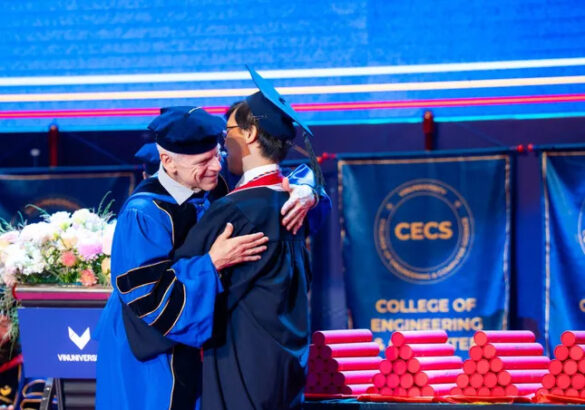
This is not a degree to “wait out” a bad job market. It requires deep internal motivation
6.2. Choosing an academic environment that supports steady progress
Your choice of university is the biggest variable you can control.
- Look for Structure: Choose programs with clear milestones and funded support.
- Look for Network: Choose programs that connect you with global experts, like the co-advising network at VinUniversity.
- Look for Impact: Choose a place where your research will matter.
It is a journey of 3 to 5 years that defines the next 30 years of how long is a PhD program your career. It is an investment of time that yields the highest return: the title of expert. If you are ready to commit to a pathway defined by rigorous standards and global mentorship, explore the PhD in Computer Science at VinUniversity: https://vinuni.edu.vn/