How long is a PhD dissertation? What really matters
February 19, 2026


How long is a PhD dissertation is one of the most common questions prospective doctoral students ask when considering advanced research pathways. At institutions such as VinUniversity, where research quality and academic rigor are emphasized from undergraduate through doctoral levels, this question often reflects deeper concerns about expectations, standards, and academic readiness. Rather than focusing solely on word counts, understanding what truly defines a successful dissertation is essential, especially in research-intensive fields like Computer Science.
Across most universities worldwide, a PhD dissertation typically ranges between 70,000 and 100,000 words. However, these numbers vary significantly by discipline, institution, and dissertation format.
For many doctoral candidates, the fixation on length is a clinical symptom of how long is the average PhD dissertation-related anxiety, which stems from research pressure and economic uncertainty. This emotional burden is intensified by the isolation of the writing process and a high-stakes publish or perish academic culture.
Key factors driving anxiety include:
As a result, anxiety about length often reflects psychological pressure rather than an actual academic requirement.

Fixating on dissertation length is often a psychological symptom of the stress many doctoral candidates face
Doctoral students often treat dissertation length as proof of academic rigor. In practice, word count more often reflects uncertainty about research contribution than actual scholarly quality.
Key reasons include:
When expectations are unclear, length becomes a stand-in for confidence. Strong dissertations succeed by communicating contribution clearly, not by maximizing word count.
The fundamental purpose of a PhD dissertation is the acquisition and dissemination of new knowledge. The process serves as an apprenticeship in the profession of research, training the candidate to communicate discoveries clearly and convincingly to the scientific community.
When asking how long is a PhD dissertation, many assume that length determines academic value. In practice, doctoral research is defined by the originality and substance of its contribution, not by the number of pages it contains.
Illustrative examples of concise yet influential dissertations:
These cases show that clarity of logic and originality can outweigh textual volume.
These examples highlight that academic impact is not tied to length. For modern discussions around how long is a dissertation for PhD study, the widely accepted principle is that a dissertation should be as long as necessary, and no longer, provided it clearly demonstrates original contribution and scholarly competence.

The fundamental purpose of a PhD dissertation is the acquisition and dissemination of new knowledge
To secure a clean pass, treat your dissertation as a technical report rather than a book. Examiners typically read in blocks of 2 – 3 chapters, relying on roadmaps and summaries to track your argument. While students often ask how long is a PhD dissertation, focusing on clarity and logical flow is more critical for these segmented reading sessions.
Practical habit analysis indicates that examiners frequently engage in pre-reading to gain an initial impression of the candidate’s mastery:
Examiners favor coherence and a convincing approach that actively engages with the literature. They are easily irritated by sloppy formatting, typos, and poor grammar, which they view as indicators of inadequate supervision or rushed conceptualization.
In Computer Science and other technical fields, PhD dissertations often follow an article-based format rather than a single monograph. This reflects years of experimental and publication-driven research, and helps explain why how long is the average PhD dissertation varies widely by discipline.
In Computer Science research, the primary output is often the innovation itself such as code, algorithms, mathematical models, or experimental systems rather than extended narrative explanation.
Common research types and their focus in Computer Science:
These approaches rely heavily on data, formulas, and structured analysis rather than extensive descriptive prose.
In Computer Science, dissertation value is driven by insight and experimentation rather than length. As a result, questions about “how long is a PhD dissertation” are best answered by focusing on originality and clarity, not page count.

In Computer Science, PhD dissertations often follow an article-based format rather than a single monograph
The output of a computer science PhD is increasingly defined by its publication record. Many top-tier universities, such as Cambridge or Aalto, now favor the article-based model where a candidate must include at least three peer-reviewed articles of publishable quality.
Institutional constraints reflect this shift toward conciseness:
The cumulative model offers a clear advantage by enabling candidates to enter the job market with published work rather than a single dissertation, shifting the focus of how long is a PhD dissertation from length to real-world impact in today’s fast-paced tech landscape.
Early research training strongly shapes doctoral success, with undergraduate research linked to stronger academic outcomes and earlier clarity on how long is a dissertation for PhD, often beginning with a student’s first project or lab experience.
Undergraduate research exposure acts as an accelerator, allowing students to build their profile and master the technical tools of their field early on. Through immersion in mentored projects, students develop essential transferable skills :
These habits transform challenging, energy-draining tasks into automatic, effortless actions, providing a research superpower that sustains the student through the grueling dissertation phase regardless of how long is a PhD dissertation.

Early research exposure fast-tracks students’ technical mastery and profile building
The ability to formulate clear, researchable questions plays a key role in shaping the quality and focus of a PhD dissertation. When developed early, this skill helps students conduct more efficient and targeted research.
Early training helps students:
Research on inquiry-based learning links early question formulation to stronger doctoral performance. Students who learn to ask precise research questions early tend to produce dissertations that are more focused, coherent, and impactful.
How long is a PhD dissertation at an elite institution like VinUniversity is a question defined by international standards and a commitment to societal impact. Both the Bachelor of Science and the Ph.D. in Computer Science programs are designed to cultivate future leaders who can tackle complex global challenges through groundbreaking research and technical leadership.
Designed to combine rigorous academic training with immersive practical experience, the Bachelor of Science in Computer Science at VinUniversity equips students with the technical depth and real-world competencies needed to succeed in the digital era.
Academic framework
Experiential and industry-based learning
Integrated technical and leadership development
Applied projects and capstone experience
Customization and specialization options
This structured yet flexible program ensures that graduates develop deep analytical and computational expertise, complemented by a practical, application-driven mindset essential for leadership roles in technology-focused industries.
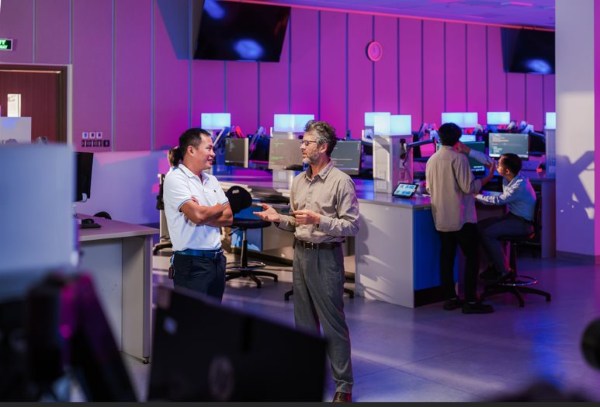
VinUniversity PhD dissertations prioritize international standards and societal impact over length
The PhD in Computer Science program at VinUniversity is strategically designed to cultivate independent, innovative researchers capable of generating globally competitive and impactful scientific work. The program emphasizes producing experts who can tackle complex challenges and pioneer breakthroughs in technology, preparing graduates to lead research teams and contribute original knowledge at national and international levels.
The VinUniversity PhD in Computer Science offers a comprehensive pathway to research excellence:
By combining rigorous, internationally validated academic training with exceptional financial and international opportunities, the VinUniversity PhD in Computer Science program is a premier choice for aspiring scholars dedicated to becoming global leaders and innovators in the field.
The inquiry into how long is a PhD dissertation ultimately reveals that the most successful doctoral journeys are those that prioritize the acquisition of new knowledge over the fulfillment of arbitrary word counts. In the field of Computer Science, where value is measured through algorithmic elegance and experimental efficiency, a concise and focused work is far superior to a bloated narrative. Success is built upon a foundation of early research habits, multidisciplinary collaboration, and a resilient mindset that views uncertainty as a gateway to discovery.
As institutions like VinUniversity continue to pioneer high-tech research pathways, the next generation of scholars has an unprecedented opportunity to shape the future of technology and society. Aspiring researchers are invited to join this community of excellence and transform their technical curiosity into global impact.
To learn more about the elite educational pathways and research opportunities available at VinUniversity, please explore the official pages: https://vinuni.edu.vn/

VinUniversity’s advanced research empowers the next generation to redefine technology and society