In the current digital economy, data literacy is becoming as essential as reading and writing. Fortunately, the barrier to entry has never been lower. For those curious about the field but not ready to commit to a full degree, free Data Science courses offer a low-risk, high-reward starting point.
This guide explores how these courses work, what they cover, and how they serve as a stepping stone toward advanced academic degrees at institutions like VinUniversity.
1. What Are Free Data Science Courses?
Before diving into the material, it is important to understand the format and target audience of these open learning resources.
1.1. How free Data Science courses are structured
Most free Data Science courses are delivered via MOOC (Massive Open Online Course) platforms. They are designed for flexibility and typically include:
- Online, self-paced modules: allowing you to learn whenever your schedule permits.
- Video-based lectures: taught by university professors or industry experts from companies like Google or IBM.
- Hands-on labs: integrated coding environments (like Jupyter Notebooks) where you can practice Python or R without installing complex software.
By eliminating the need for expensive hardware and rigid class schedules, this format democratizes access to elite education. It allows you to focus entirely on mastering the concepts rather than troubleshooting software installation. But with such broad accessibility, is this learning style right for your specific career goals? Let’s identify the distinct groups who benefit most from these open resources.
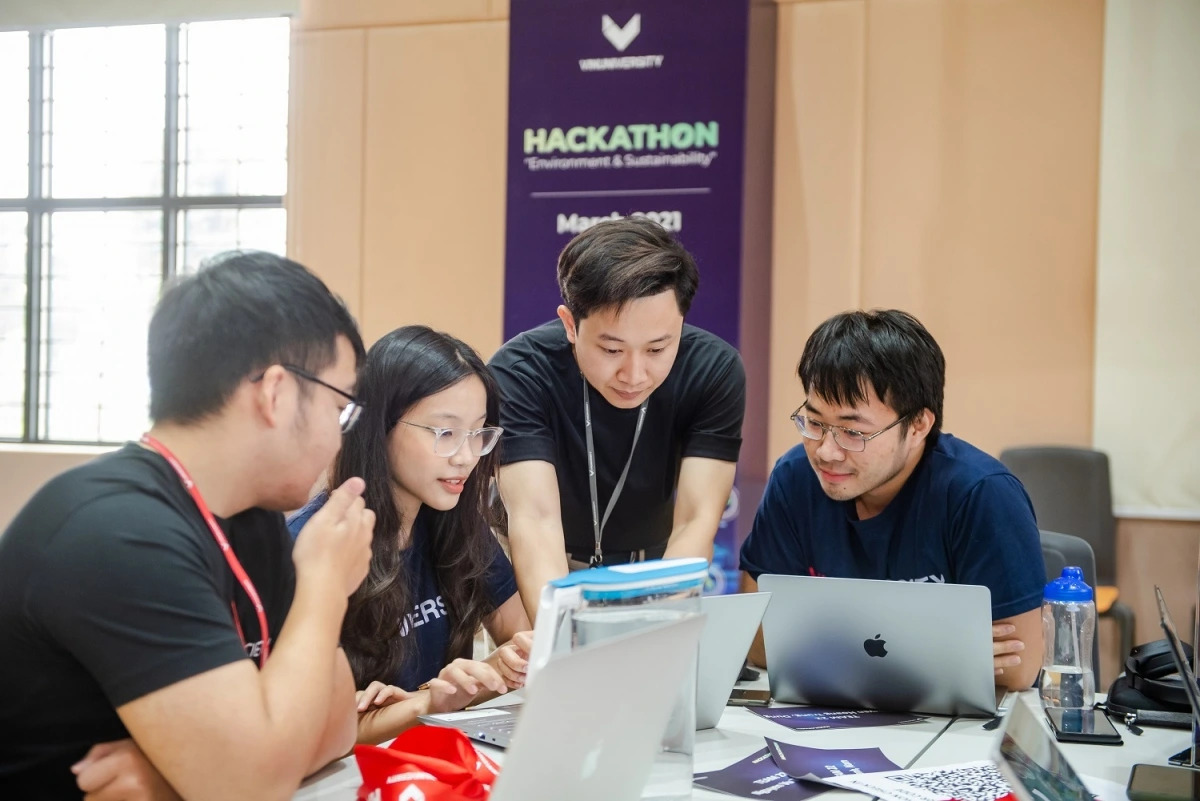
Most free Data Science courses are delivered
1.2. Who free Data Science courses are suitable for
These courses are ideal for specific groups:
- Absolute Beginners: Who want to test if they enjoy coding and statistics before paying for tuition.
- Career Switchers: Who need to upskill quickly in specific tools (e.g., learning SQL or Tableau).
- Students: High schoolers or undergraduates looking to supplement their formal education with practical skills.
Now that we understand the format, the next question is: What skills can you actually acquire without paying a cent?
2. What You Can Learn from Free Data Science Courses
Contrary to popular belief, “free” does not mean “low quality.” Many open courses cover the same foundational syllabi as university electives.
2.1. Core topics covered: Python, statistics, data analysis

The majority of free Data Science courses focus on the “Big Three” foundations
The majority of free Data Science courses focus on the “Big Three” foundations:
- Programming: Syntax and libraries in Python (Pandas, NumPy) or R.
- Statistics: Probability theory, hypothesis testing, and A/B testing.
- Data Analysis: Cleaning messy data and visualizing trends using Matplotlib or Seaborn.
These foundational skills serve as the grammar of Data Science; without them, you cannot write the “stories” hidden in numbers. Mastering these tools is the non-negotiable prerequisite before advancing to the more glamorous, predictive aspects of the field. Once you have fluency in Python and Statistics, you are ready to tackle the next frontier: teaching computers to learn from data themselves.
2.2. Introductory machine learning and real-world datasets
Once you have mastered data manipulation, free courses guide you into the realm of Machine Learning (ML), the art of teaching computers to learn from data without explicit programming.
- Fundamental Algorithms: You will not just learn theory; you will implement core algorithms like Linear Regression for predicting prices or Decision Trees for classifying customer behaviors. These are the building blocks of modern AI.
- Industry-Standard Frameworks: Learners gain hands-on experience with Scikit-Learn, the most popular Python library for ML. You will learn the end-to-end workflow: splitting data into training sets, model fitting, and evaluating accuracy using metrics like F1-score.
- Practical Application: Unlike dry textbooks, these courses use real-world datasets such as the famous Titanic survival prediction or Boston housing prices. This ensures you understand how to handle “messy” data, deal with outliers, and extract meaningful features.
Mastering these predictive tools is crucial, but they are merely instruments. To truly succeed in technology, you must also develop the underlying problem-solving mindset known as computational thinking.
2.3. Early exposure to computational thinking relevant to Computer Science
Engaging with Data Science challenges fosters computational thinking, a critical cognitive skill that enables you to solve complex problems systematically. This is the exact intellectual foundation required for advanced degrees in Computer Science.
- Algorithmic Logic: You learn to break down a vague business problem (e.g., “Why are sales dropping?”) into a sequence of precise, executable steps. This “decomposition” skill is the heart of software engineering.
- Pattern Recognition & Abstraction: You develop the ability to filter out irrelevant details and identify universal patterns within datasets a skill that directly translates to designing efficient system architectures.
- Research Readiness: For students aiming for a PhD or research role, these courses introduce the scientific method of hypothesis testing and validation. This early exposure makes the transition to rigorous academic research at institutions like VinUniversity much smoother and more intuitive.
Armed with this robust curriculum of technical skills and critical thinking, the next logical step is to find the right providers. Where should you look for high-quality content that rivals paid education?

Early exposure to computational thinking relevant to Computer Science
3. Popular Sources of Free Data Science Courses
The internet is flooded with tutorials, but for structured learning, you should rely on reputable platforms.
3.1. Platforms offering beginner-friendly and research-oriented content
- Coursera & edX: These platforms host courses from top universities (like Harvard and Stanford). While certificates cost money, the “Audit” option allows you to access lectures and reading materials for free.
- Kaggle: Famous for competitions, Kaggle offers free “Micro-Courses” that are highly practical and code-focused.
- Google Cloud Skills Boost: Offers learning paths specifically for data engineering and AI basics.
Ultimately, there is no “one-size-fits-all” approach. By consciously aligning your learning source with your career destination, you ensure that every hour of study directly contributes to your future success, whether that lies in a corporate office or a research laboratory.
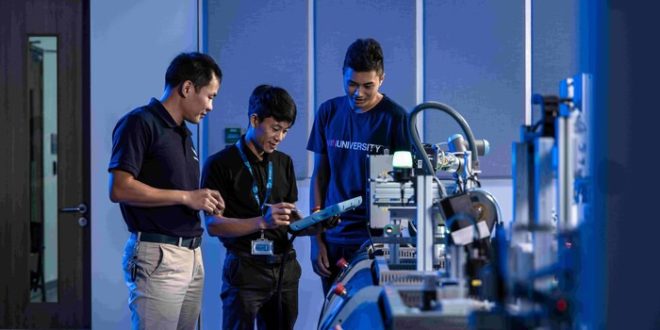
Platforms offering beginner-friendly and research-oriented content
3.2. How these resources support both industry-focused learners and students considering advanced study
These platforms act as a strategic catalyst, adapting their value based on your ultimate destination. They are not just about consuming content; they are about validating your career path.
- For Industry-Focused Learners (The “Doers”): These resources prioritize rapid upskilling. Instead of waiting four years to write code, you can learn SQL or Python in weeks and immediately apply them to automate workflows. Platforms like Kaggle allow you to build a portfolio of projects, which often speaks louder to employers than a traditional resume.
- For Aspiring Researchers (The “Thinkers”): For students considering a Bachelor’s or PhD, these courses serve as a low-risk litmus test. They expose you to the rigorous mathematics behind the code. This helps you distinguish whether you simply like the idea of AI or if you genuinely enjoy the complex statistics required to invent new AI models, a crucial realization before committing to a formal degree.
However, while these resources are powerful entry points, they are not a silver bullet. Self-study often lacks the structured mentorship and theoretical depth of a formal education. To avoid hitting a “career ceiling” later on, it is crucial to frankly address what these free courses cannot teach you.
4. Benefits and Limitations of Free Data Science Courses
Self-study is powerful, but it differs significantly from a structured academic environment.
4.1. Advantages of learning Data Science for free
The democratization of education has fundamentally altered the landscape of skill acquisition. For self-motivated learners, the open-source movement offers a compelling alternative to traditional degrees, defined by three distinct strategic advantages:
- Cost-Effectiveness: You gain valuable skills with zero financial risk.
- Accessibility: You can learn from Ivy League professors from the comfort of your home.
- Flexibility: You set your own pace, spending more time on difficult concepts like Neural Networks if needed.
These factors make self-study an incredible equalizer, lowering the barrier to entry for everyone. However, “free” often comes with a different kind of price tag. The lack of a structured roadmap can lead to fragmentation and confusion, which brings us to the critical limitations you must consider.

Advantages of learning Data Science for free
4.2. Common limitations compared to structured degree programs
While the accessibility of free learning is undeniably attractive, it is crucial to recognize the “hidden costs” of a self-directed path. Without the structural scaffolding of a university, learners often face systemic hurdles that hinder long-term career progression:
- Lack of Accreditation (The “HR Filter” Problem): A completion badge from a generic MOOC rarely carries the same weight as a Bachelor’s degree. Many top-tier employers use automated resume screening tools that filter out candidates lacking formal credentials before a human ever sees their application.
- Fragmented Knowledge (The “Black Box” Syndrome): Free courses often focus on how to use a tool (syntax), but skip the deep theoretical why (mathematics). This leads to a “black box” understanding, where you can run a model but cannot debug it when it fails or optimize it for unique business problems.
- Isolation & Lack of Networking: University is not just about classes; it is about the ecosystem. Self-learners miss out on peer collaboration, alumni networks, and direct access to recruitment fairs vital channels where over 70% of high-level jobs are filled.
- No Personalized Mentorship: When you get stuck on a complex bug, there is no professor or teaching assistant to guide you. You rely on forums like StackOverflow, which can provide answers but cannot offer the pedagogical feedback needed to improve your coding style or logic.
- “Curriculum Chaos” (Analysis Paralysis): With thousands of free courses available, beginners often waste months trying to design their own syllabus, jumping from one unfinished tutorial to another without a cohesive learning strategy.
These limitations do not render free courses useless; rather, they highlight that self-study is best viewed as a supplement to, rather than a substitute for, rigorous training. So, how do you bridge the gap between self-taught skills and a professional career? By using these courses as a strategic launchpad.
5. From Free Courses to a Data Science Degree
Free courses are the appetizer; a formal degree is the main course. Integrating both creates a powerful career trajectory.
5.1. Using free courses to build foundational skills
Strategic students do not wait for the first day of class to begin their education; they use free resources to secure a competitive advantage before stepping onto campus. This proactive approach transforms the university experience from a struggle to catch up into a platform for excellence.
- Accelerated Learning Curve: Instead of spending your first semester grappling with basic Python syntax or installing libraries, you arrive fluent in the tools. This allows you to bypass the “novice” phase and immediately tackle advanced electives or complex projects that truly differentiate your portfolio.
- Focus on Logic, Not Just Code: When you are not fighting the compiler, your brain is free to focus on what really matters: algorithmic logic and mathematical proof. You can spend your mental energy understanding why a model works, rather than just fixing syntax errors.
- Early Access to Opportunities: Professors notice prepared students. Arriving with a solid technical baseline makes you a prime candidate for research assistantships or internships at labs (like those at VinUniversity) as early as your freshman year, giving you a massive head start over peers.
By treating these free courses as a “pre-semester boot camp,” you ensure that when the real academic pressure hits, you are not just surviving, you are thriving. But remember, a foundation is only as good as the structure built upon it. This leads us to the final piece of the puzzle: choosing the right academic environment.

Smart students use free Data Science courses to build a technical foundation before entering university
5.2. Bachelor in Data Science at VinUniversity as a next academic step
For those serious about the field, the Bachelor of Science in Data Science at VinUniversity is the logical next step.
- Beyond Tutorials: Unlike free courses, VinUniversity’s curriculum (validated by Cornell University) offers deep immersion into Big Data and AI, supported by the active learning method.
- Industry Immersion: You apply your skills in real projects at VinBrain or VinFast experiences that online courses cannot simulate.
In essence, VinUniversity transforms the raw potential of a self-taught learner into the refined capability of a future CTO. But does this degree only lead to a job, or can it open doors to even higher academic pursuits?
5.3. How a structured degree supports long-term pathways, including PhD in Computer Science
A formal degree does more than teach technical skills; it opens doors to the highest echelons of the technology sector. For students aiming for research-heavy roles or a prestigious PhD, a university education provides the systemic advantages that self-study simply cannot replicate.
- Global Academic Recognition (Validated by Cornell University): Top-tier PhD programs and research labs look for candidates with a rigorous educational background. Since the VinUniversity curriculum is validated by Cornell University, your transcript carries a seal of quality recognized globally, signalling that you possess the theoretical maturity required for advanced research.
- From Consumer to Inventor: While free courses teach you how to use existing AI tools, this degree prepares you to invent new ones. The rigorous training in algorithms and mathematics allows you to tackle cutting-edge topics like Generative AI and Green Computing at a foundational level skills essential for a doctoral candidate.
- Research Portfolio & Mentorship: A PhD application requires more than good grades; it requires published papers and strong letters of recommendation. At VinUniversity, you work directly with distinguished professors on publication-worthy research, building the professional credibility needed to secure a spot in competitive graduate programs.
In summary, free resources are an excellent way to start your journey, but a world-class degree is what defines your destination. It transforms a passion for coding into a lifelong career of innovation and leadership.
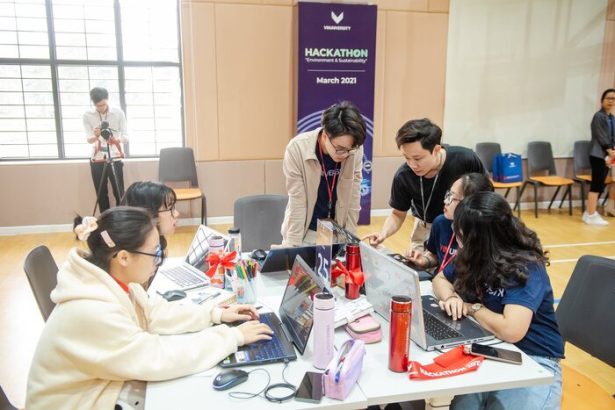
A formal degree does more than teach skills
6. Conclusion
Free Data Science courses are an incredible resource for democratization, allowing anyone with internet access to learn the basics of Python, statistics, and machine learning. They are the perfect testing ground for beginners.
However, to transform that interest into a high-impact career, a structured education is irreplaceable. Institutions like VinUniversity take the foundation you build and elevate it with world-class mentorship, industry projects, and global validation.
Start with a free course today, but plan for your future degree tomorrow. Explore the Data Science program at VinUniversity: https://vinuni.edu.vn/