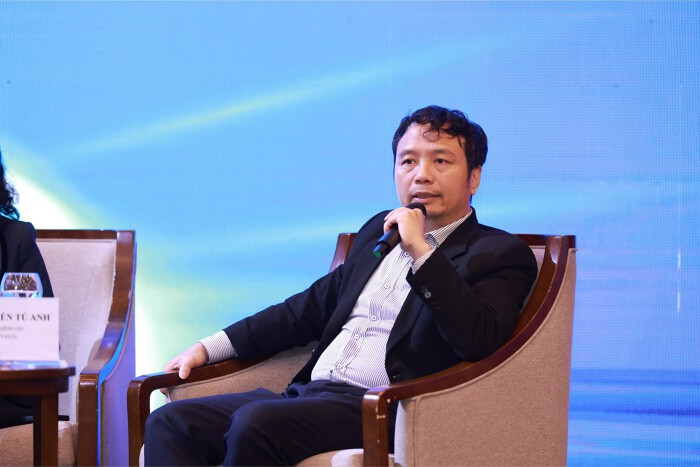
Dr. Le Mai Lan: “I had to break my own glass ceiling.”
March 11, 2026


VinUniversity is a young university, but it has quickly attracted attention for its innovation. Leading VinUni’s effort to position Vietnamese higher education on the global map is Dr. Lê Mai Lan, Vice Chairwoman of Vingroup and President of the University Council at VinUniversity.
It is known that you recently attended the Asia-Pacific Association for International Education Conference and Exhibition (APAIE 2026) in Hong Kong. After that trip, where do you think you stand?
My impression is that everyone respects Vietnam as a rising star. The Vietnamese delegation, led by the Ministry of Education and Training, included about 100 people from nearly 20 different universities, appearing at APAIE 2026 as a very strong team. Personally, I participated in the Presidents’ Dialogue session together with presidents and rectors from many prestigious universities… We were contributing, not just attending as observers. Within that broader picture, the impression that VinUni created was its speed and ability to execute.
Many higher-education governance experts from well-known universities around the world also expressed surprise at VinUni’s extremely rapid pace of development. However, many people still wonder about the goal of bringing VinUni into the top 100 universities in the world. Could that be too ambitious?
I want to clarify: “Very ambitious, but not overly ambitious.” I am not saying it is easy, it is very difficult but we do have a chance to succeed. Our most essential “weapon” is the ability for design thinking designing systems, designing products, and designing pathways.
Recently I read a very insightful article published in Business Times of Singapore. The author is the president of the prestigious Singapore University of Technology and Design (SUTD). There was one point that particularly resonated with me: the ability to execute depends greatly on system design. We talk a lot about AI, but if there is no true architect who redesigns the entire system experience, technology alone cannot improve the game.
I had a similar reflection recently while flying back home. With automated immigration using electronic identification, the process now takes only about two minutes, compared with waiting in line for half an hour before. But immediately afterward, I still had to wait 48 minutes to collect my luggage. Therefore, although reports may say that AI has reduced the immigration process to only two minutes, the overall experience of passengers has not actually improved.
Returning to the issue of governance, thinking capability is extremely important. VinUni is fortunate to have been born within Vingroup an ecosystem with a long-term vision, strong execution capacity, and a leadership team that dares to think big and is willing to invest systematically in education. That launching platform has helped us cultivate design thinking and systems thinking from the very beginning.

What about people and resources?
Talented people are the decisive factor. In 2019, we also held a Coffee Chat a conversation with the press about the aspiration to build an elite university. At that time, I already had an answer for the model of an elite university: first, a high density of talent; second, transparent governance; and third, abundant resources.
VinUni has now gathered a fairly strong team of talented experts, especially in fields such as technology, AI, and medicine. However, we continue to look for individuals who have the ability to design systems and lead organizations. In terms of governance, VinUni has built a transparent foundation, but it still needs to become more streamlined.
Are those factors sufficient to adapt in an uncertain world?
As I mentioned earlier, we are fortunate that VinUni was born within Vingroup. The ability to adapt and a spirit of real-world action are already embedded in our DNA. Our task is to fully unlock the potential that the ecosystem brings and to see uncertainty as an opportunity to multiply our resources.
The ecosystem will provide us with a “bank of real-world problems.” Vingroup has challenges and products that need to be developed, which become excellent outputs for us. We must train people capable of solving those problems, from simple to complex, along a structured educational pathway.
However, looking further ahead, the true role of a research university is not only to train people who solve the problems that businesses want addressed, but also to create what society will need in the future. Meeting both what is needed and what is desired is the synergy between education and research.
VinUni is also building a “bank of future problems.” Our professors will ask: what important issues affecting humanity remain unresolved or unexplored? In this way, VinUni’s success will depend on our ability to fully leverage what the Vingroup ecosystem and the country offer, both in terms of banks of real-world problems and future challenges.
VinUni has succeeded in attracting outstanding students, but this has been at a relatively small admissions scale. Are you concerned that excellence might become diluted when the scale expands?
To be honest, we have only achieved initial success in the teaching-university model. We already have outstanding students. As VinUni transitions to a research-university model and sets the goal of entering the top 100 universities in the world, beyond academic excellence the university must attract and train learners who possess three qualities: global thinking, global courage, and access to global information and data.
Therefore, in the near future VinUni will adjust its selection structure. Undergraduate programs will become even more selective in quality and will not expand in scale, the current size (about 2,000 students in total) is sufficient. Postgraduate programs, however, need to expand. At present the ratio is quite modest at 10/90 (residents, master’s students, and doctoral students / undergraduates), and our goal is to raise this to 40/60 within the next five years. The proportion of international students must also increase; our expectation is to reach 20/80 compared with the current 5/95 (international students / Vietnamese students).
In reality, expanding postgraduate enrollment, especially doctoral programs, has been a difficult problem in Vietnam for many years. What about VinUni?
We do not think in terms of “studying for a PhD,” but rather “doing a PhD.” We do not consider a PhD as going to school simply to obtain a degree, but as a genuine full-time job. VinUni not only sponsors the entire tuition fee but also pays doctoral students a salary of 25–30 million VND per month.
To recruit postgraduate students, it is important to have good supervisors and attractive research topics. At present, VinUni’s PhD admissions situation is very positive, we fill all available slots.
The question for us is how to train talent through postgraduate programs. We absolutely do not want to turn doctoral students into “workers producing scientific papers,” because that is very dangerous. Doctoral students must find meaning in the work they do. Success means that what they produce is something society both wants and needs. In addressing this issue, the role of the supervisor is extremely important.

So how do you recruit talented lecturers and professors?
Recently, Vingroup invested an additional 9.3 trillion VND in VinUni, and a large portion of that will be used to attract talent. However, for talent in science and technology, salary alone is not enough. They need meaningful work, people to collaborate with, and opportunities to develop products.
Professor Ling San, Senior Deputy President of VinUni, helps me recruit talent and build the image of VinUni as “very dynamic and bold.”
Professor Ling San leads the VinUni Assistant Professor Program, which is designed to build a pipeline of young researchers for the next 5–10 years. We recruit young people with exceptional potential, mentor them with outstanding scientists of global stature such as VinFuture Prize laureates, and provide them with a $1 million seed fund to develop breakthrough research projects. In the first round, there were 160 applicants, and we selected five finalists for the final stage.
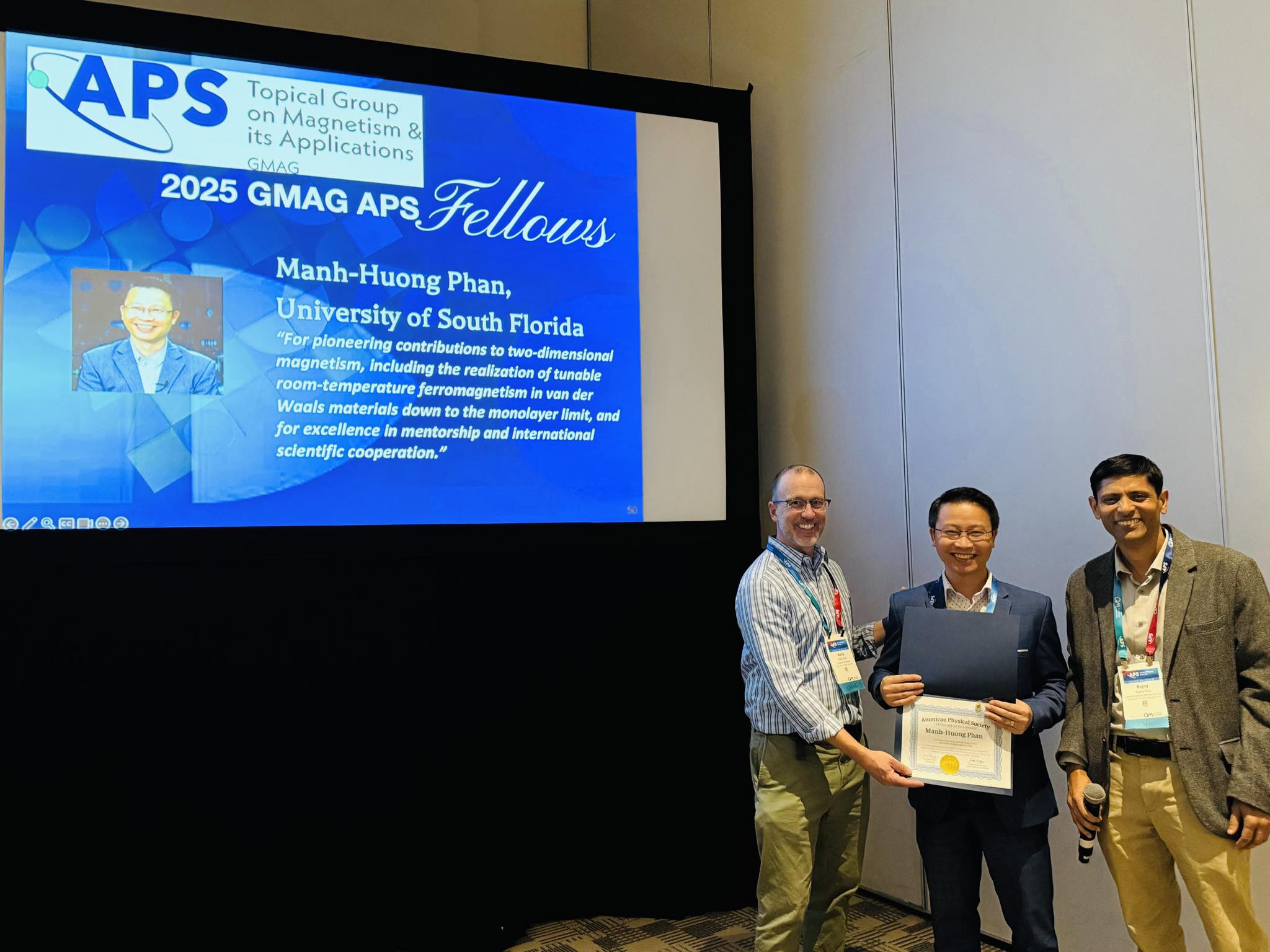
Running in parallel is the VinUni Distinguished Professor Program, which aims to attract people capable of building systems. One example is Professor Phan Mạnh Hưởng, a leading physicist in the field of magnetism and materials science, whom VinUni worked very hard to recruit from the University of South Florida in the United States. Professor Hưởng’s role at VinUni is to provide leadership, design systems, and attract talent.
Professor Hưởng has been at VinUni for only six months but has already successfully attracted a team of 10 outstanding scientists. He also quickly signed cooperation agreements with five reputable universities and enterprises. VinUni immediately met his proposals regarding office space and an energy research laboratory. At first, the computing system was not available, but within just a few weeks after his proposal it was purchased. In particular, the professor is given autonomy to recruit talented staff.
I believe that VinUni has the right mindset when it comes to attracting talent. This relates to what we discussed earlier: we are still small in scale, our resources are not yet truly abundant, and we are a latecomer. If we want to solve big problems and pursue great ambitions, our approach must be different.
Among university leaders in Vietnam, women are still very rare. You have been entrusted with a pioneering mission, do you feel pressure?
I feel that being given the opportunity is what motivates me to endure the pressure. Not everyone receives such an opportunity. Each person lives only once. If I cannot do something that makes me proud, inspires my children, and helps others grow, then I would feel that the finite life I have would have been wasted.
At Vingroup, I learned a principle that our Chairman often repeats: “If something is crooked, treat it crookedly; if it is straight, treat it straight.” That saying often helps reassure me in moments when I have to face fear or difficult decisions. Whether the road ahead brings convenience or challenges, and no matter how impossible the mission may seem, we must continue moving forward. If we achieve good results, it proves that the path we chose was correct. If the results are not as expected, then at least we will have accumulated valuable experience, learned lessons, and gained the opportunity to adjust and adapt better along the journey.

Many Vietnamese women are highly intelligent, and society also creates conditions for them to develop their potential. Yet in reality, few reach the highest levels of success. How do you explain this?
I believe that within every woman there is a “glass ceiling.” It is invisible, yet it prevents us from moving forward. That ceiling consists of perceptions and gender stereotypes within women themselves. For example, the success of a woman is often considered to be her children. Or that women must always put family above everything else. Or that they must maintain balance so as not to affect their husbands… Then women begin to hold themselves back with questions such as: why do I need to do this? Why should I compete like that? What is the point of striving like this?…
In the past, I once refused opportunities to become a leader at several large corporations because of those ceilings, although at that time I was not consciously aware of their existence. Later, reflections about the meaning of life within our finite existence which I mentioned earlier, helped me break those ceilings. What I have achieved since then feels very worthwhile.
What does a typical day look like for you now?
I wake up at around 6 a.m., and then sit down to drink coffee, look at the flowers, watch the lake, and immerse myself in a very quiet space. That is truly my time — a very good start to an ordinary day.
The end of the day is also something I enjoy very much. I often have coffee chats with students, listening to them share deep ideas and bold dreams… I feel inspired by them. It feels like the moment when I look at the results of my work, like “a farmer who has finished plowing a field.” After that, I go home and have dinner with my family. The middle of the day is similar to that of many other leaders: answering emails, attending meetings, and writing reports.
That seems like an ideal day that any woman would want?
The beginning and the end are already very good. The middle part could still be better. Right now, I am still struggling to shape the team system. I hope that VinUni will become a giant creative laboratory, rather than an administrative structure with many hierarchical layers — where only project teams remain, working together to create products, whether in research, education, or impact. That is the kind of day I dream of.
Thank you very much, Dr. Lê Mai Lan!