For decades, the traditional academic ladder seemed rigid: first a bachelor’s, then a master’s, and finally a PhD. However, in the rapidly evolving landscape of 2026, this linear path is no longer the only rule. Many ambitious students are asking: “Do you need a masters to get a PhD?”
The answer is increasingly “No” but with caveats. While a master’s degree offers specialized knowledge, it is not always a mandatory prerequisite for doctoral study, especially in high-demand fields like Computer Science and STEM.
This guide explores the nuances of direct-entry PhD pathways, the critical role of your undergraduate foundation, and how elite institutions like VinUniversity with a curriculum validated by Cornell University are designed to bridge the gap between a bachelor’s degree and doctoral research.
1. Do you need a master’s to get a PhD?
To understand the academic roadmap, we must first dismantle the myths surrounding degree prerequisites. The necessity of a master’s degree depends heavily on your field of study, your location, and the specific policies of the university you are applying to.
1.1. Why this question matters for students planning a doctoral pathway
Asking “do you need a bachelors and masters to get a PhD” is not just about checking a box on an application form; it is a strategic question about time, money, and career momentum. Understanding the answer can save you years of study and significant financial resources.
- Time Efficiency: A traditional master’s program typically takes 2 years. By skipping this step through a direct-entry PhD program, candidates can begin their original research sooner, potentially entering the job market or academia at a younger age.
- Financial Implications: Master’s degrees are often self-funded and can be expensive. In contrast, PhD programs especially in STEM. They often come with funding packages. Skipping the master’s can mean avoiding additional debt.
- Research Continuity: Staying in an unbroken research track allows for deeper immersion. You do not have to reset your research focus or adapt to a new institution’s culture between degrees.
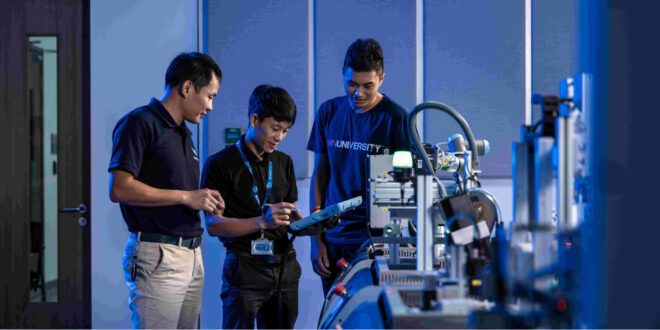
Why does this question matter for students planning a doctoral pathway?
While efficiency is appealing, it requires a candidate to be exceptionally prepared. This brings us to the global differences in how higher education systems view the transition from undergraduate to doctoral studies.
1.2. How different academic systems approach PhD entry
The requirement for a master’s degree is often geographical. The academic philosophy in the United States differs significantly from the traditional models found in Europe and parts of Asia, though these lines are blurring in 2025.
- The US Model (Direct Entry): In the United States, it is very common for students to proceed directly from a bachelor’s to a PhD. These programs are typically longer (5-6 years) because they incorporate coursework that would essentially cover the material of a master’s degree in the first two years.
- The European Model (Sequential): Traditionally, the Bologna Process in Europe standardized the 3+2+3 model (3 years Bachelor, 2 years Master, 3 years PhD). Here, a master’s degree is usually a strict prerequisite because the PhD phase is purely research-based with little coursework.
- The Global Convergence: Top-tier universities in Asia and around the world are increasingly adopting the US model to attract young talent. They are looking for research potential rather than just degree accumulation.
Regardless of the system, the trend is shifting towards evaluating competency over credentials. This places an immense responsibility on the bachelor’s degree to deliver more than just basic knowledge.
2. The bachelor’s degree as the true starting point of a PhD
If you plan to skip the master’s, your bachelor’s degree must do double duty. It is no longer just about learning what is known; it must be about learning how to discover the unknown.
2.1. How undergraduate training shapes research thinking and discipline
A standard undergraduate experience focuses on consuming knowledge. However, a research-oriented undergraduate program focuses on creating it. This shift in mindset is the single most important factor in determining if you are ready for a PhD.
- Critical Inquiry: Standard students ask, “Is this the right answer?” Research students ask, “Is this the right question?” This critical shift involves challenging assumptions and understanding the limitations of current theories.
- Resilience in Failure: Research is 90% failure and 10% breakthrough. A strong undergraduate program exposes students to the frustration of code that doesn’t compile or experiments that yield inconclusive results, building the grit required for a PhD.
- Methodological Rigor: It is not enough to have a good idea; you must know how to prove it. This involves mastering the scientific method, data hygiene, and ethical research practices before entering a doctoral program.
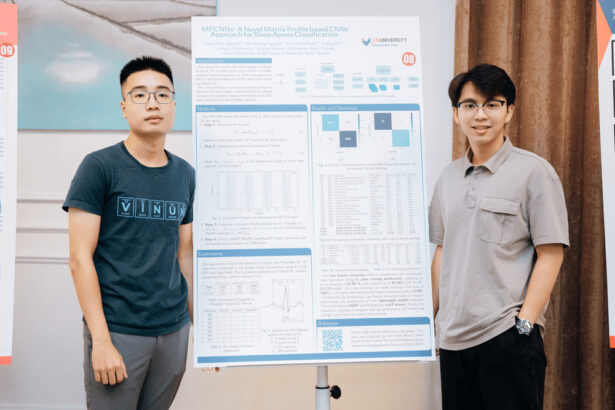
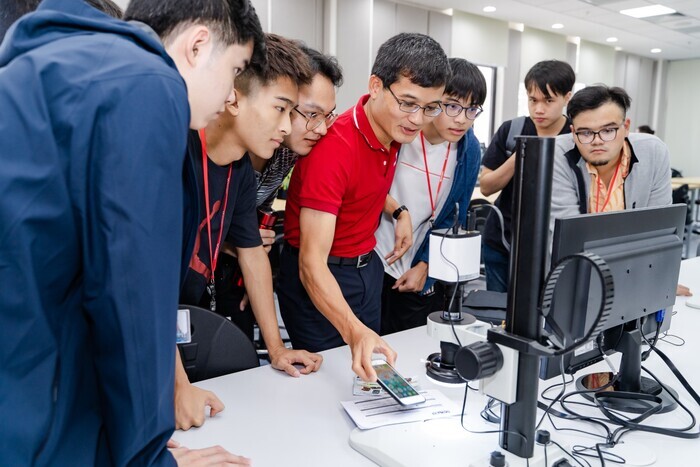
A standard undergraduate experience focuses on consuming knowledge
This mental framework is the foundation, but it must be supported by hard skills. In fields like Computer Science, the technical gap between a bachelor’s and a PhD can be vast if the undergraduate curriculum is not rigorous.
2.2. Academic skills developed during a Computer Science Bachelor’s program
For Computer Science specifically, the question “do you need a masters to get a PhD” often hinges on your mathematical maturity. A robust bachelor’s curriculum acts as a litmus test for your ability to handle advanced topics.
- Advanced Mathematics: You cannot do research in AI or Machine Learning without a deep grasp of Linear Algebra, Calculus, and Probability Theory. A PhD-track bachelor’s covers these not as abstract concepts but as tools for algorithm design.
- Algorithm Design & Analysis: Beyond writing code that works, prospective PhDs must write code that is optimal. Understanding Big-O notation, complexity classes, and data structures is non-negotiable.
- Technical Writing: The currency of academia is the research paper. Students must learn how to structure arguments, cite sources correctly, and present complex data clearly, skills often overlooked in standard coding bootcamps.
Possessing these skills is essential but proving you have them is another challenge. How do admissions committees determine who makes the cut for a direct-entry PhD?
3. How PhD admissions actually evaluate candidates
When admissions officers review applications from bachelor’s degree holders, they are looking for evidence that the student can survive the rigors of a doctorate without the “training wheels” of a master’s program.
3.1. Research readiness beyond formal qualifications
Transcripts tell only half the story. The committee is not looking for a student who can get an ‘A’ on a test; they are looking for a junior colleague. “Research readiness” is a nebulous term that translates to specific behavioral traits.
- Curiosity Drive: Does the candidate pursue knowledge outside the syllabus? This might be evidenced by independent study, contributions to open-source projects, or participation in hackathons.
- Problem-Solving Creativity: PhD research involves solving problems that have no textbook answer. Evaluators look for instances where the student approached a novel problem with a unique perspective or innovative methodology.
- Communication Skills: Can the student explain complex technical concepts to a lay audience? This is often assessed through the Statement of Purpose (SOP) and interview rounds.
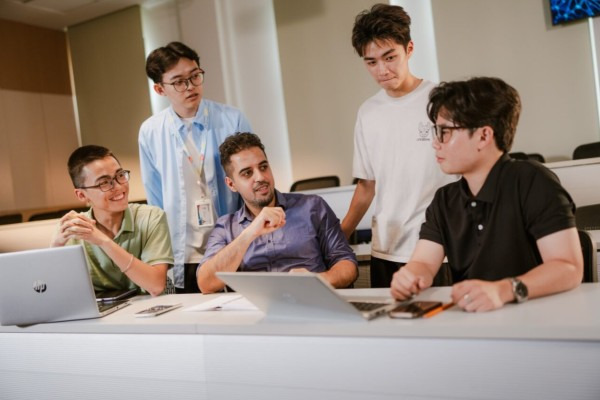
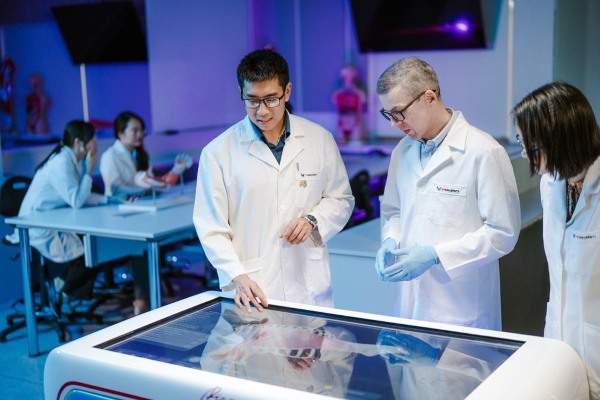
The committee is not looking for a student who can get an ‘A’ on a test; they are looking for a junior colleague
While these soft skills are crucial, hard evidence is better. Nothing speaks louder to an admissions committee than a track record of tangible output.
3.2. The weight of undergraduate research, projects, and faculty mentoring
In the absence of a master’s thesis, your undergraduate projects become your primary portfolio. This is where the quality of your undergraduate institution and its faculty connections become a decisive factor.
- Publication Record: Having a paper accepted (or even submitted) to a conference is the “gold standard.” It proves you have already gone through the research cycle: hypothesis, experiment, analysis, and peer review.
- Faculty Letters of Recommendation: A generic letter is useless. You need detailed letters from professors who have supervised your research, attesting to your ability to work independently.
- Capstone Projects: A substantial final-year project that addresses a real-world problem demonstrates your ability to manage a long-term technical endeavor, mimicking the scope of a mini-dissertation.
Successfully showcasing these elements proves you are ready. But what does the actual pathway look like for someone entering directly?
4. Entering a PhD without a master’s degree
The “Direct PhD” is a challenging but rewarding route. It is designed for students who are certain of their research interests and possess a high degree of intellectual maturity.
4.1. Direct-entry PhD routes and their expectations
Direct-entry programs are structured differently than post-master’s PhDs. They are often referred to as “integrated” programs because they combine the coursework phase with the research phase.
- The Probationary Period: Most direct-entry programs start with a “qualifying phase” (usually 1-2 years). During this time, students take advanced courses and must pass qualifying exams (Quals) to officially become PhD candidates.
- Higher Attrition Risk: Because the jump in difficulty is steep, these programs can have higher dropout rates. Institutions expect students to hit the ground running, often balancing heavy coursework with lab rotations.
- Fast-Track Potential: For those who survive the initial shock, the reward is speed. You avoid the administrative overhead of graduating with a master’s and reapplying for a PhD, streamlining your career trajectory.
The academic structure is demanding, but the psychological demand is often greater. Succeeding without a master’s requires a specific mindset.
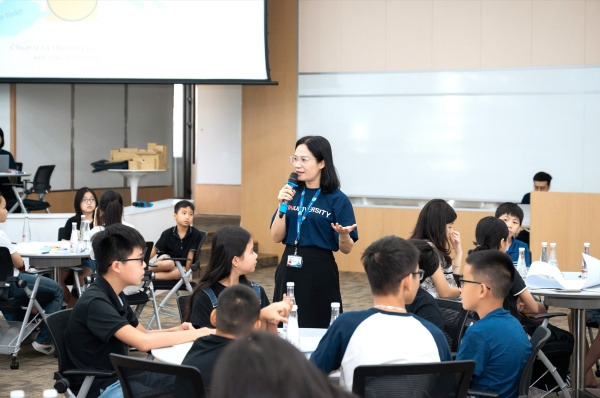
Direct-entry programs are structured differently than post-master’s PhDs
4.2. Intellectual maturity and long-term research commitment
A PhD is a marathon, not a sprint. Without the intermediate step of a master’s to “test the waters,” students must be absolutely sure of their commitment to a 4-5 year endeavor.
- Self-Motivation: There are no daily homework assignments in the later stages of a PhD. You must wake up every day and decide to push your research forward. This requires an immense internal drive.
- Handling Ambiguity: In undergraduate studies, answers are in the back of the book. In a PhD, you don’t even know if an answer exists. Intellectual maturity is the ability to remain productive despite this uncertainty.
- Focus vs. Breadth: You must be ready to narrow your focus from “Computer Science” to a tiny sub-niche. This requires the maturity to let go of the desire to learn “everything” in favor of mastering “one thing.”
To cultivate this level of maturity and skill, you need an educational environment that fosters it from Day 1. This is where the choice of your undergraduate institution becomes pivotal.
5. Academic progression in Computer Science at VinUniversity
For students in Vietnam and the region, VinUniversity offers a strategic educational ecosystem designed to support this direct progression. Aligning with global standards, it removes the need for an intermediate master’s degree.
5.1. The Computer Science Bachelor’s program as a research-oriented foundation
The Bachelor of Science in Computer Science program at VinUniversity is not a standard coding bootcamp; it is a rigorous academic program designed to produce future innovators.
- Curriculum validated by Cornell University: The program follows a world-class framework validated by Cornell University. This ensures that the depth of instruction in algorithms, data structures, and software engineering meets the rigorous standards required for direct admission into top-tier PhD programs globally.
- Industry immersion: Students do not study in a bubble. The curriculum creates opportunities for students to engage in real-world R&D environments, such as analyzing medical imaging data or optimizing autonomous driving algorithms. This integration provides the essential practical context that complements theoretical learning.
This strong foundation naturally leads many graduates to consider the next step. For those who wish to stay within this ecosystem of innovation, VinUniversity offers a seamless transition to the highest level of academic achievement.

The Bachelor of Science in Computer Science at VinUniversity is not a standard coding bootcamp
5.2. The Computer Science PhD program and its focus on original research
For those aiming for the absolute peak of the pyramid roles like Principal Research Scientist or Chief AI Officer VinUniversity offers a world-class PhD in Computer Science. This program is designed to cultivate the next generation of scientific leaders.
- Cutting-Edge Research: Candidates work on breakthrough projects in Generative AI, Green Computing, and Smart Health. These are the exact fields where global tech giants are pouring billions of dollars in investment.
- Global Mentorship: You are not limited to one institution. The program facilitates a co-advising model where qualified students can be supervised by distinguished professors from VinUniversity and experts from strategic global partners. For instance, via the VinUni-Illinois Smart Health Center (VISHC), students can work directly with faculty from UIUC. Additionally, our strategic ties with Cornell University and UPenn provide PhD candidates access to elite academic networks, ensuring research quality meets international standards.
- Financial Freedom (The PhD Fellowship): VinUniversity provides a highly competitive support package designed to attract top-tier research talent. The PhD Fellowship includes 100% tuition waivers and substantial monthly stipends to cover living expenses, alongside fully-funded opportunities for overseas research exchanges. This robust financial framework ensures that scholars can dedicate themselves entirely to high-impact innovation and original research without the burden of financial debt.
In this environment, the question “do you need a masters to get a PhD” becomes irrelevant because the bachelor program provides sufficient launch velocity, and the PhD program provides sufficient support.
6. Conclusion: Choosing the right academic path toward a PhD
The decision to pursue a PhD is one of the most significant career choices you will make. It should not be based on myths about degree prerequisites but on a realistic assessment of your goals and your readiness.
6.1. When progressing directly from bachelor’s to PhD makes sense
Skipping the master’s is not for everyone but for the right candidate. It is the optimal path. It is a decision that favors the bold, the prepared, and the focused.
- Clear Research Vision: If you already know exactly what you want to research (e.g., “Natural Language Processing for low-resource languages”), a master’s may be redundant.
- Strong Undergraduate Performance: If your GPA is high and, more importantly, your research portfolio is strong, you are already a competitive candidate for direct entry.
- Desire for Impact: If you are eager to contribute to human knowledge sooner rather than later, the direct path accelerates your entry into the scientific community.
Ultimately, the degree names matter less than the skills you acquire and the network you build.
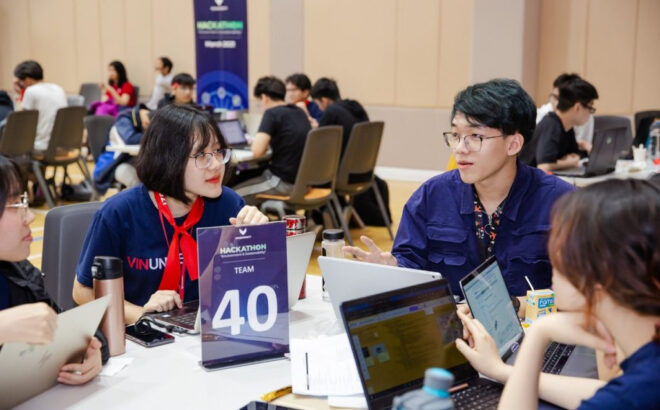
Skipping the master’s is not for everyone but for the right candidate
6.2. Aligning educational choices with long-term research goals
Your academic journey is a means to an end. Whether you aspire to be a professor, a lead researcher at a tech giant, or a founder of a deep-tech startup, your education must be aligned with that destination.
- Choose the Right Environment: Look for institutions that value undergraduate research and offer clear pathways to doctoral study.
- Seek Mentorship: Surround yourself with faculty who have walked the path you want to take. Their guidance is often more valuable than the coursework itself.
- Start Early: The preparation for a PhD begins in your freshman year. Every project, every internship, and every elective course is a building block.
So, do you need a masters to get a PhD? No. What you need is a world-class undergraduate education that challenges you, mentors who guide you, and the courage to leap directly into the unknown. Explore the Computer Science programs at VinUniversity today to start your journey to the top: https://vinuni.edu.vn/