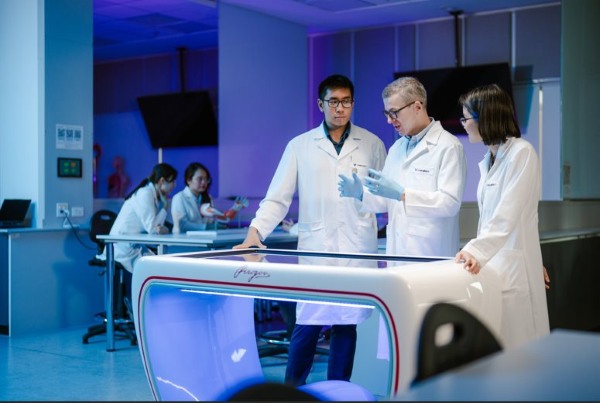
The modern world is driven by data, and two fields stand at the forefront of this revolution: Data Science and Machine Learning. Understanding the true difference between these interconnected disciplines is crucial for anyone looking to enter this high-demand space, or for businesses aiming to harness their collective power.
At institutions like VinUniversity, where cutting-edge technology and interdisciplinary studies converge, students are equipped to master the core skills and competencies that distinguish and unite these two powerful fields.
This article aims to help you understand the difference between Data Science vs Machine Learning scope, detailing the foundational concepts, required skillsets, real-world applications, and career trajectories of both to illuminate the optimal academic path for aspiring professionals.
1. Deciphering the Core: Data Science vs Machine Learning Defined
To truly grasp the debate of Data Science vs Machine Learning, one must first define the core identity of each discipline. While often used interchangeably, they represent distinct, though related, areas of study and practice within the broader umbrella of data-driven decision-making.
1.1. Data Science: The Interdisciplinary Umbrella
Data Science is a highly interdisciplinary field that uses scientific methods, processes, and algorithms to extract knowledge and insights from data in various forms. It encompasses the entire lifecycle of data, from collection and cleaning to analysis and strategic use in business.
The core objective is to answer complex questions, drive innovation, and solve real-world problems. A Data Scientist acts as a bridge between the data’s raw potential and its strategic business value.
Key Components of Data Science:
- Business/Domain expertise: Understanding the context and problem to be solved.
- Statistics & mathematics: Using rigorous methods for hypothesis testing and inference.
- Computer Science/Programming: Developing tools and algorithms to process data.
- Data visualization: Communicating findings effectively to non-technical stakeholders.
Ultimately, Data Science is the complex convergence of computer science, statistics, and domain knowledge, focused on leveraging the full data lifecycle to generate predictive models and strategic insights that solve tomorrow’s most difficult problems.
1.2. Machine Learning: The Algorithmic Engine
Machine Learning (ML) is a specific subfield of AI and Computer Science that develops algorithms allowing computers to learn from data without explicit programming. Its core premise is building models that analyze data, identify patterns, and make predictions.
In the Data Science ecosystem, ML serves as a powerful set of tools. While a Data Scientist focuses on general insights, an ML Engineer is specifically focused on building and optimizing predictive models.
Types of Machine Learning:
- Supervised learning: Training models on labeled datasets (e.g., classification, regression).
- Unsupervised learning: Finding hidden patterns or structure in unlabeled data (e.g., clustering, dimensionality reduction).
- Reinforcement learning: Training models to make a sequence of decisions in an environment to maximize a reward.
In essence, Machine Learning is the engine of prediction and automation, utilizing algorithms across supervised, unsupervised, and reinforcement paradigms to transform raw data analysis into actionable, future-oriented intelligence within the broader field of Data Science.
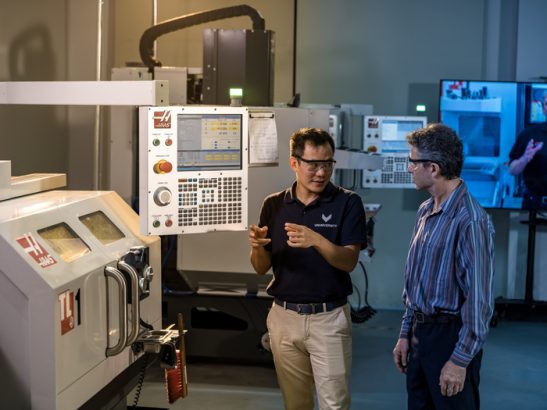
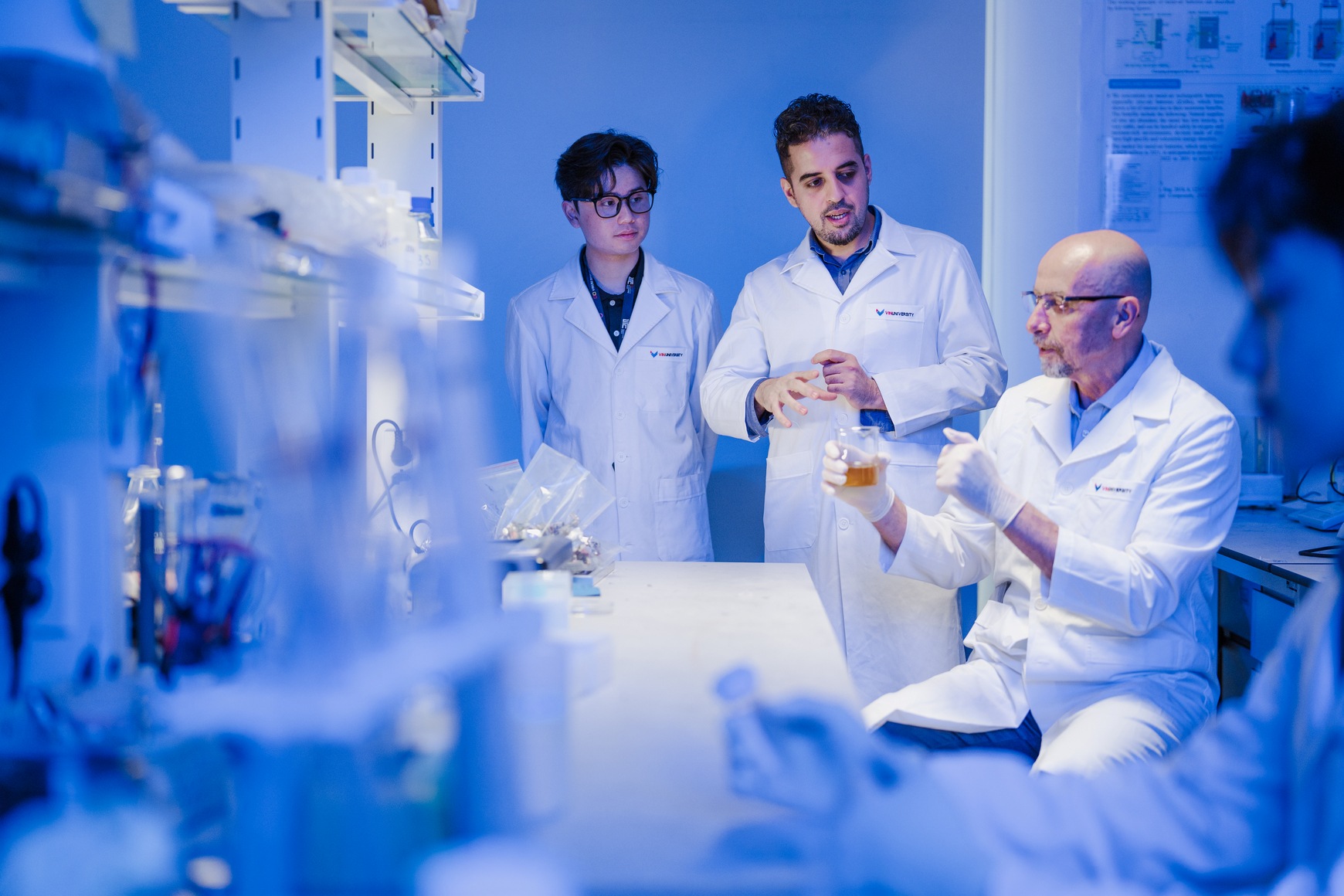
Data Science and Machine Learning are distinct but related areas under the broader umbrella of data-driven decision-making
1.3. Understanding the Relationship Between Data Science and Machine Learning
The relationship between Data Science and Machine Learning can be summarized as one of inclusion. Data Science is the broader field, and Machine Learning is one of its most powerful methods.
- Data Science is the overarching process of data-driven discovery. It encompasses the preparation, analysis, modeling, and communication of results.
- Machine Learning is primarily the modeling stage of the Data Science process. It’s the specific technique used to create predictive systems from cleaned data.
Think of it this way; a Data Scientist determines which business question to answer and how to use the data to answer it, often including the development of an ML model. An ML Engineer focuses almost exclusively on the robust development, optimization, and deployment of that specific predictive model.
2. Skillset Showdown: Tools, Techniques, and Expertise
The requirements for a Data Scientist and a Machine Learning Engineer overlap significantly, particularly in the foundational areas of statistics and programming. However, the difference in focus dictates a divergence in the advanced skills and tools they prioritize.
2.1 Technical skills in Data Science
A successful Data Scientist must be a versatile generalist, proficient across the entire data lifecycle.
Core technical skill:
- Statistical analysis & modeling: Deep understanding of statistical tests, hypothesis formulation, probability theory, and experimental design.
- Data cleaning and preprocessing: The ability to handle missing values, outliers, data normalization, and feature engineering which is often called the “80% of the job”.
- Data mining & exploration (EDA): Techniques to explore large datasets to uncover hidden patterns and trends using visualization and statistical methods.
- Business acumen & communication: Translating technical findings into clear, concise, and strategic business recommendations for non-technical leadership.
Key techniques for Data Scientists:
- A/B Testing
- Regression Analysis
- Time Series Forecasting
- Data Visualization
By mastering this blend of deep technical analysis, meticulous data handling, and sharp business communication, the Data Scientist transforms raw data into a powerful source of strategic, predictable organizational value.
2.2 Technical skills in Machine Learning

The requirements for a Data Scientist and a Machine Learning Engineer overlap significantly, especially in statistics and programming
Machine Learning Engineers are specialized practitioners who focus heavily on the mathematical and engineering aspects of creating robust AI systems.
Core technical skill:
- Algorithm development & optimization: Expert knowledge of various ML algorithms (e.g., neural networks, SVMs, decision trees) and their underlying mathematics.
- Model Deployment (MLOps): The practice of deploying, scaling, and maintaining ML models in production environments like cloud platforms.
- Software Engineering principles: Strong coding skills and knowledge of software development best practices like version control, modular code for building scalable systems.
- Deep learning & advanced architectures: Experience with complex neural network models, including CNNs, RNNs, and Transformers, particularly in specialized domains like Computer Vision or NLP.
Key techniques for ML Engineers:
- Model Hyperparameter Tuning
- Bias/Variance Trade-offs
- Feature Selection and Scaling
- Model Evaluation Metrics (Precision, Recall, F1-Score, AUC)
In short, the Machine Learning Engineer acts as the crucial bridge between theoretical model design and real-world system operation, ensuring predictive algorithms are robust, optimized, and seamlessly integrated into production-scale applications.
2.3 Programming languages and tools comparison
Both roles rely heavily on programming, but their toolsets often reflect their respective priorities.
Data Scientist focus:
- Primary languages: Python valued for versatility and libraries and R used for statistical rigor.
- Core libraries: Pandas, NumPy, Matplotlib, and Scikit-learn used for analysis and basic modeling.
- Data storage & Query: SQL that is mandatory for querying and data manipulation and NoSQL.
- Big Data tools: Spark and Hadoop that are used for data processing pipelines.
- Cloud platforms: AWS Sagemaker, Azure ML, and Google Vertex AI primarily for model training and experimentation.
Machine Learning Engineer focus:
- Primary languages: Python used for ML libraries, C++, or Java used for high-performance deployment.
- Core libraries: TensorFlow, PyTorch, and Keras used for deep learning and production models.
- Data storage & Query: SQL/NoSQL used for feature stores and production data access.
- Big Data tools: Spark and Distributed Systems used for training large models on distributed clusters.
- Cloud platforms: AWS, Azure, and GCP that require deep expertise in cloud infrastructure for deployment and scaling.
In essence, while the Data Scientist employs a broader set of tools for analysis and experimentation, the Machine Learning Engineer leverages specialized, production-focused libraries and deep cloud expertise to build and scale robust, high-performance predictive systems.
3. Use Cases and Real-World Applications
The distinction between Data Science vs Machine Learning becomes clearest when examining their real-world applications. Data Science projects often lead to strategic business reports and deeper understanding, while Machine Learning projects directly power automated systems and intelligent products.
3.1. Common Data Science applications across industries
Data Science drives decision-making across virtually every sector by extracting non-obvious truths from transactional and behavioral data.
- Finance (Risk management): Data Scientists build models (often statistical) determine loan default probability, assess market volatility, and detect fraud.
- Retail (Customer segmentation): Analyzing history and behavior to segment customers for targeted marketing, inventory optimization, and demand prediction.
- Healthcare (Epidemiology and clinical trials): Using patient datasets to identify disease trends, evaluate drug efficacy, and optimize hospital resources.
- Energy (Operational efficiency): Analyzing sensor data to predict equipment failures (preventive maintenance) and optimize energy distribution.
In summary, Data Science serves as a critical strategic asset, translating complex data across finance, retail, healthcare, and energy into predictive models and actionable insights that optimize operations and mitigate risk.
3.2. Machine Learning applications in automation and AI systems
Machine Learning models are the engine behind the automated, “smart” experiences people interact with daily.
- E-commerce (Recommendation engines): ML algorithms (collaborative filtering, content-based methods) analyze user data to suggest personalized products on platforms like Amazon or Netflix.
- Autonomous Vehicles (Perception systems): Deep Learning models analyze sensor data (Lidar, camera) in real-time for safe navigation and object identification.
- Natural Language Processing (NLP): ML powers chatbots, language translation services, and sentiment analysis tools by learning human language patterns.
- Manufacturing (Quality control): Computer Vision models automatically inspect products on assembly lines to detect defects quickly and precisely.
From optimizing personalized suggestions to enabling real-time autonomy and automated quality inspection, Machine Learning’s widespread applications drive efficiency and fundamentally redefine human-technology interaction across modern industries.

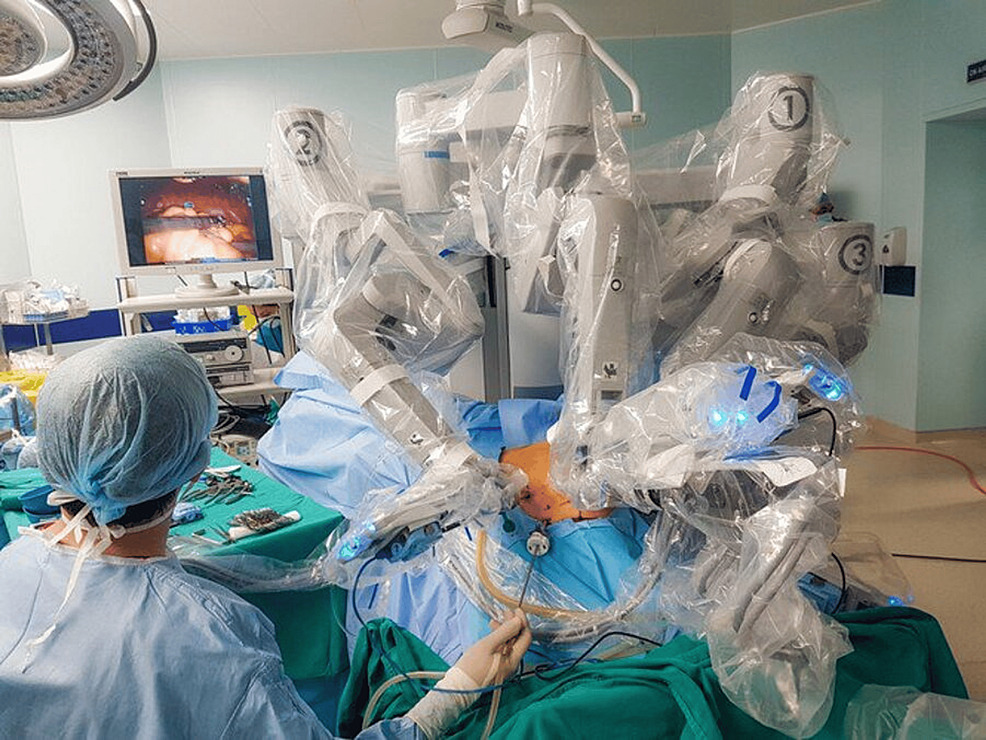
The distinction between Data Science vs Machine Learning becomes clearest when examining their real-world applications
3.3. When to choose Data Science vs Machine Learning for projects
The choice between a Data Science and a Machine Learning approach depends directly on the project’s goal: whether you aim to understand the past or predict the future.
The Data Science approach is typically chosen for retrospective analysis:
- Project goal: To explain what happened or why it happened.
- Methodology: Focus on exploratory data analysis (EDA), statistical tests, and visualizations to explain past events.
- Example 1 (Customer churn): Analyze customer survey data and historical metrics to find the root causes of why customers leave.
- Example 2 (Website traffic): Analyze traffic sources, time-on-page, and conversion funnels to understand how users navigate the site and suggest improvements.
The Machine Learning approach is chosen when the goal is prediction or automation:
- Project goal: To predict what will happen next or automate an action.
- Methodology: Focus on building, training, and deploying a model to predict a future outcome or automate a process.
- Example 1 (Customer churn): Build a classifier model to predict which specific customers are likely to churn in the next 30 days.
- Example 2 (Website traffic): Build a recommender system that personalizes the content on the homepage for each user based on their past behavior.
Ultimately, the distinction lies in the objective, Data Science focuses on retrospective discovery to explain past events, while Machine Learning is strictly forward-looking, dedicated to building predictive models that automate future actions.
4. Career Paths and Job Market Outlook
The robust growth of data-driven industries has created parallel, high-demand career tracks for both Data Scientists and Machine Learning Engineers. The choice between them often comes down to an individual’s preference for business strategy and broad analysis versus deep algorithmic development and production engineering.
4.1. Data Scientist roles and career progression
Data Scientist is a foundational role that requires a blend of business, statistics, and programming. The career path often moves toward greater strategic impact.
- Entry-level: Data Analyst, Junior Data Scientist that focuses on reporting, SQL, and basic statistical analysis.
- Mid-level: Data Scientist, generally focus on end-to-end project ownership, advanced modeling, and stakeholder communication).
- Senior/Management: Senior Data Scientist, Analytics Manager, Director of Data Science shifts focus toward defining the overarching data strategy, mentoring and leading teams, and solving high-level business problems..
Data Scientists are essential in non-tech-native companies such as pharma, consulting, financial services where deriving business intelligence from internal data is the primary goal.
4.2. Machine Learning Engineer roles and demand

The salary gap between Data Science and Machine Learning reflects the high demand for engineers who can productionize AI at scale
The ML Engineer role is inherently more specialized, sitting at the intersection of Data Science and Software Engineering.
- Entry-level: An ML Intern or Junior ML Engineer primarily focuses on foundational tasks such as data pipeline creation, model training, and providing basic MLOps support.
- Mid-level: A Machine Learning Engineer elevates their focus on model optimization, production deployment, scaling models, and working with cloud infrastructure.
- Senior/Management: Senior ML Engineer, Deep Learning Specialist, Applied Scientist, Director of AI/ML that focus on designing complex AI architectures, leading research, and managing production systems at scale.
ML Engineers are highly sought after in technology companies, AI-focused startups, and any organization building a customer-facing, data-driven product. The demand for ML Engineers is projected to continue its exponential rise as more businesses seek to automate and infuse AI into their core operations.
4.3. Salary trends and global hiring outlook
Financial compensation for these roles remains among the most competitive in the global economy, with a clear premium placed on specialized machine learning skills. In 2025, the gap between Data Science vs Machine Learning salaries is approximately 10–15%, reflecting the high technical complexity and demand for engineers who can productionize AI at scale.
- United Kingdom: Data Scientists earn between $55,919 – $98,729 per year, while ML Engineers average $52,946 – $93,964 per year.
- Australia: Data Scientists typically earn $123,395 – $217,861 per year, compared to $115,777 – $205,471 per year for ML Engineers.
- United States: Data Scientist salaries range from $92,133 – $162,667 per year, while ML Engineers start from $94,334 – $167,415 per year.
- Canada: Data Scientists earn $96,507 – $170,389 per year, versus $93,433 – $165,817 per year for ML Engineers.
- Vietnam: Data Scientist salaries are generally $19,118 – $33,754 per year, whereas ML Engineers earn $19,385 – $34,304 per year.
Career progression starts with junior roles focused on building clean datasets and reproducible notebooks. Mid-level professionals take ownership of model lifecycles and automated pipelines. At the senior and principal levels, the role shifts toward technical authority, mentorship, and defining the company’s AI roadmap. Elite roles, like AI Research Scientists, can see senior-level compensation exceed $220,000.
5. Studying Data Science and Advanced Computing at VinUniversity
For ambitious students looking to secure a foothold in the high-growth fields of Data Science vs Machine Learning, a rigorous academic program is the essential first step. VinUniversity’s College of Engineering and Computer Science offers pathways designed to build both the broad analytical foundation of Data Science and the specialized skills required for advanced computing.
5.1. Overview of VinUniversity’s Bachelor of Science in Data Science as the primary academic pathway
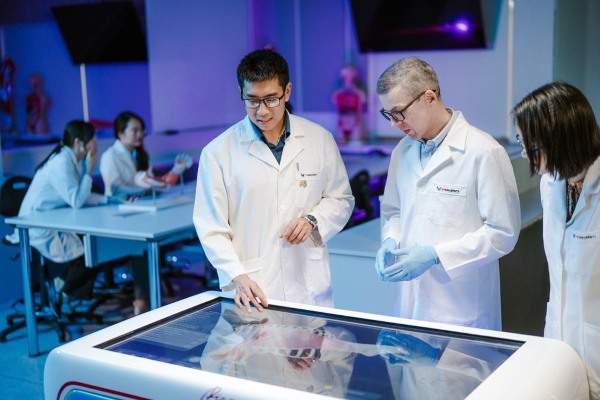
The VinUniversity BSDS provides the interdisciplinary knowledge students need to excel in the field
The Bachelor of Science in Data Science (BSDS) at VinUniversity is strategically designed to provide students with the interdisciplinary knowledge base necessary to excel in the field. The program emphasizes both theoretical mastery and practical application, aligning with the core requirements of a Data Scientist. The curriculum is academically validated by Cornell University, ensuring that its structure, content, and learning outcomes are benchmarked against internationally recognized standards in data science education. The curriculum is academically validated by Cornell University, ensuring that its structure, content, and learning outcomes are benchmarked against internationally recognized standards in data science education.
- Program overview
- The Bachelor of Science in Data Science (BSDS) at VinUniversity is a rigorous 4-year, full-time program combining computational theory with practical data-driven applications.
- The curriculum is designed to prepare graduates for competitive graduate study or advanced technical roles in global technology sectors.
- Academic pathways
- Single Major (120 credits): Focuses on developing core data science competencies for specialized technical careers.
- Major + Minor (135 credits): Allows students to add a 15-credit minor in areas such as Business Essentials, Finance, Marketing, Communications, Healthcare Management, or Healthcare Information.
- Integration of theory and practice
- Capstone project: Students address real-world data challenges, applying analytical and modeling techniques to practical organizational problems.
- Course-related projects and electives: Advanced electives in areas such as Artificial Intelligence, Natural Language Processing, Optimization, and computational methods enable deeper technical specialization.
- Internship and experiential learning: Non-credit internships and field trips are embedded in the curriculum to provide exposure to professional environments.
- Progressive skill development
- The program progresses from foundational mathematics and programming to advanced analytics and applied data science.
- Graduates are prepared to pursue Data Analyst roles or advance toward Data Scientist careers requiring stronger modeling and machine learning expertise.
- Program objectives
- Develop strong theoretical foundations in computing, statistics, and data management.
- Provide hands-on experience with modern data tools and analytical techniques.
- Foster professional awareness of ethical, legal, and organizational responsibilities.
- Graduate learning outcomes
- Acquire, explore, and analyze large or complex datasets to solve real organizational problems.
- Design and maintain data processing workflows using standard programming tools.
- Apply core computational and statistical theories to data science challenges.
- Communicate insights effectively to both technical and non-technical audiences.
- Collaborate responsibly within multidisciplinary teams and uphold ethical standards.
This curriculum provides the perfect launchpad for a Data Science career, but its robust statistical and computer science core also prepares graduates for the specialized demands of Machine Learning.
5.2. Academic foundations for advanced study, including PhD in Computer Science

VinUniversity’s research-focused programs equip graduates to contribute at the technology frontier
For students whose ultimate goal is to become an expert Data Scientist, a Machine Learning Engineer or pursue a research-focused career, VinUniversity also offers a program for advanced study, such as the PhD in Computer Science.
- Program focus
- The PhD in Computer Science at VinUniversity is designed to develop highly specialized researchers capable of advancing computational knowledge and driving technological innovation.
- Research-intensive training
- Emphasizes independent, original research to build deep technical expertise, advanced analytical reasoning, creativity, and complex problem-solving skills in Computer Science.
- International academic standards
- The postgraduate curriculum is academically validated by Cornell University, ensuring alignment with globally recognized benchmarks in Computer Science education and research.
- World-class faculty and supervision
- Doctoral candidates are supervised by VinUniversity faculty members ranked among the world’s top 2% most cited scholars.
- Opportunities for co-supervision and mentorship with international academics and industry-experienced researchers are available.
- Global academic and industry exposure
- Students participate in international research collaborations, joint projects, global conferences, and professional exchanges.
- Engagement spans both academic research communities and innovation-driven industry ecosystems.
- Interdisciplinary, application-oriented research areas
- Research focuses on areas such as Artificial Intelligence and Optimization, Smart Health and Precision Medicine, Environmental Intelligence, Computational Biology, Digital Material Science, and related computational fields addressing real-world challenges.
- Innovation and entrepreneurship support
- Doctoral research aligns with societal and industry needs, integrating theoretical depth with applied work in areas including artificial intelligence, cybersecurity, data science, and smart systems.
- Innovation hubs support the translation of research outputs into real-world impact.
- Advanced research infrastructure
- Access to state-of-the-art facilities such as the Superlab, 24/7 Open Project Lab, and Rapid Prototyping Lab.
- Full access to major Computer Science databases, including IEEE and ACM.
- Comprehensive financial support
- All PhD students receive a 100% tuition scholarship valued at approximately USD 40,000 per year.
- An annual stipend of USD 10,000 is provided for Research Assistant or Teaching Assistant roles.
- Career and leadership outcomes
- Graduates are well prepared for academic careers and advanced research or industry roles, including AI researcher, data scientist, technology consultant, and university lecturer.
- The program provides strong competitiveness in the global high-technology job market.
The comprehensive structure, particularly the focus on research and advanced computing at both the undergraduate and postgraduate levels at VinUniversity, ensures that graduates can navigate the nuances of the data landscape and contribute meaningfully at the frontier of technology.
6. Conclusion

VinUniversity provides the rigorous framework to master data, tech, and business for your career
Understanding Data Science vs Machine Learning is essential for making informed academic and career decisions in today’s data-driven world. While data science offers a broad analytical framework, machine learning provides the algorithmic tools that power modern AI systems. Together, they form a complementary skill ecosystem that drives innovation across industries.
If you are ready to master these powerful, interconnected disciplines and launch a career at the intersection of data, technology, and business, VinUniversity offers the rigorous academic framework you need.
Ready to start your journey into the world of data-driven innovation?
Explore the Bachelor of Science in Data Science program to build your foundational expertise, or learn about the PhD in Computer Science for advanced research opportunities in AI and Machine Learning. Click on the links below to dive deeper into VinUniversity’s programs and take the next step toward becoming a leader in the data revolution: https://vinuni.edu.vn/