Data Science Skills: Essential Competencies for Success
January 23, 2026


At VinUniversity, data-driven education is designed to align with the realities of the global digital economy. As organizations increasingly rely on data to guide decisions, mastering Data Science skills has become essential for students aiming to build sustainable and future-ready careers.
This article provides a structured and evidence-based overview of the competencies that define modern Data Science, how they differ from traditional IT or analytics roles, and how academic programs, particularly at VinUniversity, systematically develop these skills to prepare graduates for both industry and advanced research pathways.
The modern Data Scientist is a multidisciplinary expert operating at the intersection of statistics, computer science, and domain expertise. Success requires more than technical execution, it demands a nuanced blend of analytical depth, computational strength, and business acumen to frame questions and clearly communicate complex findings.
Data is now a core asset across nearly every industry, from finance and healthcare to manufacturing and public policy. According to the World Economic Forum, data-related roles consistently rank among the fastest-growing professions globally, driven by the widespread adoption of digital platforms, automation, and artificial intelligence (AI).
Organizations rely on Data Science skills to:
Unlike basic reporting functions, Data Science integrates analytical rigor with computational methods, enabling organizations to move beyond descriptive analysis toward forecasting and optimization.
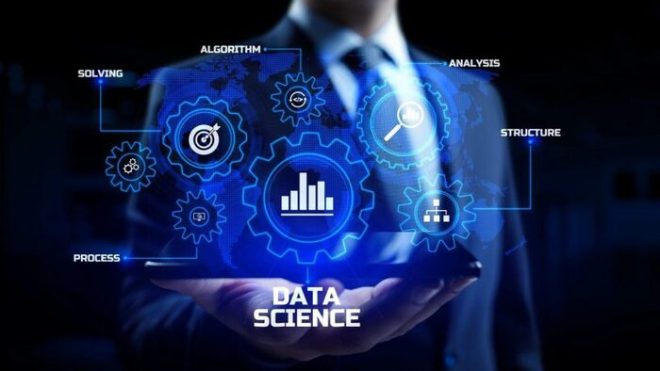
The modern Data Scientist is a multidisciplinary expert operating at the intersection of statistics, computer science, and domain expertise
Traditional IT roles typically focus on system maintenance, software deployment, and infrastructure reliability. Analytics roles, meanwhile, often emphasize descriptive statistics, dashboards, and business reporting.
In contrast, Data Science skills combine:
This distinction is widely recognized in academic and industry literature. Data Scientists are highlighted that they operate at the intersection of computer science, mathematics, and domain knowledge, rather than within a single technical silo.
The technical foundation forms the core of a Data Scientist’s toolkit, enabling them to manipulate data, construct complex models, and derive statistically valid insights.
Programming proficiency is non-negotiable, serving as the primary vehicle for data processing and model creation.
In summary, while Python and R enable complex modeling and analysis, SQL provides the critical foundation for accessing and managing data, and disciplined Data Wrangling guarantees the high-quality input necessary to produce reliable and trustworthy predictive insights.

A Data Scientist’s technical foundation enables them to manipulate data, construct models, and derive statistically valid insights
A solid theoretical foundation in statistics and mathematics is what distinguishes a data scientist from a skilled programmer. These concepts are the bedrock of all data modeling.
Ultimately, deep mathematical and statistical fluency is what separates a model user from a model innovator. This knowledge base is essential for ensuring that predictive systems are not only highly accurate but also trustworthy, and optimized for large-scale performance.
Machine learning (ML) and Artificial Intelligence (AI) are central to the predictive power of Data Science.
Ultimately, the Data Scientist is responsible for transforming theory into practice by developing robust, scalable machine learning models. This requires not only deep statistical insight into model behavior but also the engineering capability to deploy those models efficiently using modern big data and cloud computing architectures.

The Data Scientist is responsible for transforming theory into practice by developing robust, scalable machine learning models
The final step in the Data Science process is translating complex analysis into accessible, actionable insights for decision-makers.
The Data Scientist must act as an effective translator, utilizing visualization to reveal insights and data storytelling to craft a compelling narrative that ensures complex technical discoveries are understood by stakeholders and directly drive positive business outcomes.
Technical ability is only half the equation. Effective data scientists require strong professional and cognitive skills to operate successfully within an organization.
Data science is fundamentally about finding solutions to ambiguous problems.
The Data Scientist’s success relies not just on technical skills, but on the intellectual rigor and critical thinking required to translate ambiguous business challenges into precise, trustworthy analytical solutions.
Data Science projects are rarely solitary endeavors. They require constant interaction with engineers, domain experts, and executive leadership.
The ability to communicate complexity simply and collaborate effectively across teams transforms a technically proficient Data Scientist into a strategic business asset.

Data Science projects require constant interaction with engineers, domain experts, and executive leadership
As Data Science models increasingly affect human lives, for instance, loan approvals, hiring decisions, medical diagnoses. However, ethical responsibility becomes paramount.
A modern Data Scientist’s competency is incomplete without a strong ethical framework to ensure that predictive models are not only technically sound but also responsible, fair, and compliant with privacy laws.
Mastering the broad and deep competencies of Data Science requires a structured, multidisciplinary academic approach that balances theoretical rigor with practical application.

Mastering Data Science requires a structured, multidisciplinary academic approach balancing theoretical rigor with practical application
Excellence in Data Science is built upon a tripartite foundation. Academic programs must ensure students achieve deep proficiency in:
These three disciplines form the indispensable theoretical and practical bedrock upon which all advanced Data Science techniques, from Machine Learning to AI, are constructed.
The most demanding jobs in Data Science often require the ability to innovate and develop new methods, which necessitates early exposure to research. Academic programs that integrate research methodologies such as formulating novel hypotheses, designing experiments with rigorous controls, and documenting findings that prepare students to tackle problems where existing solutions are insufficient.
This emphasis on research is essential for students considering advanced degrees like a PhD in Computer Science. Doctoral programs, such as those at VinUniversity focusing on AI, big data, and cyber security, require not only theoretical knowledge but also the capacity for independent, original scholarly work. Research experience is thus an indispensable link between undergraduate study and doctoral-level work.
VinUniversity offers a modern, interdisciplinary degree specifically designed to address the global need for highly skilled data scientists. Its program is built on partnerships with prestigious institutions and a commitment to academic excellence.
The Bachelor of Science in Data Science at VinUniversity is a four-year full-time undergraduate program designed to provide students with both foundational and advanced competencies in computing, statistics, and data science methods. The program requires a minimum of 120 credits for graduation, with options to pursue additional minors or combined credit programs up to 135 credits.
This curriculum framework has been reviewed and validated by Cornell University, reflecting international standards in data science education. It aims to develop graduates who are capable of acquiring, managing, and analyzing large or complex data sets while applying appropriate computing and statistical theory.
VinUniversity’s Bachelor in Data Science develops Data Science skills through a structured progression of courses that reflect fundamental and advanced principles required in the field. The curriculum framework intentionally blends computing, mathematics, statistics, and applied Data Science techniques.
From these, graduates gain technical proficiency and the ability to use analytical thinking to solve problems and communicate data insights which are key Data Science skills aligned with global expectations.

VinUniversity’s Bachelor in Data Science develops essential skills through a structured progression of fundamental and advanced courses
A distinctive feature of the Bachelor in Data Science at VinUniversity is its emphasis on project-based and research-integrated learning. These experiences play a central role in crystallizing Data Science skills in real-world contexts.
The curriculum integrates project and research experiences to foster inquiry-driven learning. These activities develop technical competencies alongside professional attributes like critical thinking, collaboration, and ethical awareness, which are key to successful Data Science skills in practice.

VinUniversity’s Computer Science PhD trains innovative researchers to deliver globally impactful breakthroughs
The PhD in Computer Science at VinUniversity is strategically designed to cultivate independent, innovative researchers who can generate globally competitive and impactful scientific work, focusing on pioneering technological breakthroughs.
Ultimately, the VinUniversity PhD program provides an exceptionally rigorous, internationally validated, and generously funded pathway for aspiring scholars to transition into leading researchers who will drive innovation and define the future landscape of Computer Science.

VinUniversity graduates immediately address complex, real-world data challenges, making them highly sought after globally
The mastery of Data Science skills translates directly into exceptional career flexibility and earning potential across global industries. The demand for professionals who can navigate complex datasets and build predictive systems continues to outpace the supply of qualified talent globally.
Strong competencies open doors to diverse and rewarding career paths, including:
The specialized training in modern methodologies provided by institutions like VinUniversity ensures that graduates are prepared to immediately address the complex, real-world data challenges faced by modern organizations, making them highly sought after in the global market. Furthermore, the robust foundational knowledge in mathematics and computer science ensures their Data Science skills remain relevant and adaptable as the underlying technologies evolve.
To embark on a path to mastering the essential Data Science skills and securing high-demand careers, explore the rigorous, research-intensive academic programs designed for global competitiveness. Discover the VinUniversity Bachelor of Science in Data Science curriculum and its commitment to excellence in foundational mathematics, computer science, and practical research: https://vinuni.edu.vn/