Can you transfer PhD programs? What you should know
February 19, 2026


“Can you transfer PhD programs?” is one of the most frequently asked yet most misunderstood questions among those who are pursuing or preparing to enter a doctoral path. Unlike undergraduate or master’s degrees, a PhD is not simply a structured academic program. It is a long-term research journey that is closely tied to the individual, their academic direction, and a specific research environment.
In the context of increasingly globalized education and growing academic mobility, more doctoral candidates are questioning whether it is possible to change PhD programs when they encounter difficulties, shift their research interests, or seek a more suitable academic environment. However, the answer to “can you transfer PhD programs” is far from a simple yes or no.
For students who are considering a long-term academic career, choosing a strong research-oriented foundation from the beginning, such as at VinUniversity, plays an important role in reducing the risk of needing to transfer PhD programs later on and in improving adaptability within international academic environments.
In theory, transferring a PhD program is possible. In academic practice, however, it is rare, highly complex, and often associated with significant academic costs. The question “can you transfer PhD programs” reflects a fundamental difference between doctoral education and degree programs that follow a traditional credit based structure.

Unlike undergraduate study, a PhD is defined by research direction rather than a fixed curriculum.
At the undergraduate level, education is highly standardized. Students follow a fixed curriculum, complete courses along a clearly defined pathway, and can often transfer academic credits between institutions with comparable systems. The core objective at this level is to provide foundational knowledge and general skills.
PhD education operates very differently. In essence, a PhD is a form of research based training, in which there is no single standardized curriculum that applies to all doctoral candidates. Coursework, if required, serves only a supporting role for research rather than being the central component. Academic progress is assessed based on the quality, originality, and contribution of the research, not on the number of completed courses.
Each doctoral candidate pursues a distinct research question, using specific methods, data, and theoretical frameworks within a particular academic context. As a result, asking “can you transfer PhD programs” is effectively asking whether an ongoing research project can be relocated into an entirely new academic ecosystem with different expectations, standards, and intellectual priorities.
The decision to consider transferring a PhD program rarely stems from a single factor. It is usually the result of multiple academic and personal pressures accumulating over time.
From an academic perspective, common reasons include a misalignment between the research direction and long term academic goals, incompatibility in research methods, expectations, or working styles with a supervisor, and limitations in research resources, data access, or academic support networks.
On a personal level, doctoral candidates may experience changes in family or geographic circumstances, prolonged financial pressure, or difficulties adapting to the academic culture of their institution.
Within professional academic environments, transferring a PhD is generally viewed as a last resort. It is typically considered only after internal adjustments, such as refining the research topic, adding a co-supervisor, or restructuring the research plan, are no longer viable options.
In practice, most universities do not offer a formal administrative mechanism for transferring PhD programs. Instead, doctoral candidates seeking to move institutions usually have to approach the process as a new PhD application, with prior research experience serving only as contextual background rather than transferable progress. This reality gives the question “can you transfer PhD programs” a very different meaning from transferring institutions at the undergraduate level.

Research alignment and supervisory commitment matter more than previous institutional affiliation.
The most critical factor in any PhD transfer is not the reputation of the previous institution or the amount of time already spent in the program, but the degree of research alignment.
Receiving institutions typically assess whether the applicant’s research topic aligns with the strategic direction of the department or laboratory, whether a potential supervisor is willing and able to commit to long term supervision, and whether the doctoral candidate can integrate into the broader research agenda of the unit.
Without strong academic consensus and commitment from a new supervisor, transferring a PhD is unlikely to proceed, regardless of how strong the candidate’s overall profile may be.
A common misconception behind the question “can you transfer PhD programs” is the assumption that prior academic progress will be fully preserved. In reality, this is rarely the case. Coursework may be partially recognized, depending on institutional policies, but research qualification exams often need to be retaken. Dissertation proposals usually must be rewritten to align with the expectations, standards, and intellectual context of the new institution.
Because universities must ensure academic continuity and research quality, many doctoral candidates who transfer programs experience an extension of their time to degree by one or two years, or even longer if their research direction changes substantially.
As discussed in Sections 1 and 2, transferring a PhD program does not follow an administrative or procedural logic. Instead, it depends almost entirely on the doctoral candidate’s core academic capacity. For this reason, academic flexibility does not begin at the PhD level. It is cultivated much earlier, particularly during undergraduate education.

A research oriented Computer Science foundation enables long-term academic adaptability.
A research oriented The Bachelor of Science in Computer Science program plays a critical role in enabling academic mobility at the doctoral level.
First, students develop algorithmic and systems thinking. These modes of thinking form the backbone of virtually all areas of Computer Science research, from artificial intelligence and systems to theory and data driven fields. Once these ways of thinking are internalized, researchers can engage with new problems without being tied to specific tools or short term methodologies.
Second, a solid grounding in mathematics as applied to research allows students to understand the underlying principles of models, algorithms, and analytical techniques, rather than using them mechanically. This becomes particularly important in the context of a PhD transfer, where prospective institutions and supervisors tend to value theoretical reasoning and conceptual depth over narrow technical experience.
Third, students cultivate the ability to learn independently and conduct self-directed research. A PhD demands a high level of autonomy, and this capacity cannot be developed overnight. A strong undergraduate foundation enables doctoral candidates to adapt more quickly to new research directions, collaborate effectively with new supervisors, and maintain academic direction even when their research environment changes.
Together, these elements allow researchers to shift focus without losing intellectual coherence, even when facing substantial changes in their PhD trajectory.

Core research skills retain value across institutions and doctoral environments.
While research topics, methodologies, and subfields may vary, certain core research skills remain universally valued across institutions.
The ability to read, analyze, and synthesize academic literature is fundamental. This skill allows doctoral candidates to quickly understand a new research landscape, identify knowledge gaps, and position their work within a different academic ecosystem.
Equally important is the ability to formulate research questions with genuine scholarly value. When transferring a PhD, the topic itself may change, but the capacity to ask meaningful, well defined questions remains central. Receiving institutions often place greater emphasis on this ability than on continuity with a previous project.
In addition, skills in academic writing, scholarly presentation, and critical discussion are essential for maintaining credibility and continuity in an academic career. These competencies also serve as direct evidence of research independence during the PhD application or transfer process.
Finally, long term research project management is an often overlooked but decisive skill. A PhD is a multi year endeavor, and the ability to plan, adjust timelines, and sustain motivation constitutes a form of academic capital that retains value even when the research environment changes.
Computer Science is not a single unified discipline. It consists of multiple research areas, each with its own theoretical foundations, research methodologies, and publication standards. This fragmentation makes the question “can you transfer PhD programs” particularly sensitive within Computer Science.
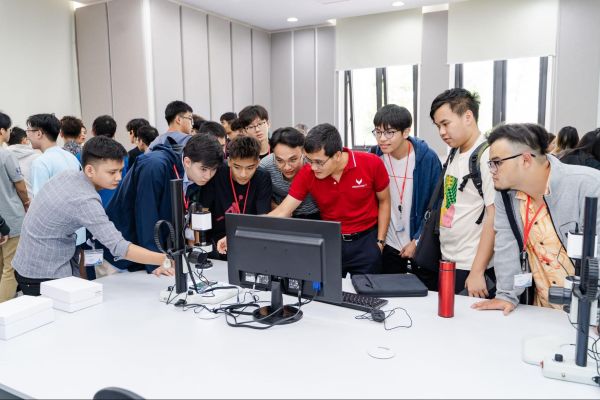
Shifting research direction often requires rebuilding theoretical and methodological foundations.
Moving between areas such as artificial intelligence, systems, theory, or data centric computing often requires doctoral candidates to relearn advanced theoretical foundations, adapt to different research methods and evaluation criteria, and rebuild academic networks and research communities.
Even when the research topic remains broadly similar, differences in methodology and academic expectations can create substantial gaps during the transition process.
The greatest risk in transferring a PhD is not merely an extended time to degree but the loss of research momentum and academic originality. Without a clear intellectual direction, doctoral candidates may fall into repetitive work or struggle to produce meaningful new contributions.
As a result, institutions tend to accept transfer candidates only when they demonstrate a coherent academic vision, the ability to connect prior research with new directions, and a sufficiently strong academic record to indicate long term research potential.
These criteria reflect the true nature of the question “can you transfer PhD programs”: it is not a matter of formal permission but of academic readiness. Only doctoral candidates with strong foundational training and clear research direction are positioned to make such a transition in a sustainable and academically credible way.
As discussed in the previous sections, transferring a PhD program is a complex decision that carries substantial academic risk. For this reason, the most critical factor is not whether a transfer is possible later on, but whether an appropriate academic pathway is established from the very beginning. At VinUniversity, Computer Science programs are designed with continuity and research orientation in mind, helping students minimize the likelihood of facing the question “can you transfer PhD programs” during their doctoral journey.
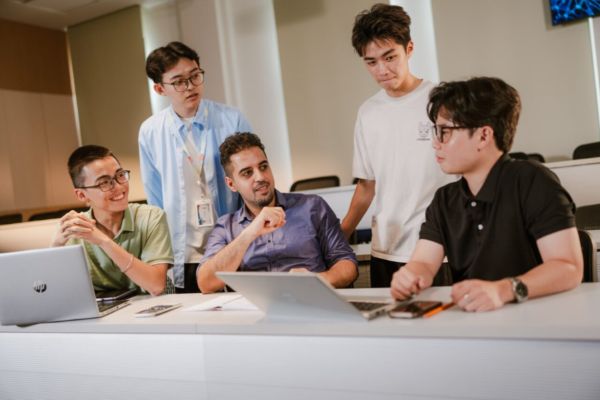
Early research exposure prepares students for long-term doctoral success.
The The Bachelor of Science in Computer Science program at VinUniversity is structured to build a strong academic foundation rather than focusing solely on short term technical skills. Students receive rigorous training in core computer science and applied mathematics, through which they develop analytical thinking, abstraction skills, and a research driven approach to problem solving.
The curriculum emphasizes the integration of theory and practice through active learning. Students not only study fundamental topics such as algorithms, computer architecture, artificial intelligence, and machine learning, but also apply these concepts in real world projects and research oriented coursework. This process enables students to develop a deep understanding of underlying principles, formulate meaningful academic questions, and cultivate independent research capability from the undergraduate level.
The academic quality of the program is validated by Cornell University, ensuring that the curriculum and learning outcomes align with international standards in Computer Science education. This research oriented undergraduate foundation plays a crucial role in maintaining academic continuity, allowing students to progress to advanced degrees without the need to restructure their research trajectory later on.
At the doctoral level, the Computer Science PhD program at VinUniversity emphasizes research depth and intellectual coherence. A PhD is not treated as an extension of undergraduate or master’s coursework but as a rigorous research training process in which doctoral candidates are expected to contribute original knowledge to the field of Computer Science.
The program follows international doctoral training standards, with a strong focus on independent research capability, the development and defense of a meaningful research agenda, and active engagement with the global scientific community. Doctoral candidates work in a research oriented academic environment, have access to modern research facilities, and participate in interdisciplinary projects in areas such as artificial intelligence, data science, and robotics.
Being prepared with a research foundation from the undergraduate level allows doctoral candidates to maintain continuity in both thinking and methodology. As a result, the risk of misalignment or academic mismatch that might prompt the question “can you transfer PhD programs” is significantly reduced.

Choosing the right academic pathway reduces the need to ask: can you transfer PhD programs?
In summary, can you transfer PhD programs? In theory, the answer is yes. In academic practice, however, it is a complex option that often involves substantial costs in time, effort, and research continuity. A PhD is not a process of exploring multiple directions but a long term commitment to a specific research agenda within a suitable academic environment.
Rather than focusing on the possibility of transferring doctoral programs, prospective researchers should invest carefully in selecting a research oriented Computer Science pathway from the undergraduate level. VinUniversity, with its internationally aligned programs and strong emphasis on academic continuity, provides a solid foundation for those pursuing a long term research career in Computer Science.
To learn more about Computer Science programs and academic pathways at VinUniversity, please visit the official website:
https://vinuni.edu.vn/