Automation and Robotics in Construction Explained
February 21, 2026


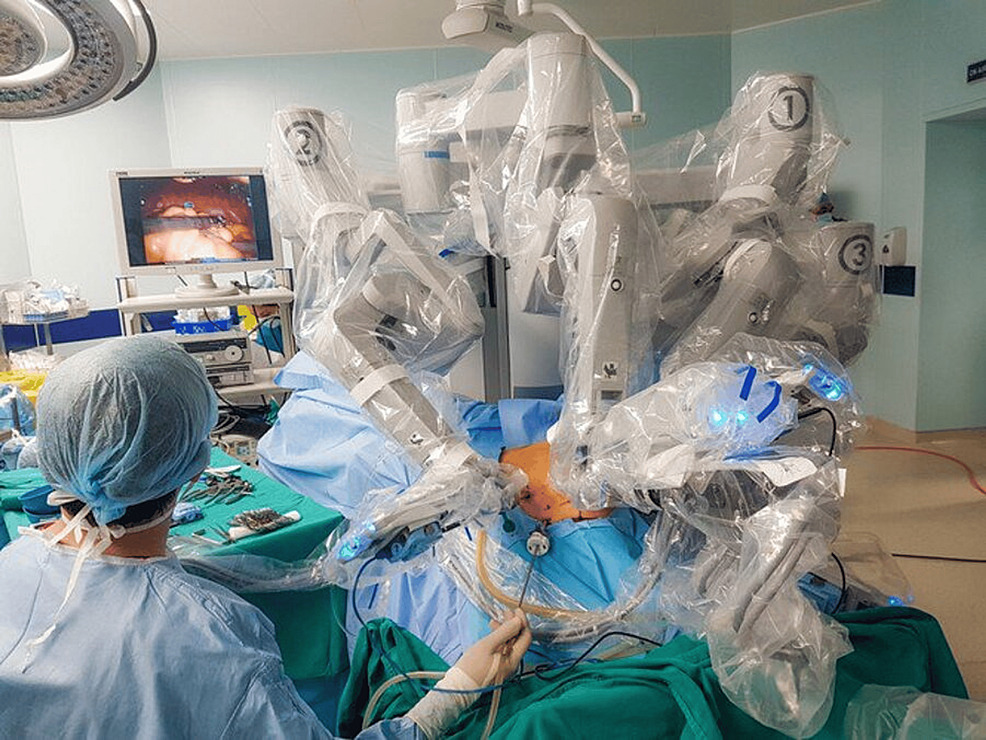
In the context of the global construction industry facing pressures on productivity, workplace safety, and sustainability, automation and robotics in construction are emerging as a long-term strategic direction. This is not simply the appearance of robots on construction sites; it’s a transformation based on software, algorithms, and computer science, where technology plays a central role in redefining how humans design, construct, and manage projects.
At VinUniversity, our Computer Science programs are geared towards embracing this trend, providing a solid academic foundation for interdisciplinary fields such as automation and robotics in construction, where technology and construction are increasingly intersecting.
Automation and robotics in construction are transforming the global construction industry through software, data, and intelligent systems.
Automation and robotics in construction are transforming how building projects are designed, executed, and operated. In the past, construction relied primarily on manual labor and on site experience. Today, decision making is increasingly supported by analytical software, simulation systems, and optimization algorithms.
Specifically, automation and robotics in construction help the industry to:
According to analyses from McKinsey and the World Economic Forum, the adoption of automation and robotics has the potential to deliver double digit productivity gains in construction, a level that is difficult to achieve through traditional methods alone.

Algorithm-based systems enable construction projects to plan, predict, and optimize processes in real time.
The fundamental difference between traditional and modern construction lies in the degree of reliance on algorithms. In automation and robotics in construction, systems do not merely execute tasks but also compute, predict, and optimize.
Modern construction projects increasingly operate through:
As a result, construction is shifting from a linear process to an adaptive system capable of adjusting to changes in environmental conditions, design requirements, or project timelines.
In practice, automation and robotics in construction are implemented through autonomous robots operating within pre designed automated workflows. These robots take on tasks where human workers face limitations in precision, endurance, or safety.
Common applications include:
Importantly, these robots do not operate in isolation. They function as part of an integrated software ecosystem in which data is continuously collected, analyzed, and fed back into the system.
Data, sensors, and real-time computing form the backbone of intelligent construction environments.
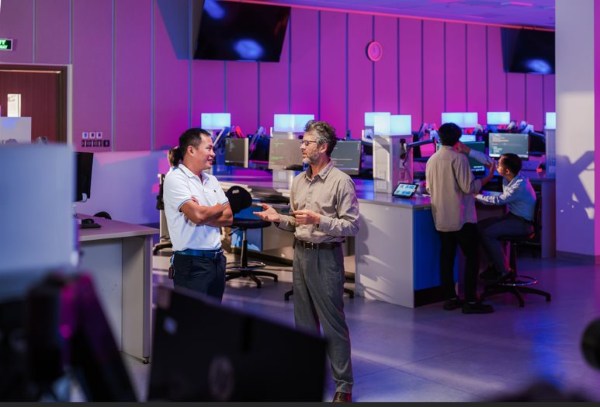
Data serves as the fuel for automation and robotics in construction. Modern construction sites are equipped with sensor networks and computing systems that enable:
The integration of sensing, data, and computing brings construction closer to a cyber physical systems model, where physical environments and digital systems are tightly interconnected.
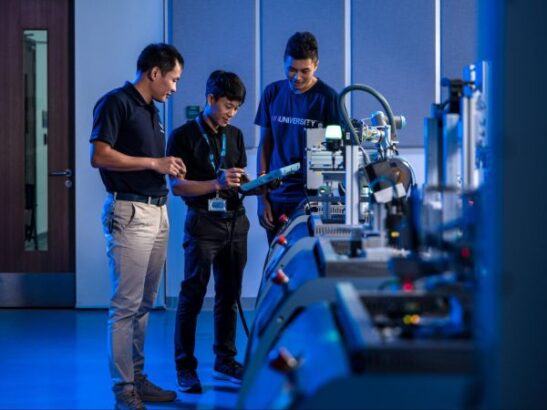
Automation and robotics in construction rely on core computer science technologies, particularly artificial intelligence, machine learning, and computer vision. These technologies allow robots not only to perform tasks but also to understand their environment and learn from data.
Through these capabilities, construction robotics evolves from rigid automation toward intelligent, adaptive systems.
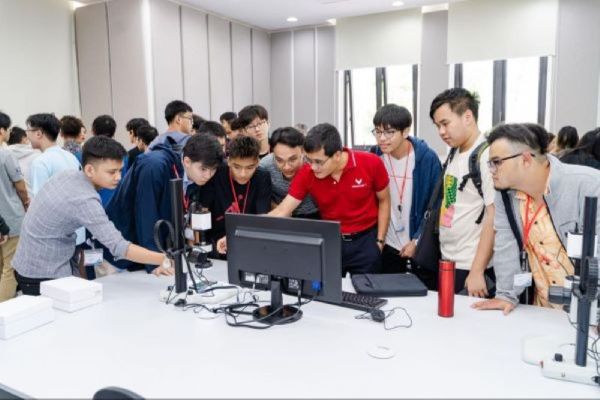
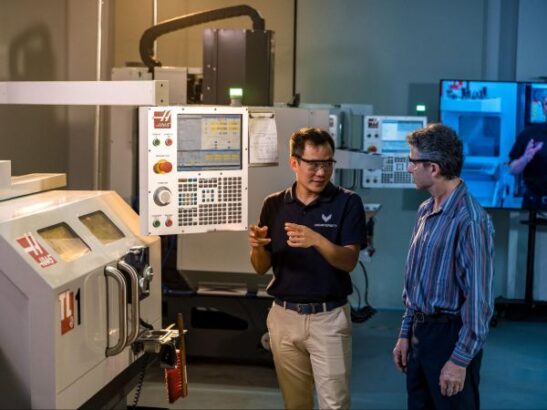
Advanced algorithms coordinate multiple robots and optimize time, cost, and resources in construction automation.
Algorithms form the operational foundation of automation and robotics in construction. Modern construction problems often involve:
These challenges require strong foundations in algorithms, optimization, and computer science, highlighting why computer science serves as a central pillar of intelligent construction.
The development of automation and robotics in construction is not just about replacing manual labor, but is ushering in a new era: smart construction based on software, data, and artificial intelligence. In the future, construction sites will operate as a distributed computing system, where robots, software, and humans interact continuously.
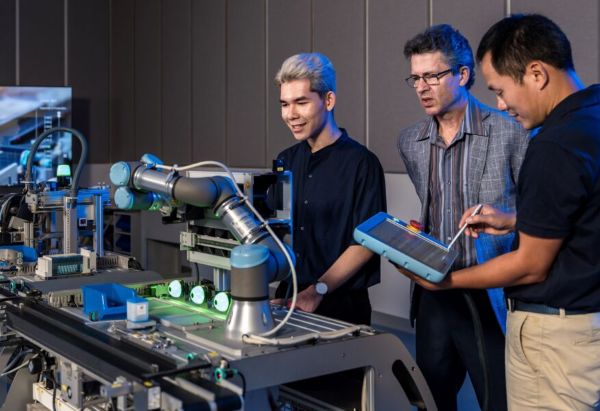
Software-defined systems allow construction automation to scale and adapt to changing project conditions.
One of the greatest advantages of automation and robotics in construction is its scalability and adaptability, something that traditional construction methods struggle to achieve. From a computer science perspective, this is achieved through:
Thanks to these software platforms, automation and robotics in construction can be flexibly applied to a wide variety of projects, from residential housing to large-scale infrastructure projects.
Over the next decade, several technology trends are predicted to continue reshaping automation and robotics in construction:
VinUniversity provides a clearly structured and internationally recognized pathway that allows students to progress from undergraduate education to doctoral research in Computer Science, supported by strong academic standards and comprehensive financial backing.
The Bachelor of Science in Computer Science at VinUniversity is designed to deliver strong technical foundations alongside meaningful real-world experience, preparing graduates for leadership roles in the digital era and for advanced academic pathways such as a PhD. Key features of the program include:
Through this integrated design, the Computer Science bachelor’s program equips students not only with strong technical proficiency, but also with the analytical mindset, research readiness, and adaptability required for funded doctoral study and long-term success in technology-driven fields.

Advanced software engineering and AI research at VinUniversity support innovation in construction automation.
The PhD in Computer Science at VinUniversity is purposefully designed to develop independent, forward-thinking researchers capable of producing high-impact, internationally recognized research. The program prepares scholars to address complex scientific challenges and contribute original knowledge at both national and global levels. Key aspects of the program include:
With strong financial support and international academic integration, graduates emerge with deep expertise, independent research capacity, and a global outlook suitable for leadership roles in academia and industry.
When evaluating the cost of pursuing a PhD, it is important to consider long-term academic and career outcomes rather than focusing solely on short-term financial factors.

A Computer Science PhD opens advanced research pathways in automation and robotics in construction.
Earning a PhD can profoundly shape long-term career trajectories. While individual outcomes vary, doctoral graduates generally gain access to advanced academic and industry roles that demand deep expertise and independent research capabilities. Common career pathways include:
In Computer Science, PhD graduates often transition successfully into industry due to strong demand for advanced technical knowledge and research-driven innovation. While academic positions remain competitive, industry research roles provide alternative pathways that combine intellectual depth with real-world impact.
Beyond short-term financial considerations, the long-term value of a PhD lies in career flexibility, access to specialized roles, and sustained earning potential. Doctoral training develops skills such as independent research, systems-level thinking, and advanced problem-solving that remain valuable throughout a professional career.
When combined with full financial support and international research exposure, as offered at VinUniversity, a PhD represents not only an academic achievement but also a strategic investment in long-term professional growth and leadership in the global technology ecosystem.

VinUniversity is shaping future leaders in automation and robotics in construction through education and research.
Automation and robotics in construction is becoming one of the most important interdisciplinary fields between construction and computer science. With a strong focus on training and research in Computer Science, VinUniversity is creating a solid foundation for a generation of engineers and researchers ready to lead this transformation.
To learn more about related training and research programs, visit the VinUniversity homepage and explore learning opportunities in computer science and future technologies at https://vinuni.edu.vn/