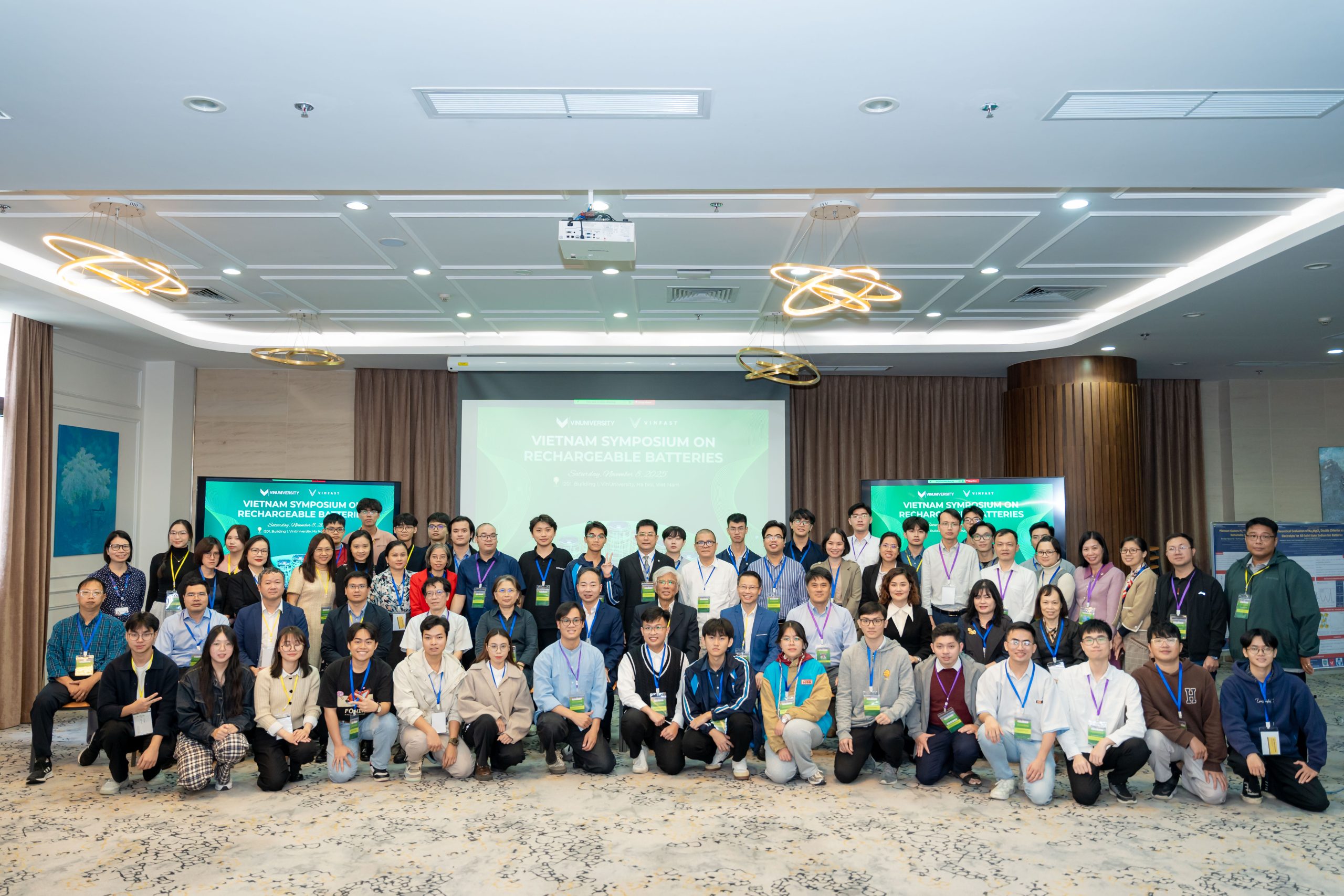
AI Expanding The Frontiers Of Scientific Discovery
November 8, 2025


Artificial Intelligence (AI) is transforming how scientists confront the world’s most complex problems. In fields like materials chemistry, where discovery has historically relied on intuition and trial-and-error, AI now enables systematic exploration at scales previously unimaginable.
A striking example is the Algorithmic Iterative Reticular Synthesis (AIRES) project, an international collaboration between VinUniversity (VinUni), global partners, and Professor Omar M. Yaghi, laureate of the 2025 Nobel Prize in Chemistry for his foundational work on reticular chemistry and metal–organic frameworks (MOFs) (Nobel Prize Organization, 2025). Yaghi has also been awarded the VinFuture Prize in the “Innovators with Outstanding Achievements in Emerging Fields” category (VinFuture Foundation, 2021), recognizing his pioneering work on the discovery and development of MOF and covalent organic framework materials with the potential to improve millions of lives.
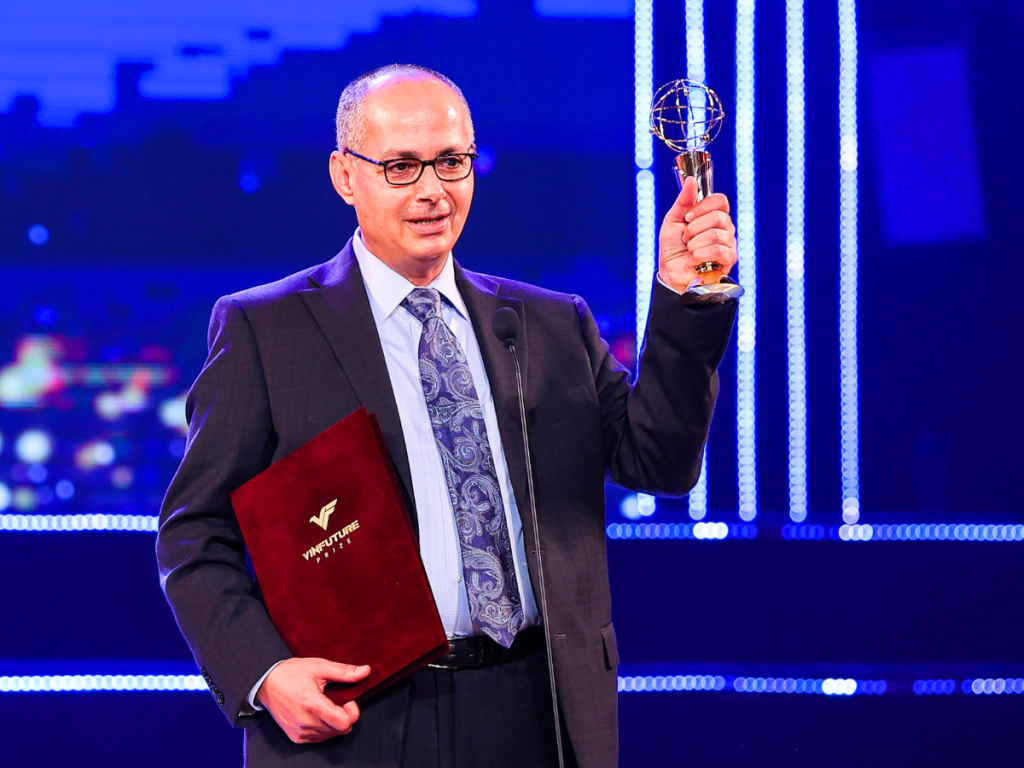
Professor Omar M. Yaghi honored with VinFuture Prize in the “Innovators with Outstanding Achievements in Emerging Fields”. Photo: VinFuture, 2021
The idea for AIRES was first conceived during early discussions between VinUni scientists and Professor Yaghi, exploring how artificial intelligence could accelerate the design and synthesis of novel porous materials for sustainable applications. At its core, AIRES seeks to redefine how humanity discovers new materials faster, smarter, and more sustainably.
Being published in Nature Synthesis (Rong et al., 2025), AIRES integrates machine learning with automated high-throughput experimentation to synthesize zeolitic imidazolate frameworks (ZIFs), porous materials with applications in carbon capture and water harvesting.
Traditional experimental methods, dependent on intuition, yielded success rates as low as 25% and slowed progress after years of incremental advances. AIRES disrupts this paradigm: by employing probabilistic models such as Random Forest and Gaussian Process classifiers, it predicts crystallization outcomes across complex chemical systems.
In just 700 experiments, the team discovered 11 new ZIF structures from 48 novel linkers (“organic bridges” connecting metal nodes that form the backbone of a MOF), doubling the efficiency of traditional approaches and expanding the Zn–ZIF library by one-third.
This is more than optimization; it is a new logic of discovery; one where algorithms collaborate with human intuition to solve climate-scale problems.
In collaboration with scientists from Monash and UC Berkeley, the VinUni research team has successfully demonstrated expertise in AI-led materials discovery and independently uncovered a novel synthesis route for MOFs using environmental inputs, enhanced by robotic automation of experimental processes to validate proposals with increased speed and accuracy (Vu et al., 2025).
In this study, VinUni researchers developed machine learning algorithms particularly effective for data-scarce fields like materials science, where experimental data are often limited and costly to obtain.
The work illustrates how global collaboration can empower emerging research teams to contribute meaningfully to frontier science, and how Vietnam’s growing research ecosystem is ready to play its part on the world stage.
Building on advances in AI-guided synthesis, VinUni researchers are extending this paradigm into predictive modeling, where deep neural networks learn directly from atomic interactions to uncover molecular patterns beyond human reach.
In 2024, a study by the Center for Environmental Intelligence (CEI) at VinUni, in collaboration with Professor Konstantin S. Novoselov, laureate of the 2010 Nobel Prize in Physics (Nobel Prize Organization, 2010), introduced a machine learning model capable of predicting the energetic and electronic properties of MOFs from their atomic environments (Nguyen et al., 2024).
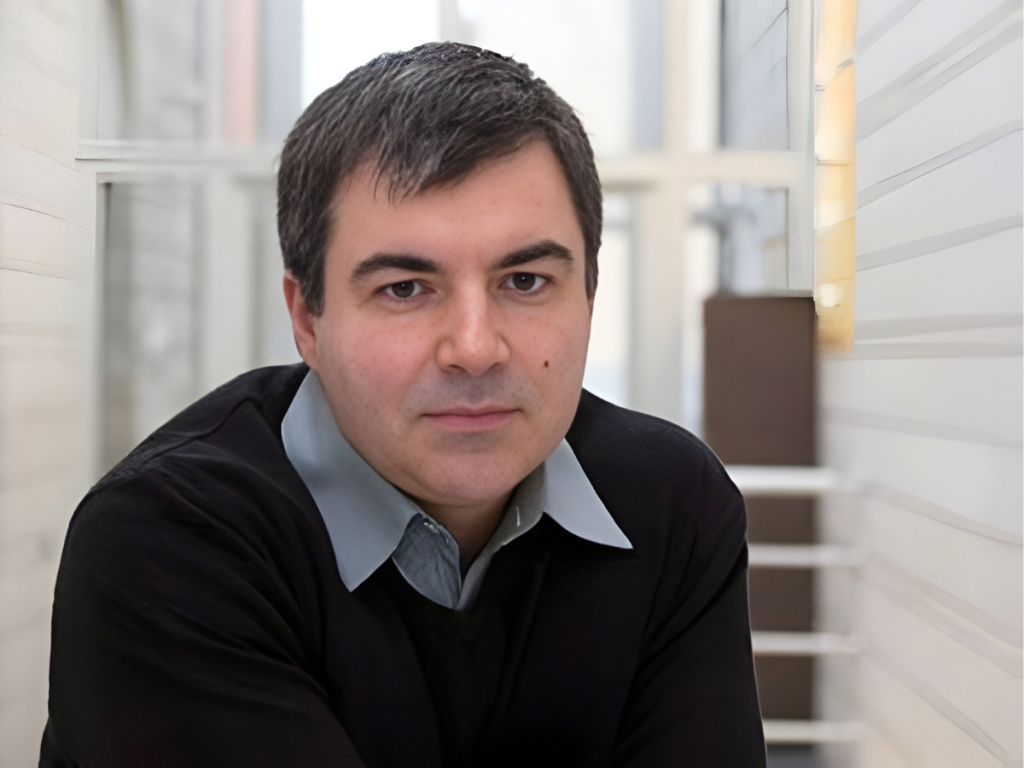
Professor Konstantin S. Novoselov, Nobel Laureate in Physics (2010), Member of the Advisory Board, VinUni Center for Environmental Intelligence. Photo: VinFuture, 2021
Unlike density functional theory (DFT), which requires intensive computational resources, this deep learning approach achieves near-DFT accuracy in predicting total energies and band gaps while being thousands of times faster. It enables large-scale screening of thousands of candidate MOFs for energy storage, catalysis, and environmental applications, compressing months of computation into minutes.
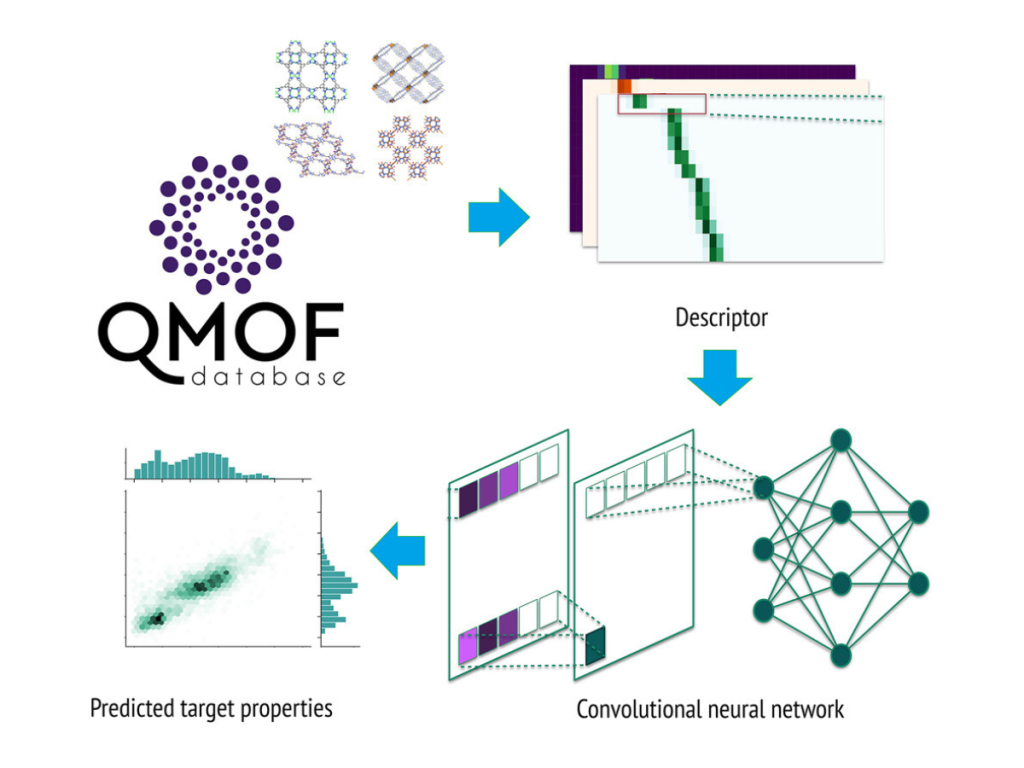
AI Unveils MOF Properties: Neural Network Predicts Energy and Band Gaps from Atomic Interactions.
Beyond accelerating discovery, the model demonstrates how learnable atomic features can be transferred across materials, allowing AI to generalize from known systems to unknown ones. As Professor Novoselov notes, such research bridges two worlds 2D materials like graphene and the 3D frameworks of MOFs, forming hybrid systems that could reshape the landscape of sustainable materials science (Neto & Novoselov, 2011).
That these studies originate from Vietnam is transformative. Historically, global scientific innovation has been concentrated in a handful of powerhouses. A Vietnamese university advancing algorithmic materials discovery and AI-guided chemistry redefines geography of discovery, showing that world-class science is determined not by location, but by vision, and intellectual ambition.
VinUni’s efforts inspire a trend toward the greater democratization of discovery: an institution in an emerging economy contributing at the frontier, not from the periphery. This also changes how we view science: it’s no longer about where discoveries happen, but about who is driving them forward.
The impact is tangible for Vietnam’s scientific ecosystem: it sets new research standards, inspires students, nurtures local talent, and builds confidence among a generation of Vietnamese scientists that global-level discovery is within reach.
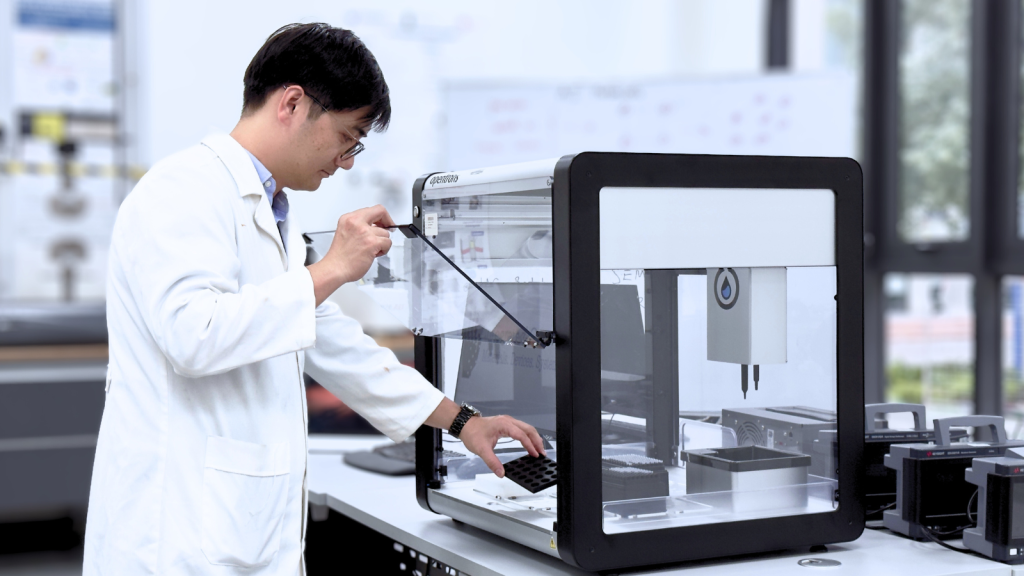
The Opentron OT-2 automated robot, part of VinUni’s AI-driven materials research
These milestones reflect more than technological achievement; they embody VinUni’s aspiration for AI-driven science as a force for equity and sustainability.
Through programs like CEI ENVISION 2025, the university advances computational infrastructure, open-data platforms, and mentorship in emerging areas including AI for materials, environmental intelligence, and biomedical innovation. The broader vision extends to cultivating a culture of discovery that strengthens Vietnamese higher education and the global research community.
By combining local talent with global partnerships, VinUni seeks to create ripple effects, inspiring students, advancing research standards, and empowering scientists to contribute confidently to international knowledge.
Looking forward, VinUni aims to deepen its global collaborations in AI-driven sustainability research, positioning a university from Vietnam as both bridge and catalyst in the global knowledge ecosystem.
The academic collaborations between VinUni and Nobel Laureates Omar M. Yaghi and Konstantin S. Novoselov illustrate a defining principle: hybrid human–AI systems not only amplify creativity but also extend the frontier of scientific discovery, rather than replacing human roles.
Whether applied to algorithmic synthesis or atomic-scale prediction, AI is not merely accelerating discovery; it is redefining who can discover.
For emerging universities like VinUni, this represents both opportunity and responsibility: to harness AI not simply as a tool, but as a collaborative equalizer, empowering scientists everywhere to contribute meaningfully to global progress.
In this shared pursuit, intelligence, both human and artificial, converges to build a sustainable world. When discovery is open, the world becomes one laboratory, and every question we ask brings us closer to the shared horizon of knowledge.

VinUniversity