AI, Big Data and Advanced Analytics in supply chains
February 22, 2026


In today’s interconnected global economy, supply chains are becoming increasingly complex, data-intensive, and vulnerable to disruption. As organizations seek more intelligent and resilient systems, AI, Big Data & advanced analytics in the supply chain has emerged as a critical foundation for data-driven decision-making.
At VinUniversity, this transformation is reflected in its Computer Science education and research ecosystem, where Artificial Intelligence, Data Science, and advanced analytics are applied to real-world complex systems, including modern supply chains.
By combining rigorous computer science fundamentals with cutting-edge analytical methods, VinUniversity prepares learners and researchers to understand, model, and optimize supply chain operations in a digital-first world.
The digitization of global logistics has created vast amounts of data, shifting the industry focus from physical infrastructure to data-driven intelligence. By leveraging AI, Big Data & advanced analytics in the supply chain, organizations can transform structured and unstructured data into predictive insights, significantly enhancing visibility, coordination, and strategic decision-making across the entire value chain.
Modern supply chains have evolved from manual, error-prone tracking into thinking systems that prioritize autonomous decision-making. By integrating diverse data sources such as social media and satellite imagery into a unified data lake, organizations can now harness dark data to achieve a single version of truth.
The core elements of this evolution include:
Ultimately, this transition from fragmented visibility to unified intelligence enables global supply chains to respond instantaneously to environmental shocks.
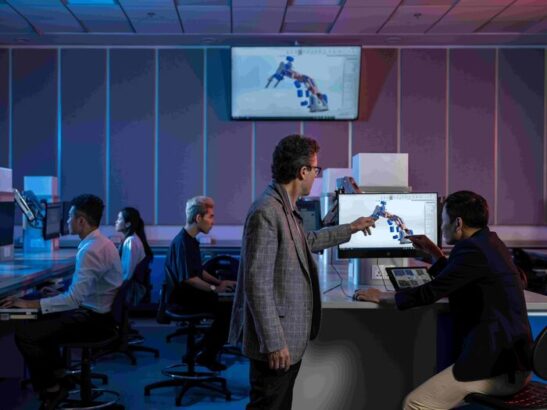
How AI, Big Data and advanced analytics operate in the supply chain?
Advanced analytics now powers modern logistics, shifting from hindsight to predictive and prescriptive intelligence across multiple analytical levels that support strategic, operational, and tactical decisions.
As multi-tier supply networks grow more complex, organizations must go beyond Tier-1 monitoring. Advanced analytics enable full value-chain visibility, uncover hidden dependencies and risks, and create a shared understanding across all levels of the business.
The application of AI and advanced analytics has a measurable impact on how supply chains perform across cost, service quality, and resilience. Rather than replacing human expertise, these technologies augment managerial decision-making with data-backed insights.
Planning activities such as demand forecasting, inventory replenishment, and capacity allocation are core functions of supply chain management. Data-driven models enhance these functions by learning from historical patterns and continuously updating predictions as new data becomes available.
For example, machine learning-based forecasting models can incorporate multiple variables, including seasonality, promotions, and external factors, to improve forecast accuracy. More accurate forecasts reduce excess inventory and stockouts, directly affecting operational efficiency.

The application of AI and advanced analytics has a measurable impact on how supply chains perform
Supply chains operate under uncertainty related to demand variability, supplier reliability, and transportation disruptions. Computational approaches such as stochastic modeling and simulation allow decision-makers to evaluate how systems behave under different scenarios.
AI-based models can process vast datasets to detect early warning signals and support contingency planning. For instance, anomaly detection algorithms can identify unusual patterns in supplier performance or logistics flows before they escalate into major disruptions.
Behind the application of analytics in supply chains lies a foundation of Computer Science methods. These methods enable the modeling, analysis, and optimization of complex systems at a scale.
Machine learning is a central component of AI, Big Data & advanced analytics in the supply chain. Supervised learning models are commonly used for demand forecasting, lead time prediction, and quality control, while unsupervised learning supports segmentation and pattern discovery.
These models require strong foundations in algorithms, data structures, probability, and statistics, which are core areas of Computer Science education. The ability to design, train, and evaluate models responsibly is essential to ensure reliability and interpretability in operational contexts.

Machine learning is a central component of AI, Big Data & advanced analytics in the supply chain
Optimization algorithms play a critical role in logistics and network design. Problems such as vehicle routing, facility location, and production scheduling are often formulated as mathematical optimization problems.
Advanced solvers and heuristic algorithms enable organizations to evaluate trade-offs between cost, speed, and service levels across global networks. These methods are deeply rooted in Computer Science disciplines such as algorithm design, computational complexity, and numerical methods.
The strategic adoption of AI, Big Data & advanced analytics in the supply chain provides multifaceted advantages that extend far beyond simple cost reduction.
Key benefits for decision-making and forecasting include:
In summary, AI strengthens forecasting and decision-making by increasing accuracy, speed, and transparency, enabling organizations to respond more effectively to market dynamics and build more resilient supply chains.

AI enables faster, more accurate decisions to adapt to markets and strengthen supply chains
The benefits of enhanced visibility and resilience enabled by AI can be observed across key operational dimensions:
Overall, AI-driven visibility enables supply chains to become more agile and resilient by improving response speed, reducing risk, and supporting sustainability objectives across operations.
As the demand for technical mastery in AI, Big Data & advanced analytics in the supply chain continues to rise, VinUniversity has prepared for the next generation of innovators. The university’s curriculum is benchmarked against elite international standards, ensuring that graduates possess skills required to lead in the global technological landscape.
The Bachelor of Science in Computer Science at VinUniversity is a comprehensive program designed to bridge the gap between academic theory and professional practice, preparing students for the demands of the digital age.
The program’s structure and core features include:
By combining rigorous analytical training with flexible specialization options, this program equips graduates with the technical depth and strategic mindset necessary to lead in technology-driven industries.
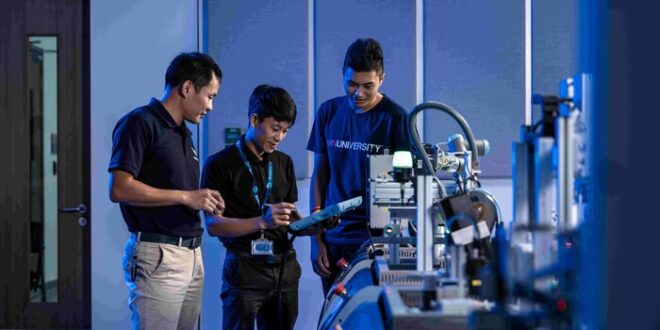
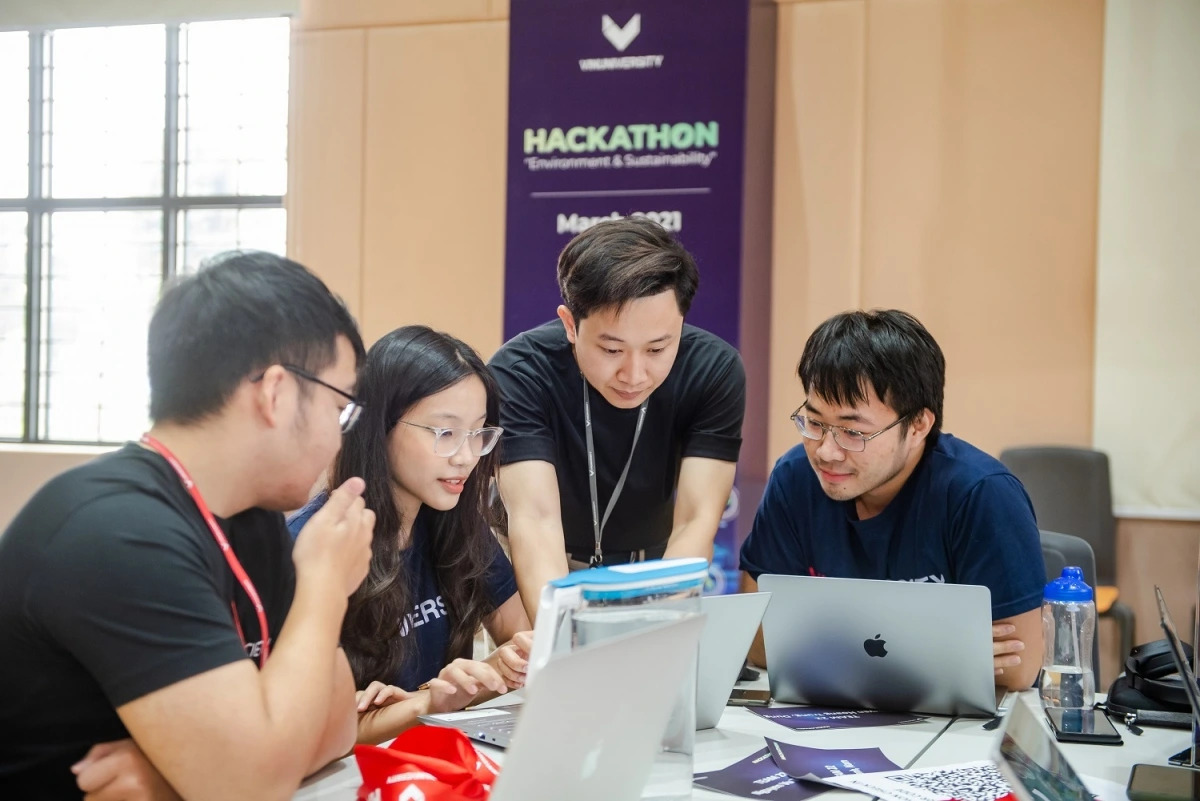
The Bachelor of Science in Computer Science at VinUniversity prepares students for the digital age through theory and practice
The PhD in Computer Science at VinUniversity aims to cultivate independent researchers who can deliver high-impact innovation on a global scale. By focusing on complex scientific challenges, the program prepares scholars to lead significant advancements in both academia and industry.
Key highlights of the program include:
Through this comprehensive training and global exposure, graduates are well-equipped with the specialized skills and visionary outlook necessary to thrive in the modern scientific landscape.
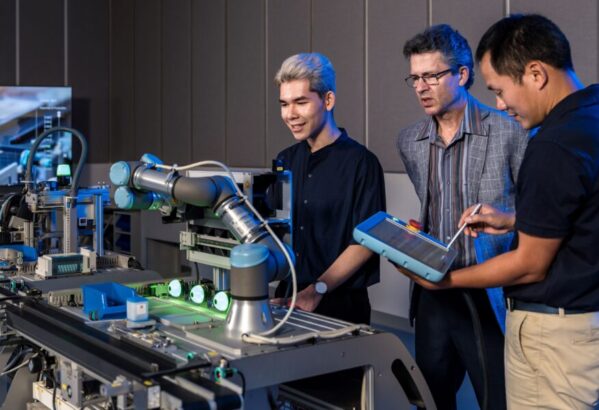
The PhD in Computer Science at VinUniversity develops independent researchers capable of delivering high-impact global innovation

VinUniversity prepares future Computer Scientists to design resilient, sustainable, and intelligent supply chains
The future of global commerce is inextricably linked to the successful integration of AI, Big Data & advanced analytics in the supply chain. As the era of “Industry 6.0” approaches, characterized by autonomous supply networks and hyper-personalized consumer experiences, the ability to manage complexity through intelligence will define organizational survival.
The transition from reactive crisis management to proactive, foresight-led orchestration that is driven by machine learning, MILP, and digital twins is already creating massive efficiency gains and environmental benefits.
Institutions like VinUniversity are leading this transformation, ensuring that the next generation of Computer Scientists is prepared to architect the resilient, sustainable, and intelligent supply chains of tomorrow.
For those aspiring to master these technologies and lead the future of innovation, explore the academic pathways offered at VinUniversity: https://vinuni.edu.vn/