Transforming Patient Care through AI and Robotics in Healthcare
November 6, 2025


In the 21st century, as technology permeates every breath of life, the healthcare industry is witnessing a historic turning point: the rise of Artificial Intelligence (AI) and Robotics in medical care. From sophisticated surgical machines to AI systems capable of detecting diseases earlier than humans, medicine is gradually transforming into a field that “learns, understands, and acts through data.”
But more importantly, this is not merely a story about technology. It is a journey to redefine how humans are cared for. AI and robots do not replace doctors; they help them become more accurate, compassionate, and efficient. Amid this global transformation, VinUniversity stands out as a pioneering university in Vietnam. There is a place where students not only learn how to program robots but also how to make technology serve humanity in an intelligent and ethical way.
In today’s medical world, Artificial Intelligence (AI) and Robotics are no longer distant concepts from science fiction movies. They have become powerful drivers of innovation, transforming every corner of hospitals and clinics.
AI is the technology that enables machines to learn, analyze, and make decisions like humans. When combined with robotic machines capable of movement, sensing, and performing tasks. They create a “technological wingspan” that enhances treatment quality, reduces the workload of healthcare professionals, and provides better experiences for patients.
According to a 2025 Forbes report, more than 90% of major healthcare organizations in the U.S. and Europe are investing in AI or robotic systems to improve diagnostics, surgery, and patient data management. This proves that AI and robotics are not just a trend. They represent a revolution in modern medicine, shaping the future of AI and robotics in healthcare, where AI and robotics are transforming healthcare into a more intelligent, efficient, and patient-centered system.
AI and robotics are now integrated into nearly every aspect of the healthcare system:
1.3. Why AI and Robotics are becoming a trend in healthcare
There are three key reasons why AI and robotics have become an inevitable trend in modern healthcare:
2.1. Improving accuracy and efficiency in diagnosis and treatment
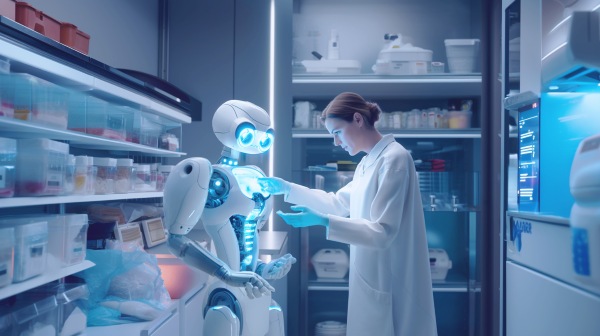
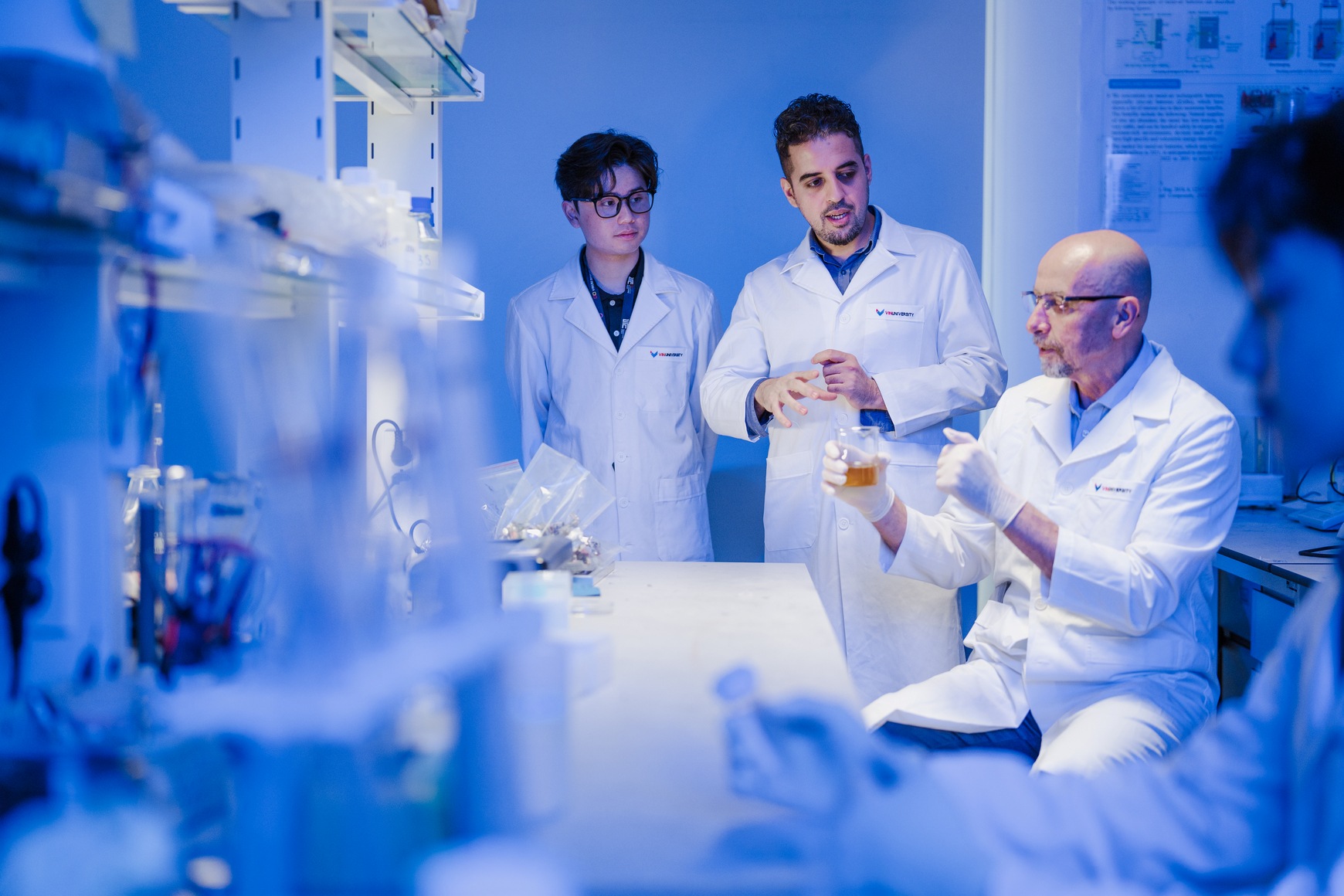
A researcher collaborates with an intelligent medical robot to enhance diagnostic precision and patient treatment through advanced AI technologies.
AI has the ability to analyze millions of data records within seconds, allowing it to detect abnormalities that the human eye might easily miss. This not only increases diagnostic accuracy but also shortens the time needed for diagnosis and treatment, enabling patients to receive earlier interventions.
In Vietnam, several hospitals have already begun using AI to predict cardiovascular complications and detect lung cancer at early stages, remarkable advancements that bring new hope for thousands of patients.
2.2. Enhancing patient experience and safety
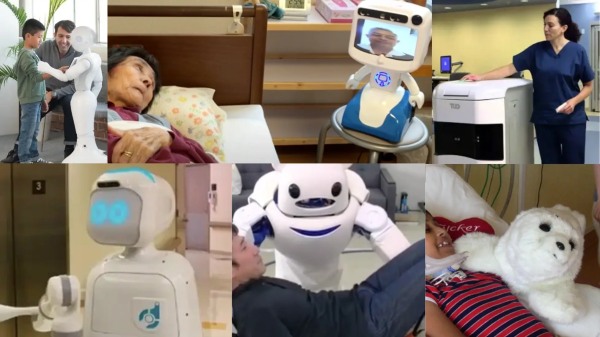
6 Nurse AI Robots That Are Changing Healthcare in 2025
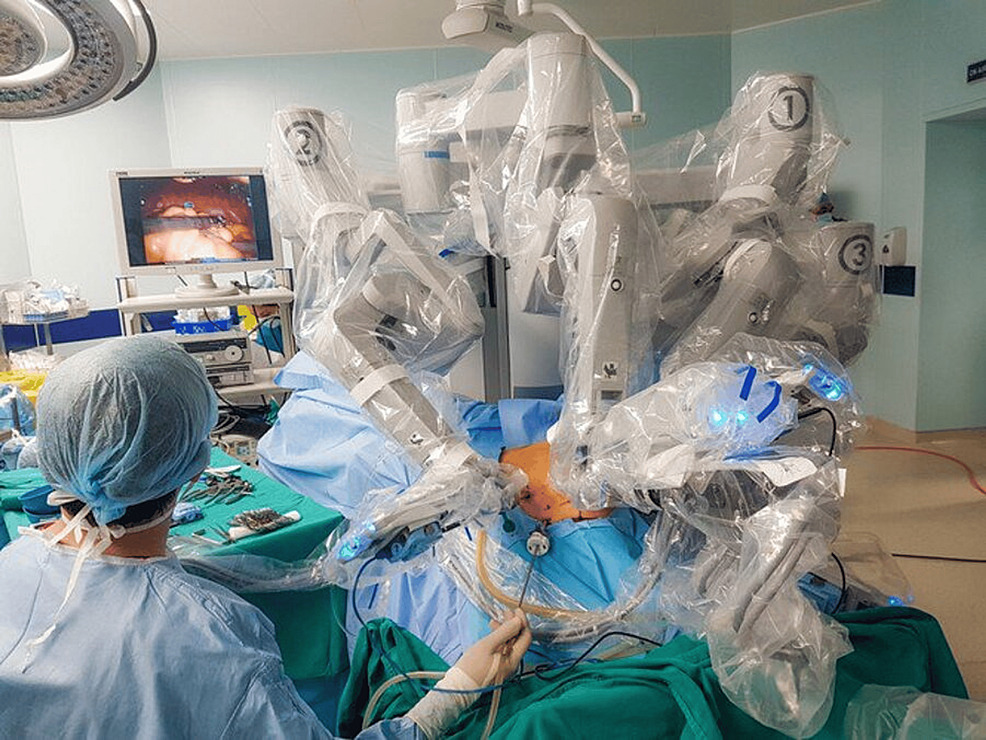
Robots can take on heavy or hazardous tasks such as transporting medication, disinfecting hospital rooms, or assisting in surgeries. This not only helps reduce risks for healthcare workers but also provides patients with a greater sense of safety and reassurance.
In particular, AI-powered companion robots can communicate with elderly or disabled patients, helping them feel cared for and accompanied. These robots do not replace humans, but instead, they serve as supportive companions, always ready to assist and bring comfort.
According to Forbes, hospitals that adopt robotic automation systems can reduce operational costs by 15-30%. By automating repetitive tasks, healthcare professionals have more time to focus on direct patient care and consultation.
Moreover, AI technology helps optimize pharmaceutical inventory management, appointment scheduling, and medical record systems, thereby minimizing resource waste and improving overall healthcare efficiency.
The integration of AI and medicine is creating a wide range of exciting new career opportunities, such as:
In the United States, the average annual salary for an AI Engineer in healthcare ranges from $110,000 to $160,000, depending on experience and position. According to Coursera (2025), this income level reflects the growing demand among hospitals and technology companies to integrate AI into diagnostics and patient care.
In particular, engineers who possess expertise in both AI and medical science are highly sought after by major corporations such as Siemens Healthineers, Philips Healthcare, and GE, as well as by emerging medtech startups around the world.
The three fastest-growing areas of AI and robotics application in healthcare include:
These are also the key fields that VinUniversity is actively researching and developing, preparing the next generation of biomedical engineers to lead the future of intelligent healthcare.
When choosing to study AI & Robotics in Healthcare, you should carefully consider four key factors:
Don’t rely solely on reputation or promotional materials. A truly strong program is reflected in student outcomes and the research capability of the university.
Consider investigating the following:
For international students, beyond the curriculum itself, there are several important aspects to consider:
At VinUniversity, students study entirely in English, have the opportunity to participate in global exchange programs with partner universities, and receive comprehensive support which is from enrollment to career orientation.

Learning sustainability through innovation, research, and community impact
5.1. Program overview and educational philosophy
Amid the global wave of technological innovation, VinUniversity is not only training computer scientists and engineers but also nurturing visionary innovators with a strong sense of humanity and social responsibility. The Computer Science program at VinUniversity is designed to combine a solid theoretical foundation with hands-on, real-world experience, enabling students to deeply understand how technology operates in practice especially through applications of Artificial Intelligence (AI), data science, and automation across various fields, including healthcare and education.
VinUniversity’s educational philosophy centers on learning for innovation. This is reflected through its international collaboration programs, where students gain access to advanced learning models, real-world projects, and research environments that meet global standards.
Beyond undergraduate and graduate education, VinUniversity also offers technology and innovation training initiatives for school students, sparking an early passion for science and technology. This reflects the university’s commitment to expanding access to knowledge and creating opportunities for young generations in Vietnam and beyond to engage with future-defining technologies.
The Computer Science program at VinUniversity provides students with a comprehensive understanding of computer systems, programming, and intelligent technologies. Courses are designed to develop both technical expertise and problem-solving capabilities, empowering students to explore emerging areas such as artificial intelligence, machine learning, and robotics through projects and research collaborations with faculty members.
VinUniversity also offers a PhD in Computer Science, providing learners with opportunities to engage in high-impact research under the guidance of experienced professors. Within this program, students can join research projects related to Artificial Intelligence and other cutting-edge areas, contributing to innovations that address real-world challenges.
Through this integrated approach, VinUniversity equips its students and researchers with the knowledge, skills, and mindset needed to drive meaningful technological advancement and create positive impact in society.
One of the key factors that make VinUniversity stand out is its team of international faculty members and experts. Many of them have taught or conducted research at prestigious universities in the United States, the United Kingdom, Singapore, South Korea, and other leading academic hubs bringing a global perspective while maintaining a deep understanding of the Vietnamese context.
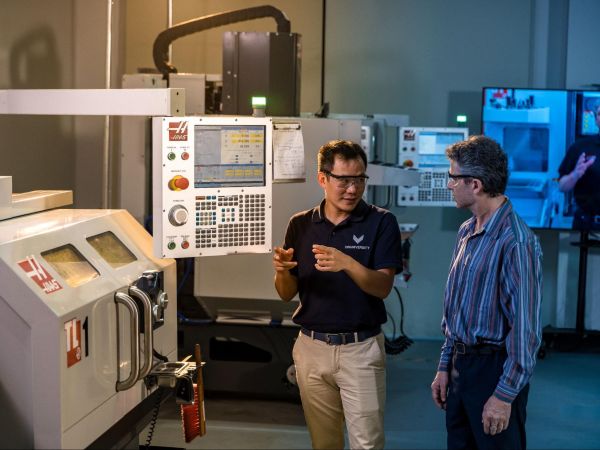
Students study in state-of-the-art laboratory environments, where they can participate in international research projects on medical robotics, AI-assisted diagnostics, and intelligent autonomous systems, gaining hands-on experience and contributing to innovations that shape the future of healthcare and technology.
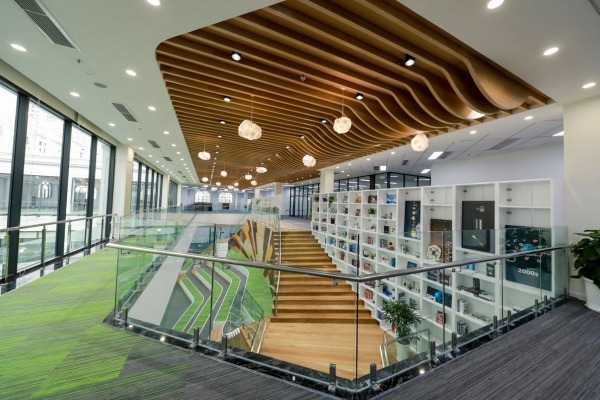
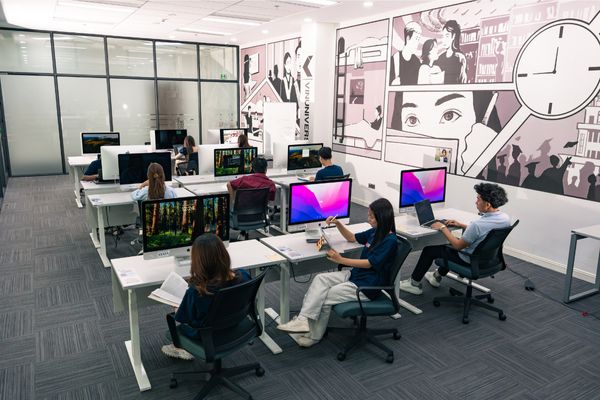
Modern Facilities and Student Amenities at VinUniversity
5.4. Internship, exchange, and scholarship opportunities

VinUniversity connects Vietnam with the world in the journey toward sustainable development.
At VinUniversity, learning goes far beyond the classroom. Students have the opportunity to gain international exposure and real-world internship experience as early as their second year. The university maintains a broad network of partnerships with leading technology corporations, research institutes, and hospitals in Vietnam and around the world.
VinUniversity also offers international student exchange programs, enabling learners to spend a semester at partner universities in the U.S., South Korea, or Europe expanding their global mindset and adaptability in multicultural work environments.
In addition, outstanding students may receive full or partial scholarships and participate in funded research projects, allowing them to explore innovation while contributing to meaningful advancements in healthcare technology.
The future of medicine is no longer shaped by doctors alone. It is also built by AI engineers, robotics specialists, and technology product managers who are quietly redefining healthcare systems to become smarter, safer, and more compassionate.
Studying AI and Robotics in healthcare is the first step to becoming part of that transformative journey. At VinUniversity, you not only learn from world-class professors and engage in cutting-edge research, but also cultivate the spirit of “innovation for humanity,” a core value that ensures technology truly serves people and enriches lives.
If you are looking for a place to develop your technological talent while making a positive impact on the world, VinUniversity is where your dream begins a place where knowledge turns into action, and ideas become solutions that heal the future.