AI and Big Data in Healthcare: The Computer Science Impact
February 24, 2026


The global medical landscape is experiencing a paradigm shift as the integration of AI and Big Data in healthcare transitions from a theoretical possibility to a foundational necessity for modern clinical practice. Institutions such as VinUniversity are at the forefront of this evolution, developing specialized academic programs and research initiatives that bridge the gap between advanced computational theory and practical medical application.
As the volume of health-related information continues to expand at an exponential rate, the ability to synthesize this data into actionable intelligence has become the primary driver for improving patient outcomes, reducing operational waste, and enabling the next generation of precision medicine.
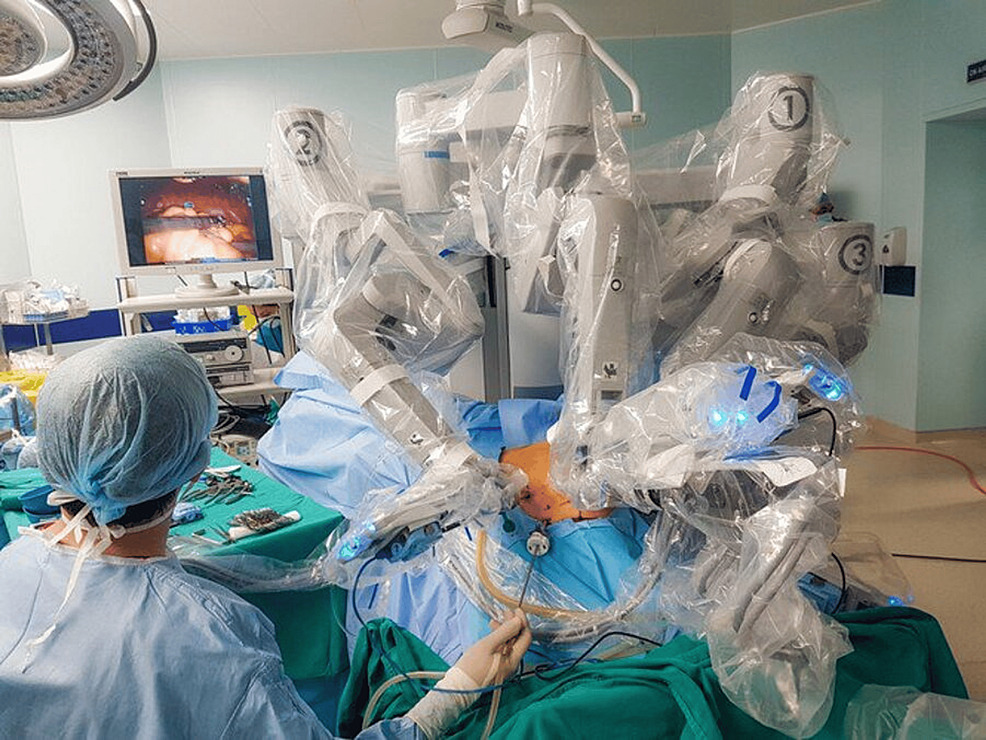
The emergence of AI and Big Data in healthcare represents more than a technological upgrade, it is a fundamental reconfiguration of how health systems function globally. In an era where healthcare costs are becoming untenable, approaching nearly $5 trillion annually in some developed markets, the industry has been forced to abandon fragmented, infrastructure-heavy models in favor of a digital-first, proactive approach.
Healthcare’s shift to a data-driven model responds to rising costs, inefficiencies, and complex chronic disease management. Moving beyond reactive care, organizations now use predictive analytics to enable proactive planning, improve patient outcomes, optimize staffing, and reduce readmissions.
Economically, data-driven healthcare supports value-based care, streamlines administrative workflows that currently consume about 25% of spending and improves revenue cycle efficiency. With aging populations and chronic conditions accounting for 90% of healthcare costs, data analytics is essential for effective care management beyond hospital settings.

The emergence of AI and Big Data in healthcare represents more than a technological upgrade
Medical data storage has evolved alongside computing itself. Early EMR systems in the 1960s – 1970s were designed mainly to digitize paper records and were limited to large hospitals due to high costs and technical constraints. In the 1990s, the push for standardization led to HIPAA in 1996, establishing foundational privacy and security standards for digital health data.
Today, healthcare has shifted from static records to real-time data ecosystems powered by the Internet of Medical Things (IoMT). Continuous data from wearables and smart sensors enables digital patient profiles and physiological digital twins, allowing AI-driven systems to predict clinical risks such as sepsis or respiratory failure well before traditional detection methods.
The integration of AI and Big Data in healthcare is fundamentally altering the clinical landscape by augmenting the capabilities of medical professionals. Artificial intelligence has demonstrated a remarkable ability to extract meaningful patterns from large-scale datasets.
Machine learning (ML) is transforming disease identification by consistently analyzing large-scale data without fatigue, enabling the detection of subtle biomarkers through diverse algorithms tailored to clinical challenges:
Real-world applications highlight the impact of AI in healthcare, from reducing radiotherapy planning time by up to 90% to achieving over 0.89 AUC in multi-label chest X-ray classification, even with non-standardized data.
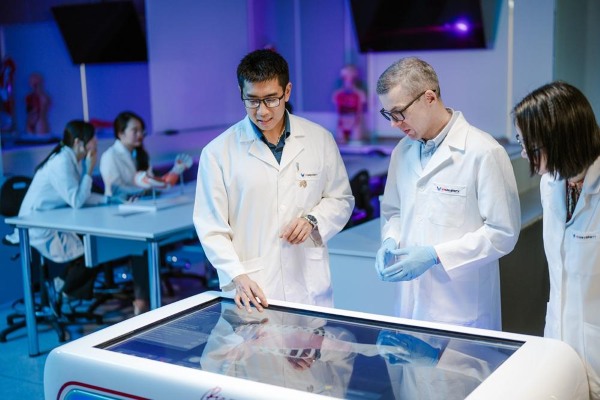
AI and Big Data are transforming healthcare by enhancing medical professionals’ clinical capabilities
Case studies in personalization highlight the benefits across various disease domains:
In summary, these examples demonstrate how AI and Big Data in healthcare enable data-driven personalization, transforming reactive healthcare into proactive, life-saving precision medicine.
While AI delivers intelligence, Big Data analytics provides the foundation. Healthcare’s data explosion from diverse sources creates major engineering and ethical challenges that must be addressed to unlock its full potential.
Managing massive medical datasets requires a move from on-premises systems to scalable cloud platforms. Major challenges include data heterogeneity between structured clinical data and unstructured records, as well as data silos that create fragmented information and increase the risk of inefficiency and clinical errors.
To address these issues, hospitals are adopting interoperability standards such as FHIR to enable effective data sharing in AI and Big Data in healthcare. Advanced analytics must also handle high dimensionality and sparse patient records, requiring robust data cleansing and regularization techniques to ensure reliable and accurate models.
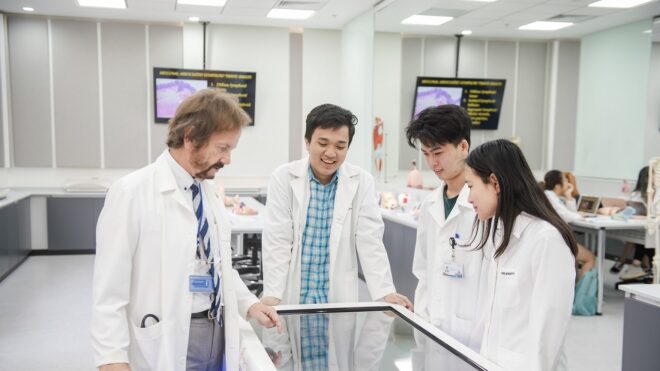
While AI delivers intelligence, Big Data analytics provides the foundation
As systems become more integrated, the risk of data breaches and unauthorized access becomes a paramount concern. Compliance with regulations like HIPAA and the EU’s General Data Protection Regulation (GDPR) is essential but complex. Beyond legal compliance, several ethical challenges persist:
Current research focuses on fairness-aware machine learning, where mathematical constraints are applied during model training to ensure that predictions remain independent of sensitive attributes like race or gender. The objective is to achieve a balance where the utility of AI systems is maximized without compromising the ethical principles of autonomy, fairness, and privacy.
The successful implementation of AI and Big Data in healthcare is inherently a Computer Science problem. It requires the design of complex algorithms, the engineering of robust data systems, and the creation of user-centric software solutions that can operate within the high-stakes environment of a hospital.
Computer Scientists develop algorithms tailored to medical data, such as RNNs and Transformers for analyzing sequential health records and physiological signals. These models are designed with human-in-the-loop principles to support but not replace clinical decision-making.
Healthcare data systems must be highly resilient, with blockchain explored for secure, decentralized data sharing while preserving patient control. At the same time, explainable AI (XAI) is emphasized to provide transparent, clinically justifiable insights for medical decisions.
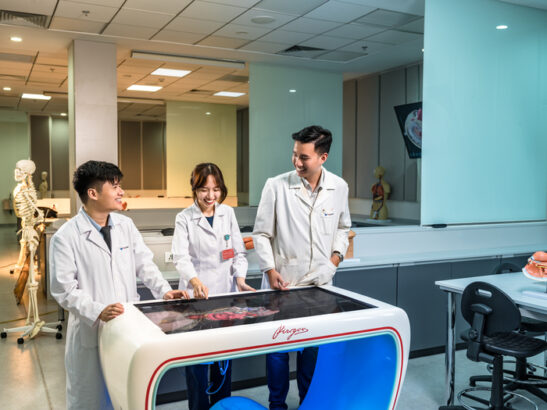
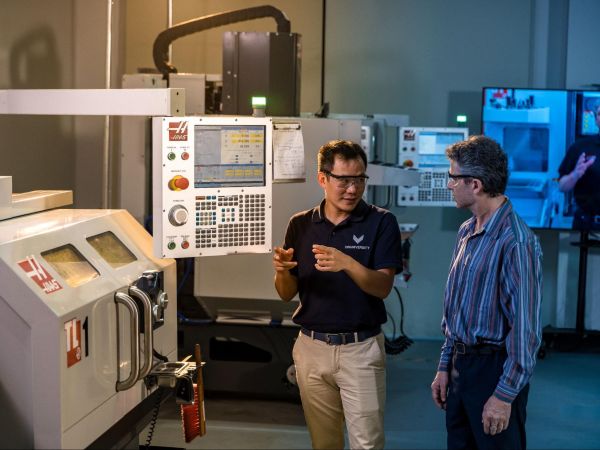
The successful implementation of AI and Big Data in healthcare is inherently a Computer Science problem
From a software engineering perspective, medical AI platforms are increasingly moving toward microservices and service-oriented architectures. This modularity allows for the decomposition of complex hospital information systems into reusable components that can be independently scaled and updated. A typical robust architecture for a hospital AI platform involves five layers:
These systems often leverage Natural Language Processing (NLP) to convert unstructured text into structured data, allowing physician notes to be searched and analyzed by machine learning models. By automating repetitive tasks like scheduling and documentation, these software solutions empower healthcare workers to focus on the most urgent clinical matters.
Recognizing the critical need for skilled professionals in AI and Big Data in healthcare, VinUniversity has developed a range of academic programs and research centers dedicated to the intersection of computing and medicine. The university’s curriculum is designed to international standards, validated by Cornell University, and emphasizes hands-on research and close industry collaboration.
VinUniversity’s Computer Science program is a premier undergraduate degree meticulously crafted to bridge the gap between academic theory and high-level industry practice. It is designed to prepare students for the complexities of the digital age through a robust curriculum and a commitment to experiential learning.
Core program components:
By blending deep analytical training with a practical, application-driven approach, VinUniversity ensures its graduates emerge as versatile leaders ready to drive innovation in the global technology landscape.

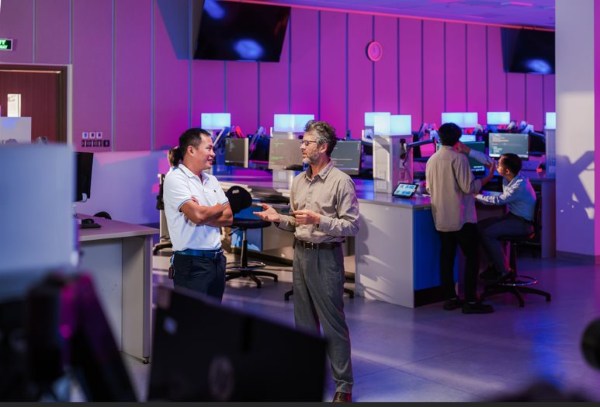
VinUniversity offers specialized programs and research centers to address the demand for AI and Big Data in healthcare expertise
VinUniversity offers a rigorous doctoral program dedicated to nurturing visionary scholars who are poised to lead global innovation. The curriculum is meticulously crafted to transform students into independent researchers capable of tackling the world’s most intricate scientific hurdles through high-impact, internationally acclaimed work.
Core program pillars:
By merging deep technical mastery with a global perspective, VinUniversity ensures that its graduates are uniquely equipped to redefine the boundaries of technology. This program serves as a launchpad for future leaders ready to drive transformative change across both the industrial sector and academia.
The Bachelor of Science in Electrical Engineering at VinUniversity bridges the gap between hardware and healthcare. Sophisticated medical technology found in modern hospitals, such as MRI machines and blood pressure monitors, is rooted in electrical engineering principles. The ECE program at VinUniversity, developed in collaboration with Cornell University, trains students in signal processing and communication systems, which are vital for real-time patient monitoring.
Through initiatives like the VinUni-Illinois Smart Health Center (VISHC), faculty and students conduct high-impact research on biomedical sensing and telehealth. Current projects at VISHC include AI-powered digital pathology, wearable sensors for patient rehabilitation, and low-cost diagnostic tools for underserved populations. These research efforts underscore VinUniversity’s commitment to developing widely accessible health solutions through the application of advanced engineering.
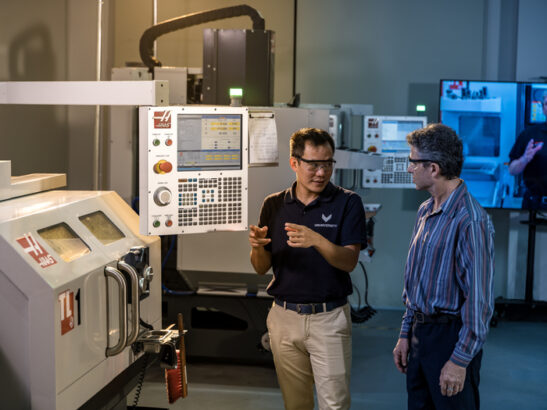
VinUniversity prepares graduates to become adaptable leaders who drive innovation in the global tech landscape

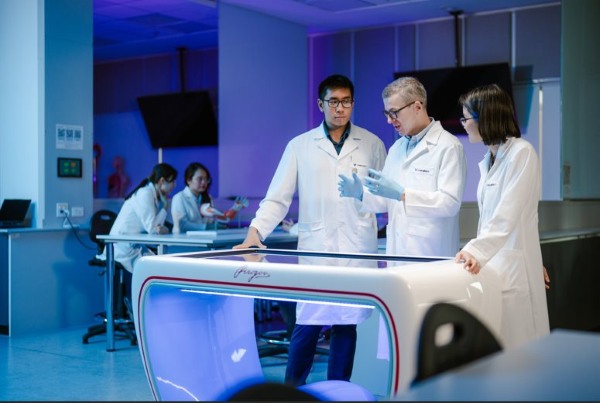
VinUniversity offers a specialized education and research environment to develop future leaders in smart health
The integration of AI and Big Data in healthcare is no longer a distant vision, it is a rapidly maturing reality that is redefining the boundaries of human health and longevity. As we look toward 2030, the convergence of predictive analytics, real-time physiological monitoring, and personalized treatment protocols will allow medical systems to shift from reactive care to a truly proactive model. AI will not replace clinicians but will instead serve as a powerful orchestrator, distilling vast amounts of complex data into simple, actionable insights that allow for faster and more accurate decision-making.
However, the sustainable implementation of these technologies depends on a foundation of ethical governance, data privacy, and a workforce trained at the intersection of Computer Science and Medicine. Institutions like VinUniversity are critical to this transition, providing the specialized education and research environment necessary to cultivate the next generation of leaders in smart health. By bridging the gap between technological innovation and human-centered care, we can ensure a future where the most advanced intelligence is leveraged to serve the health of all.
Discover how you can lead the future of healthcare technology at VinUniversity: https://vinuni.edu.vn/