The operating room of the 21st century is undergoing a transformation as profound as the discovery of anesthesia. For decades, surgery was defined by the steady hand of the surgeon. Today, it is increasingly defined by the steady code of the engineer. The rapid advances in robotic surgery have moved the field beyond simple mechanical assistance to a new era of computational intelligence.
While the mechanical arms of systems like the da Vinci robot are the visible face of this revolution, the true engine of change is invisible: it is Computer Science. From the algorithms that filter out a surgeon’s hand tremors to the computer vision systems that identify tumors in real-time, software is becoming the silent partner in every procedure.
This guide explores the technological underpinnings of these innovations, the “impact factor” of these systems on patient outcomes, and how elite educational pathways at VinUniversity with a curriculum validated by Cornell University are preparing the next generation of researchers to lead this intersection of medicine and technology.
1. Advances in Robotic Surgery from a Computer Science Perspective
To appreciate where we are going, we must understand the trajectory of technology. The field has evolved from “tele-operation” (remote control) to “intelligent cooperation.”
1.1. From early robotic assistance to computation-centered surgical systems
In the early days, advances in robotic surgery were primarily mechanical triumphs. Systems were designed to mimic human movements on a smaller scale, allowing for minimally invasive procedures. The robot was essentially a fancy joystick; it had no awareness of its environment. It was a master-slave relationship where the robot blindly executed commands.
Today, we are witnessing a shift toward computation-centered systems. Modern surgical robots are not just actuators; they are data processors. They ingest streams of data from cameras and sensors, process this information using complex kinematic algorithms, and augment the surgeon’s capabilities. For example, “active constraints” (or virtual fixtures) use software to prevent a surgeon from accidentally cutting into a critical blood vessel, effectively creating a “no-fly zone” around delicate tissue.
This evolution marks a critical turning point where the limitations of the hardware are no longer the bottleneck. Instead, the frontier of innovation has shifted entirely to the software domain, where the speed of progress is dictated by algorithmic sophistication rather than mechanical engineering.
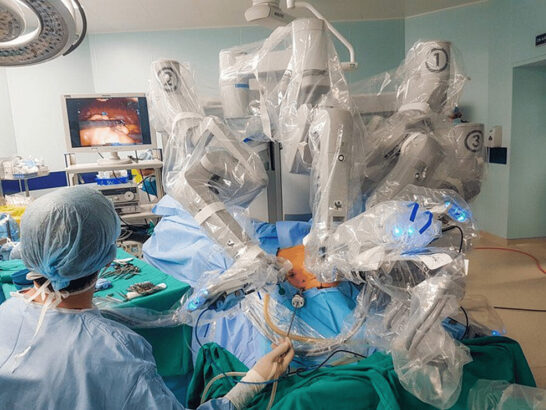
In the early days, advances in robotic surgery were primarily mechanical triumphs
1.2. Why recent advances in robotic surgery are driven by software and algorithms
Hardware development is slow and expensive; software development is fast and iterative. This is why the most significant recent breakthroughs have come from Computer Science.
- Haptic Feedback Simulation: Providing the surgeon with the “feeling” of tissue resistance without physical connection requires advanced physics engines and real-time control loops.
- Motion Scaling: Algorithms can scale a surgeon’s hand movement of 10 centimeters down to a robotic movement of 1 millimeter, enabling microsurgeries that are physically impossible for unassisted human hands.
- Machine Learning Integration: We are moving from programmed automation to learned behaviors, where systems can suggest the best angle for an incision based on thousands of previous successful procedures.
The dominance of software in this field has opened the door for advanced technologies previously restricted to the tech sector. Now, artificial intelligence and computer vision are becoming standard tools in the operating theater, fundamentally altering how surgeries are planned and executed.
2. Key Innovations Shaping Modern Robotic Surgery
The integration of “Smart Health” technologies is turning the surgical robot into an intelligent assistant. This is where Computer Science shines brightest.
2.1. Artificial intelligence and machine learning for surgical planning
Before the first incision is made, AI is already at work. Advances in robotic surgery now include pre-operative planning tools that use Machine Learning (ML) to analyze patient scans (CT, MRI) and build 3D navigational maps.

- Predictive Modeling: AI models can simulate different surgical approaches to predict potential complications, essentially allowing the surgeon to “practice” on a digital twin of the patient before the actual operation.
- Anatomical Segmentation: Deep learning algorithms can automatically segment complex organs and blood vessels from noisy imaging data, highlighting critical structures that must be preserved.
- Workflow Optimization: AI systems analyze operating room video feeds to predict the next steps in a procedure, automatically adjusting lighting or robotic arm positions to streamline the workflow.

Before the first incision is made, AI is already at work
While planning is crucial, the high-stakes environment of the operating room requires immediate, split-second decision-making. This demand has led to the development of sophisticated computer vision systems capable of interpreting complex visual data in real-time.
2.2. Computer vision and real time data interpretation in the operating room
In a traditional surgery, the surgeon relies on their eyes. In robotic surgery, the system relies on Computer Vision.
- Augmented Reality (AR) Overlays: Advanced systems can overlay a virtual map of the patient’s internal anatomy onto the live video feed. This gives the surgeon “X-ray vision,” allowing them to see tumors or vessels hidden beneath opaque tissue.
- Depth Perception: Stereoscopic vision algorithms reconstruct 3D depth from 2D camera feeds, providing the high-fidelity depth perception necessary for precise manipulation in tight spaces.
- Dynamic Tracking: Soft tissue moves and deforms when touched. Real-time computer vision algorithms track this deformation, updating the 3D model instantly so the AR overlay remains accurate throughout the procedure.
The technological wizardry is impressive but for the medical community, technology is only a means to an end. The ultimate measure of these innovations is their clinical utility specifically, how they enhance precision and improve patient outcomes.
3. Applications and Impact of Robotic Surgery Systems
When researchers discuss the “advances in robotic surgery impact factor,” they are referring to the measurable benefits these systems bring to healthcare: reduced recovery times, lower complication rates, and higher success rates in complex cases.
3.1. Precision enhancement and decision support through intelligent systems
The primary contribution of Computer Science to surgery is the democratization of precision.
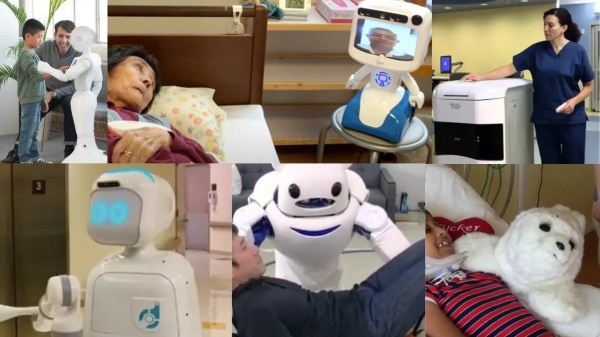
- Tremor Filtration: Algorithms filter out the physiological tremors inherent in human hands (6-12 Hz), allowing surgeons to perform tasks requiring sub-millimeter accuracy.
- Decision Support: Intelligent systems act as a second pair of eyes. If an algorithm detects that an instrument is approaching a nerve bundle, it can alert the surgeon visually or haptically, preventing potential paralysis.
- Standardization: By analyzing data from top surgeons, systems can guide less experienced surgeons through complex maneuvers, raising the baseline quality of care across hospitals.

The primary contribution of Computer Science to surgery is the democratization of precision
This enhanced precision allows surgeons to operate with less collateral damage to the patient’s body. Consequently, this capability has firmly established minimally invasive procedures as the gold standard in modern medical practice.
3.2. The role of minimally invasive procedures in modern robotic surgery
Robotic systems enable complex surgeries to be performed through incisions no larger than a keyhole.
- Reduced Trauma: Smaller incisions mean less pain, less blood loss, and lower risk of infection. This is a direct result of the robot’s ability to manipulate tools in spaces too small for human hands.
- Faster Recovery: Patients who undergo robotic-assisted surgery often go home days earlier than those undergoing open surgery. This efficiency is critical for hospital resource management.
- Access to Deep Anatomy: Procedures in hard-to-reach areas, such as the pelvic floor or the base of the skull, are made significantly safer through the articulation and stability provided by robotic systems.
Despite these transformative benefits, the marriage of medicine and computer science is not without friction. As reliance on these complex systems grows, so too does the need to address the unique technical and ethical challenges that accompany them.
4. Challenges and Limitations from a Computer Science Viewpoint
Building software for surgery is not like building a mobile app. The cost of a bug is not a crash report; it is a human life. This imposes rigorous constraints on the engineering process.
4.1. System reliability, data quality, and algorithmic trust
Trust is the currency of the operating room. Surgeons must trust that the robot will do exactly what it is told, every single time.
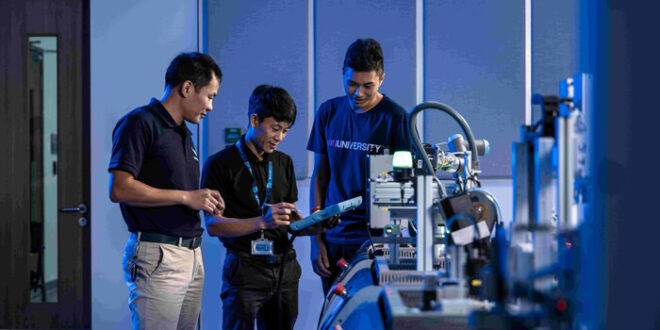
- Algorithmic Bias: If an AI model for tumor detection was trained primarily on data from one demographic, it may fail when applied to another. Ensuring data diversity and algorithmic fairness is a massive challenge in Smart Health.
- Explainability (XAI): A “black box” AI that recommends a surgical path without explanation is useless to a doctor. Computer scientists must develop Explainable AI that provides the “why” behind the recommendation.
- Cybersecurity: As surgical robots become connected to hospital networks (IoMT), they become potential targets for cyberattacks. Securing these systems against hacking is a critical priority.

Surgeons must trust that the robot will do exactly what it is told, every single time
Beyond the issues of trust and security lies the sheer computational difficulty of the task. Surgery is a dynamic, chaotic physical process, and processing the data it generates within strict time limits pushes current hardware to its absolute breaking point.
4.2. Computational complexity and real time constraints in surgery
The operating room is a “hard real-time” environment.
- Latency is Fatal: In telesurgery or AR overlays, a lag of even 200 milliseconds can cause motion sickness for the surgeon or lead to operational errors. Algorithms must be optimized for extreme speed.
- Data Volume: A surgical procedure generates gigabytes of high-resolution video and sensor data per minute. Processing this locally (Edge Computing) without overheating the equipment requires highly efficient code.
- Deformable Modeling: Accurately simulating how soft tissue (like a liver or lung) changes shape when cut or prodded requires complex physics calculations that are notoriously computationally expensive.
Solving these high-level problems requires a new breed of professional, one who is fluent in both the language of code and the logic of biology. To cultivate this talent, educational institutions are creating specialized pathways that merge Computer Science with medical innovation.
5. Computer Science Education and Research at VinUniversity
For students inspired by these advances in robotic surgery, VinUniversity offers a strategic ecosystem designed to foster innovation in Smart Health.
5.1. Bachelor of Science in Computer Science and foundations for surgical robotics
The journey to building the next da Vinci robot starts with a strong undergraduate foundation.
- Curriculum Validated by Cornell University: The Computer Science program follows a rigorous framework validated by Cornell University. This ensures students master the high-level mathematics, control theory, and algorithmic design principles required for medical robotics.
- Industry immersion: Students do not study in a bubble. The curriculum creates opportunities for students to engage in real-world R&D environments, such as analyzing medical imaging data or optimizing autonomous driving algorithms. This integration provides the essential practical context that complements theoretical learning.
While the bachelor’s program builds technical competence, the true frontier of surgical innovation is explored at the doctoral level. For those aiming to lead research labs or become principal scientists in med-tech, VinUniversity provides a world-class platform for advanced discovery.
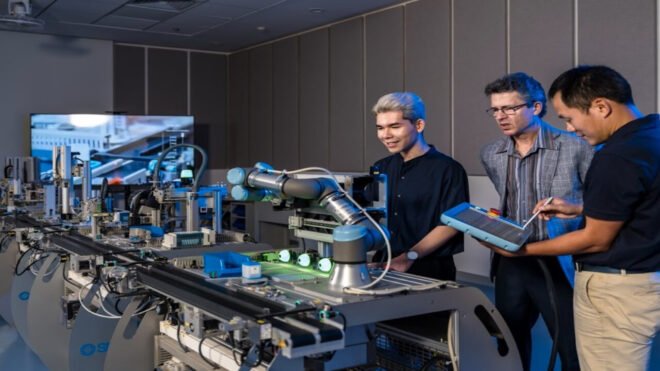
The journey to building the next da Vinci robot starts with a strong undergraduate foundation
5.2. PhD in Computer Science with research directions in robotics and intelligent systems
The PhD program is designed for deep dives into “Smart Health.”
- Research Focus: Candidates work on breakthrough projects in Generative AI, Green Computing, and Smart Health all of which have direct applications in manufacturing (e.g., using Green Computing to optimize energy usage in factories).
- Global Mentorship: You are not limited to one institution. The program facilitates a co-advising model where qualified students can be supervised by distinguished professors from VinUniversity and experts from strategic global partners. For instance, via the VinUni-Illinois Smart Health Center (VISHC), students can work directly with faculty from UIUC. Additionally, our strategic ties with Cornell University and UPenn provide PhD candidates access to elite academic networks, ensuring research quality meets international standards.
- Financial Freedom: To allow students to focus entirely on innovation, VinUniversity offers comprehensive tuition waivers and competitive monthly stipends, along with support for overseas research exchanges. This financial backing removes the distraction of debt, allowing for full immersion in the lab.
6. The Future of Robotic Surgery and Computational Innovation
We are only at the beginning of the S-curve. The next decade will see surgical robots move from “smart tools” to “autonomous partners.”
6.1. Emerging research trends in intelligent surgical systems
The labs of today are building the operating rooms of tomorrow.
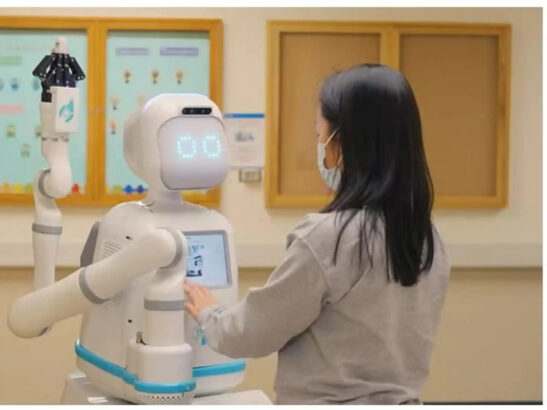
- Autonomous Sub-tasks: Robots will soon take over routine parts of the surgery, such as suturing (stitching) a wound, doing it faster and more evenly than a human.
- Telesurgery over 5G: As networks improve, expert surgeons will be able to operate on patients in remote or war-torn areas from halfway across the world with near-zero latency.
- Nanobots: Research is progressing toward microscopic robots that can be injected into the bloodstream to perform surgery at the cellular level, guided by external magnetic fields and software.

Robots will soon take over routine parts of the surgery
These futuristic concepts underscore the permanent shift in the medical landscape. Computer Science has irrevocably intertwined itself with surgical practice, promising a future where the quality of healthcare is defined not just by the surgeon’s hands but by the engineer’s code.
6.2. The long term role of computer science in shaping surgical practice
Computer Science will continue to be the driver of the “advances in robotic surgery impact factor.”
- Democratization of Care: By lowering the skill barrier for complex procedures through robotic assistance, high-quality surgery will become accessible to more people in more places.
- Data-Driven Medicine: Every robotic surgery generates a dataset. Over time, this global library of surgical data will be used to train AI models that continuously improve medical standards, turning every operation into a learning opportunity for the entire system.
7. Conclusion
So, what are the advances in robotic surgery? They are the convergence of steel and silicon, where algorithms save lives. This field represents the highest calling of Computer Science: using technology to alleviate human suffering.
For those ready to embrace this challenge, the path is clear. It requires a rigorous education, a research-oriented mindset, and a commitment to precision. Explore the Computer Science programs at VinUniversity today to start your journey into the future of Smart Health: https://vinuni.edu.vn/