A solar cell that maximizes sunlight
September 22, 2025


Imagine today’s solar cells as cups catching rain. They can only hold the drops that fall “just right.” When the rain is too heavy, the extra spills over. Something similar happens in solar panels: when high-energy photons strike, their excess energy is lost as heat. This process is known as thermalization, and one of the biggest reasons solar cells waste sunlight.
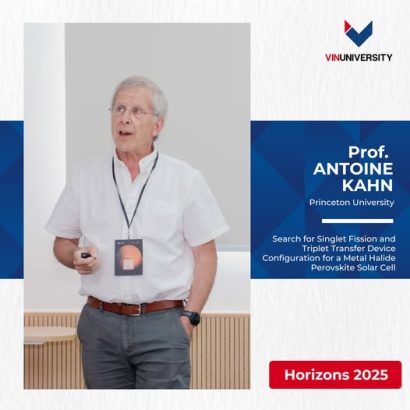
At Horizons 2025, hosted by VinUniversity, Professor Antoine Kahn (Princeton University) introduced a groundbreaking solution. Using a quantum effect called singlet fission, a single high-energy photon can be split into two usable energy packets. Both are absorbed by a perovskite layer, a crystalline semiconductor material that efficiently absorbs light and transports charge carriers. This approach could dramatically increase efficiency by turning what was once wasted sunlight into usable electricity.
This innovation opens the door to:
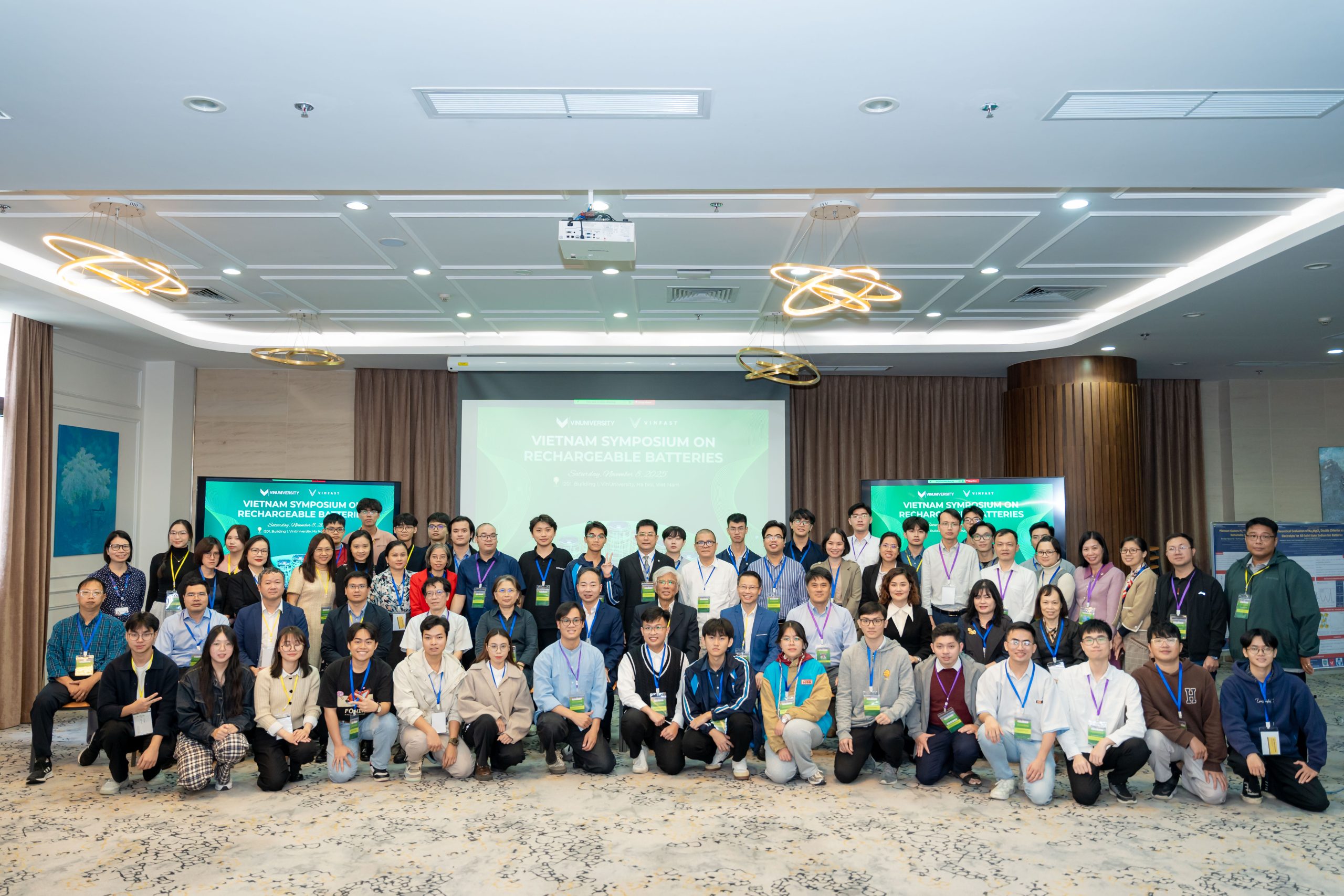
Why it matters: Horizons 2025 at VinUni shows how bold science and real-world impact can meet. By hosting global pioneers like Professor Kahn alongside young researchers, VinUni contributes to the worldwide effort toward clean energy innovation, helping to connect minds and ideas that bring us closer to a sustainable future.