
[SEMINAR RECAP] Applying ICT and AI to Disaster Early Warning in the Context of Climate Change: Opportunities and Challenges
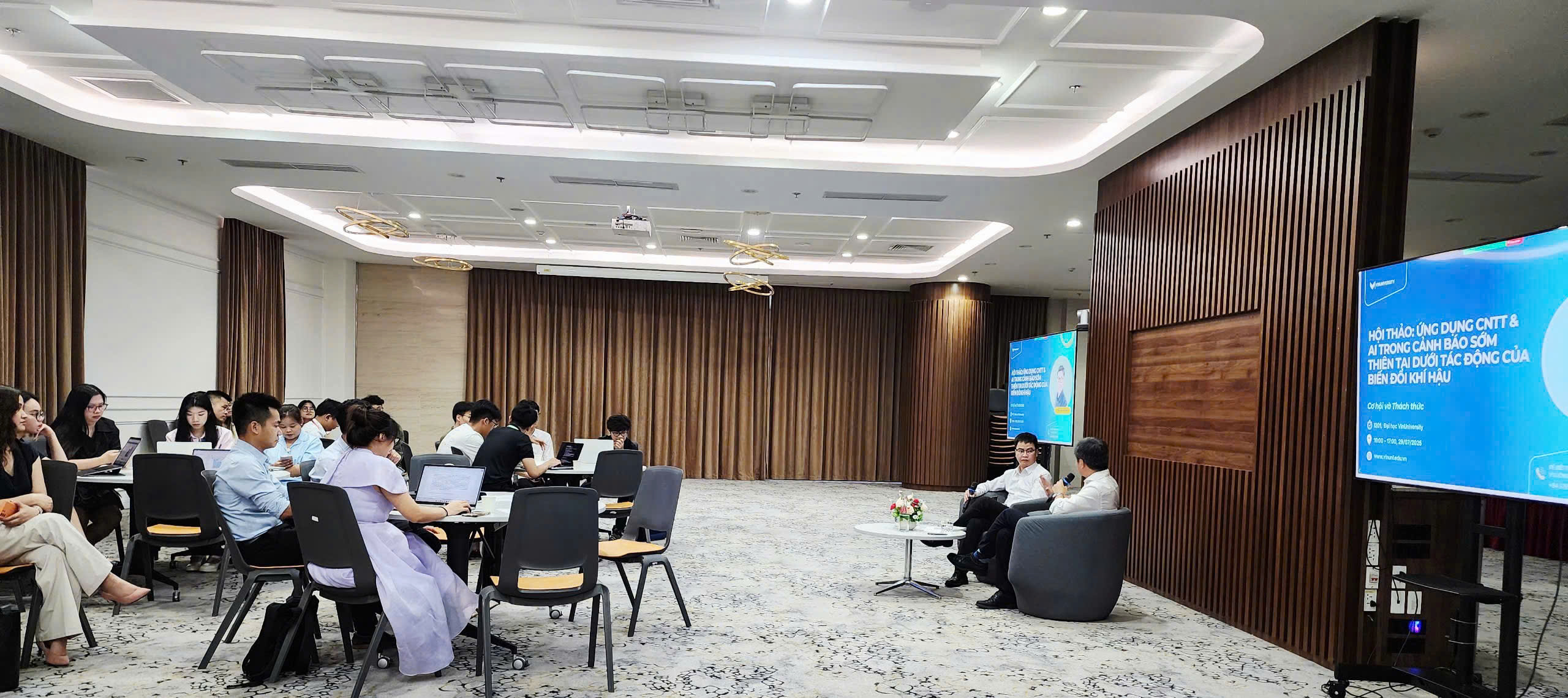
On July 29, 2025, VinUniversity organized a seminar entitled “Applying ICT, IoT, and AI in Disaster Early Warning: Opportunities and Challenges in the Context of Climate Change”. The event took place in Room I201 and was simultaneously livestreamed via Zoom to facilitate broader academic participation. Led by Dr. Huy Nguyen (VinUniversity), the seminar attracted a diverse audience of students, researchers, and professionals with an interest in climate resilience, technological innovation, and disaster risk reduction.
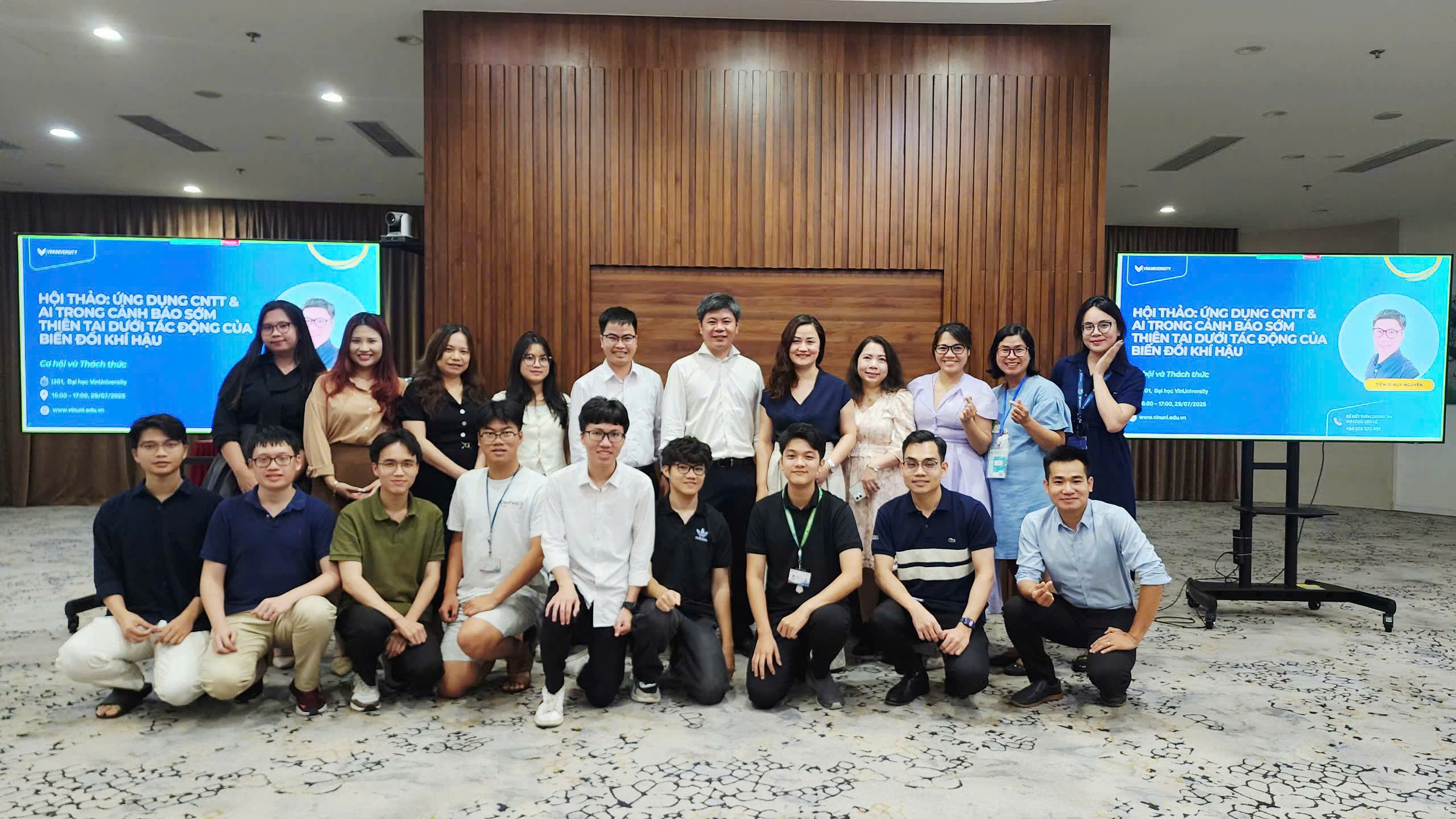
Seminar Highlights
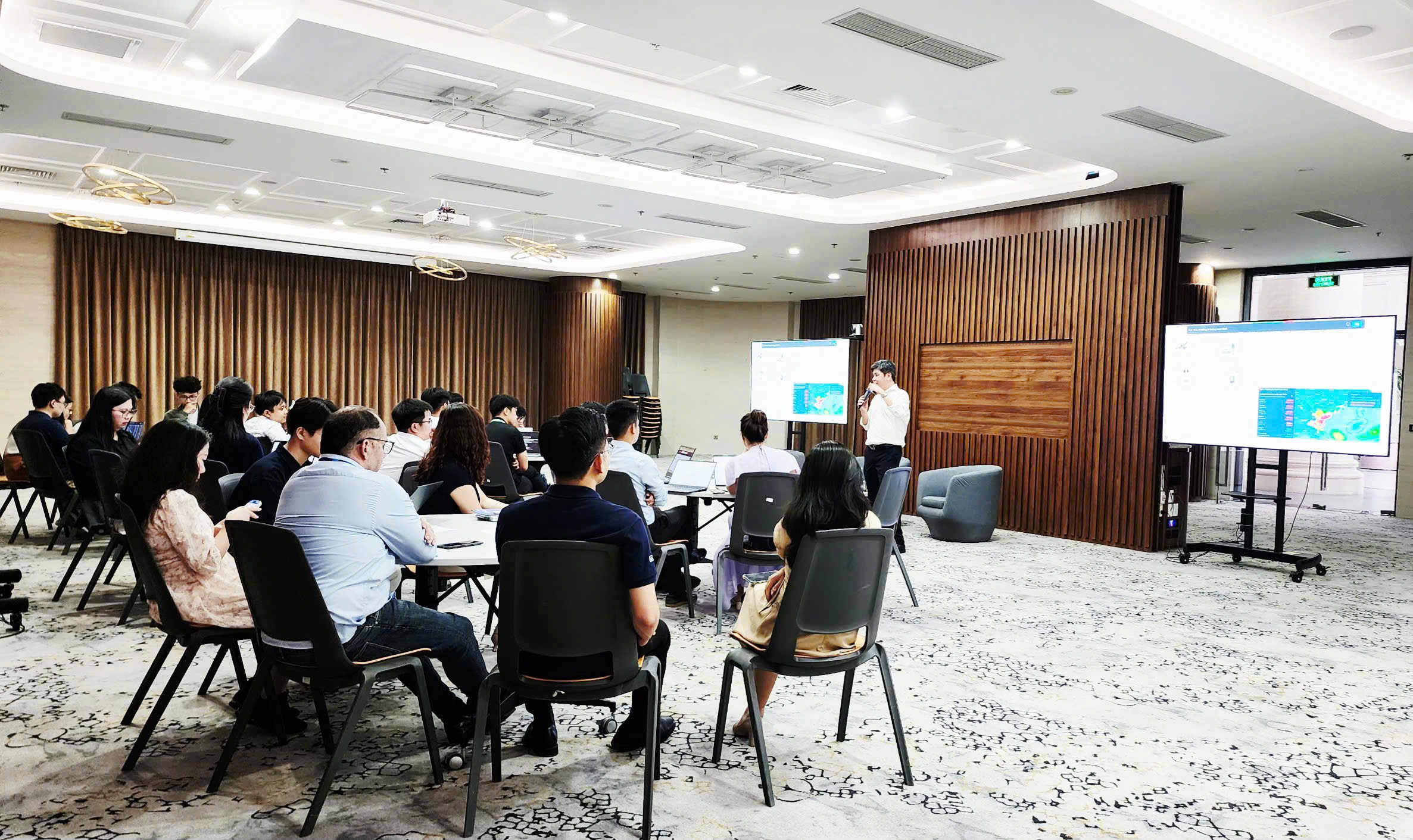
Dr. Huy Nguyen delivered a thought-provoking presentation emphasizing the vital role of technology in disaster early warning—an increasingly urgent need in the face of climate change. The session opened with the question: “Is there a link between global warming and the increasing frequency of natural disasters?“, setting the stage for a rich, multidimensional discussion.
Key Takeaways
- Early Warning Systems: Integrate risk assessment, monitoring, communication, and response to minimize disaster impacts.
- Proactive Approach: Shift from reactive response to early forecasting and preparedness.
- Technology in Action: Real-time sensors, satellite data, and AI models enhance risk prediction and deliver targeted mobile alerts.
- Data Limitations: Key datasets remain undigitized or inaccessible, restricting system effectiveness.
- Case Study – Typhoon Yagi: Highlighted challenges in managing unverified information and coordination gaps among informal rescue groups.
- AI-Based Application: A new disaster management app provides localized alerts, shelter navigation, real-time reporting, and multilingual guidance for 21 disaster types.
The seminar concluded with a clear message: “While we cannot stop natural disasters, we can reduce their impact through early warning, early action, and smart use of technology.”
Acknowledgements
We extend our sincere thanks to Dr. Pham Huy Hieu for his coordination and support in organizing this seminar. Our heartfelt appreciation also goes to Dr.Huy Nguyen for his insightful presentation, which provided valuable perspectives on the integration of emerging technologies in disaster risk reduction.
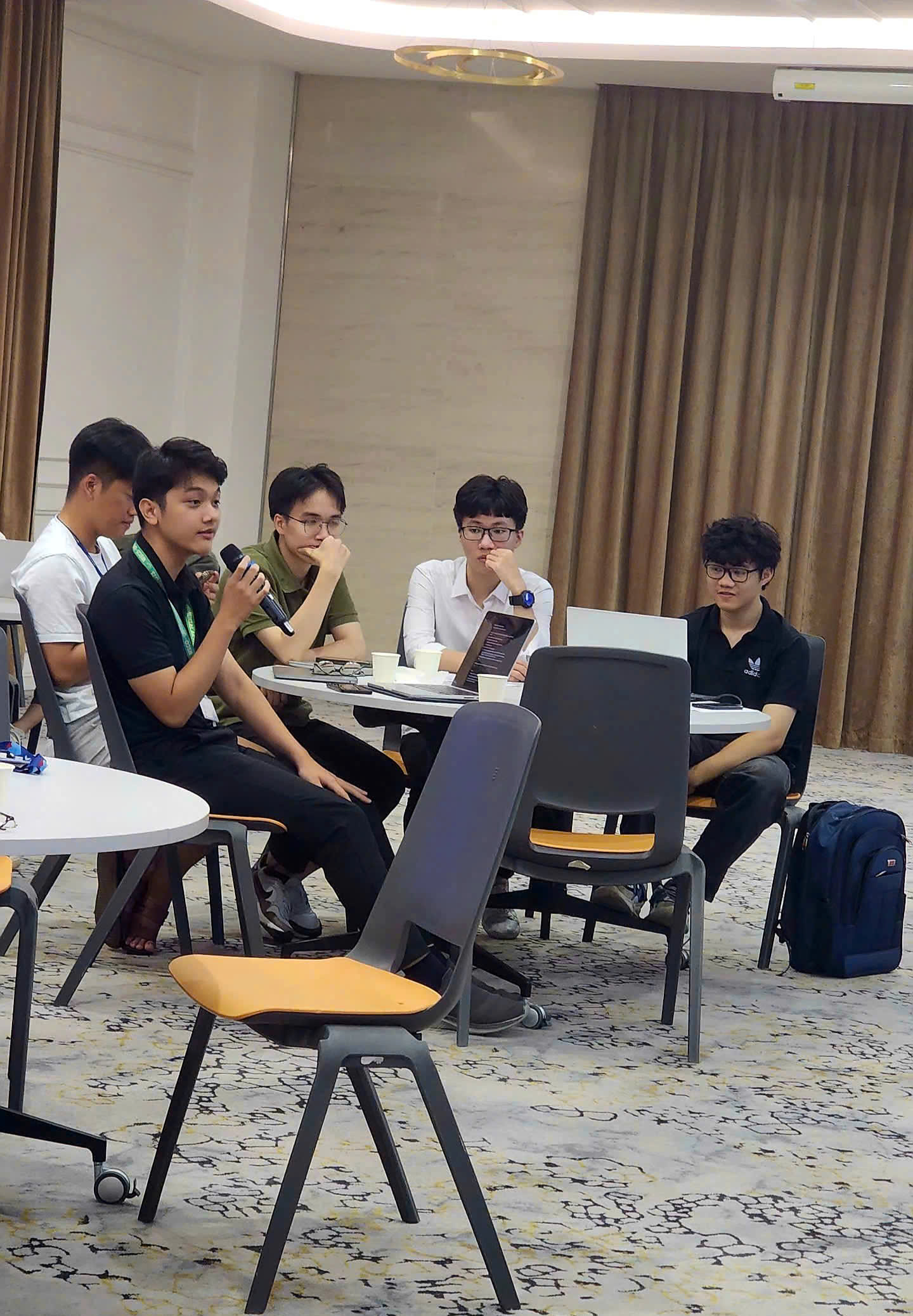
We also extend our appreciation to all participating students and researchers for their active engagement and thoughtful contributions throughout the seminar.
More than a platform for academic exchange, this seminar served as a source of inspiration—mobilizing and empowering the next generation of scholars and practitioners to contribute to the development of a smarter, more proactive, and resilient disaster preparedness framework for Vietnam.
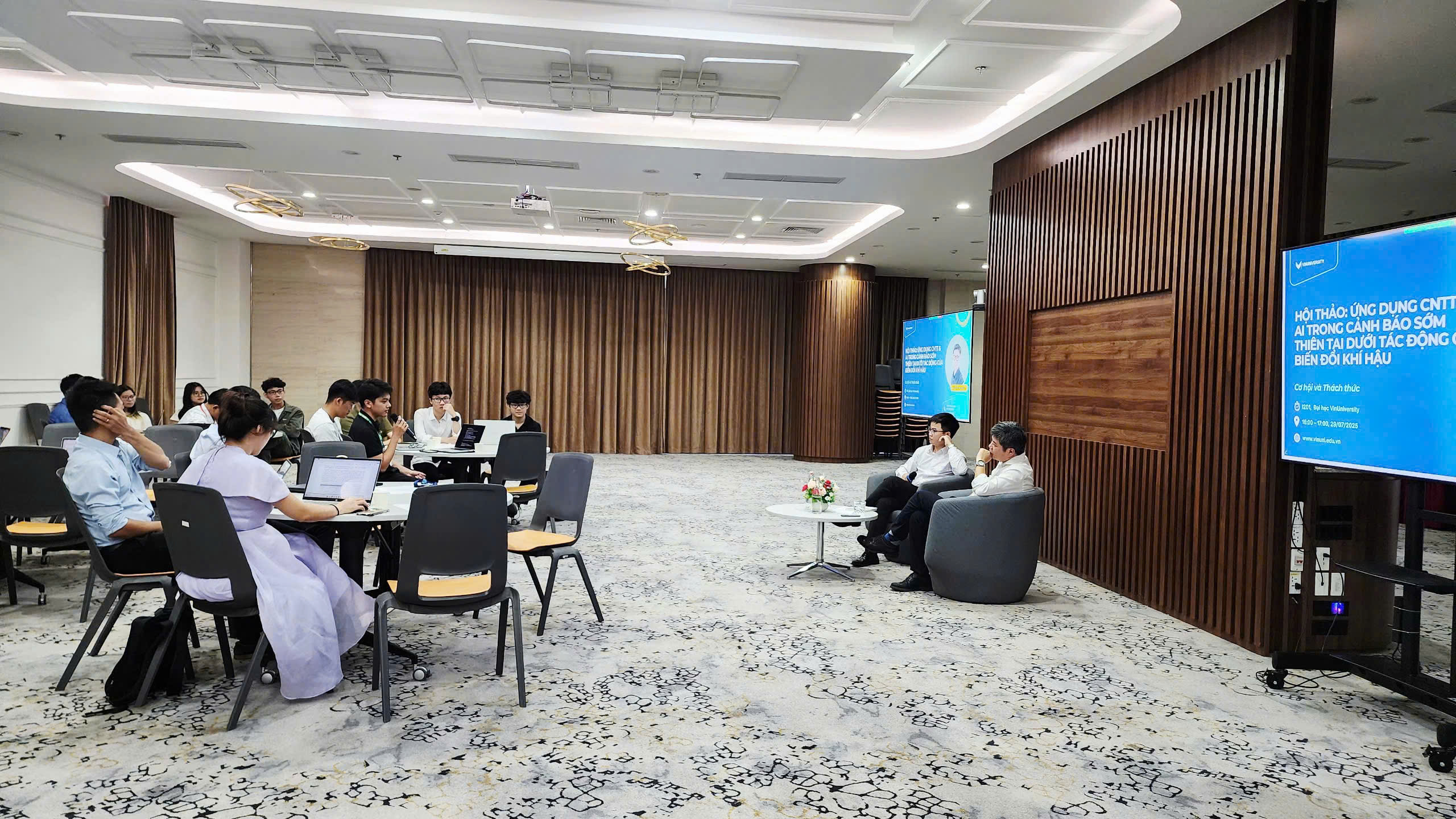
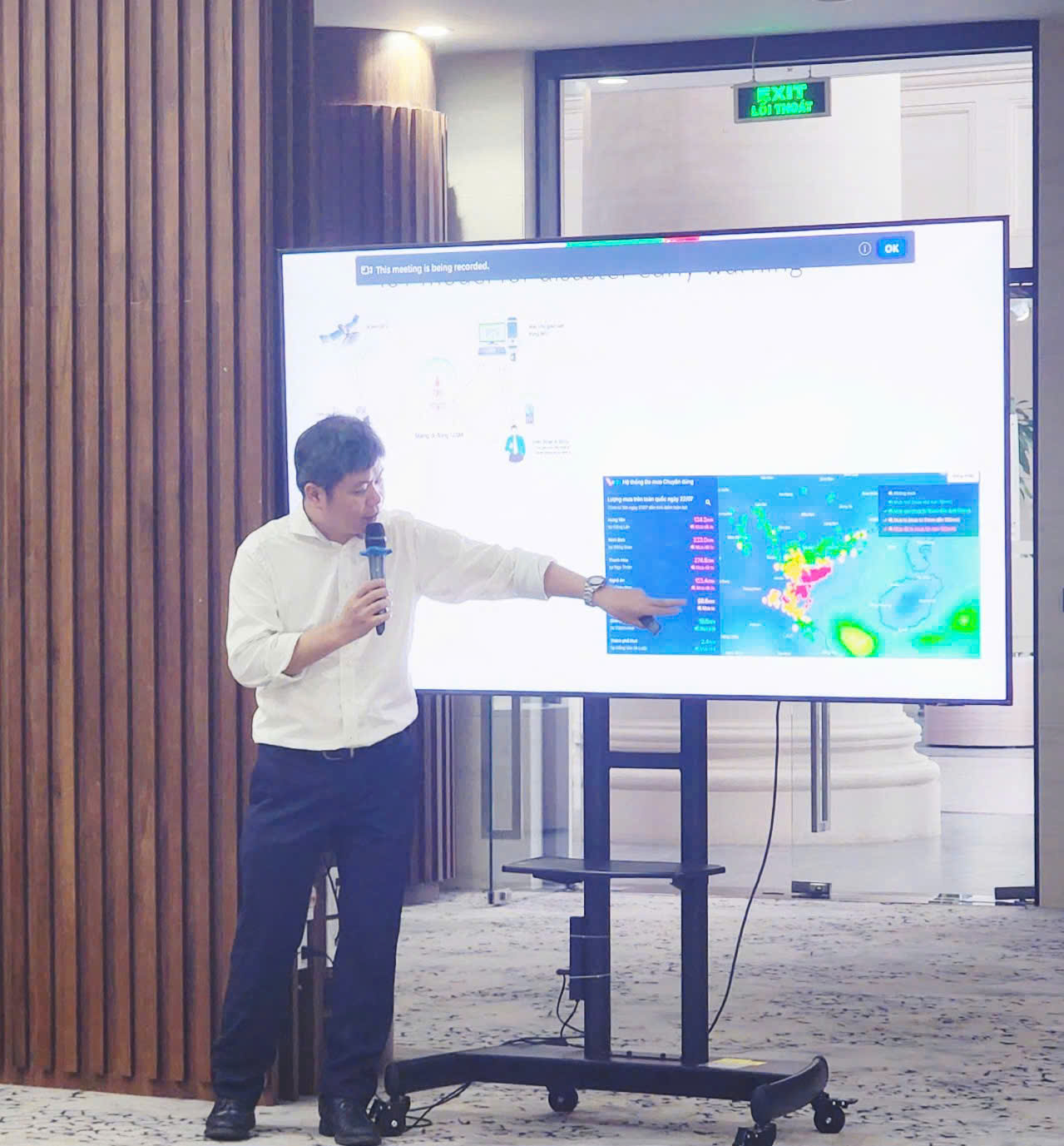
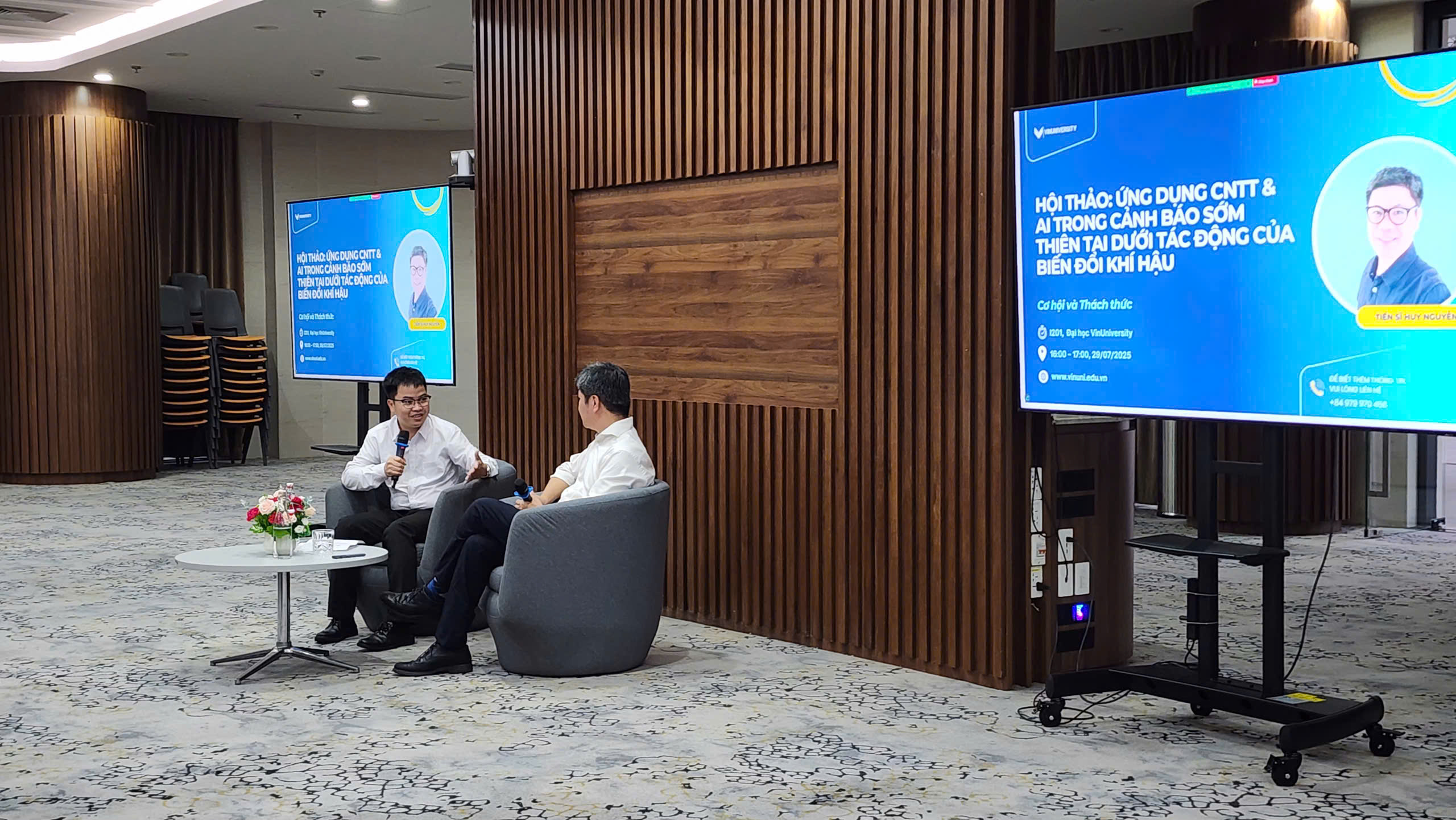
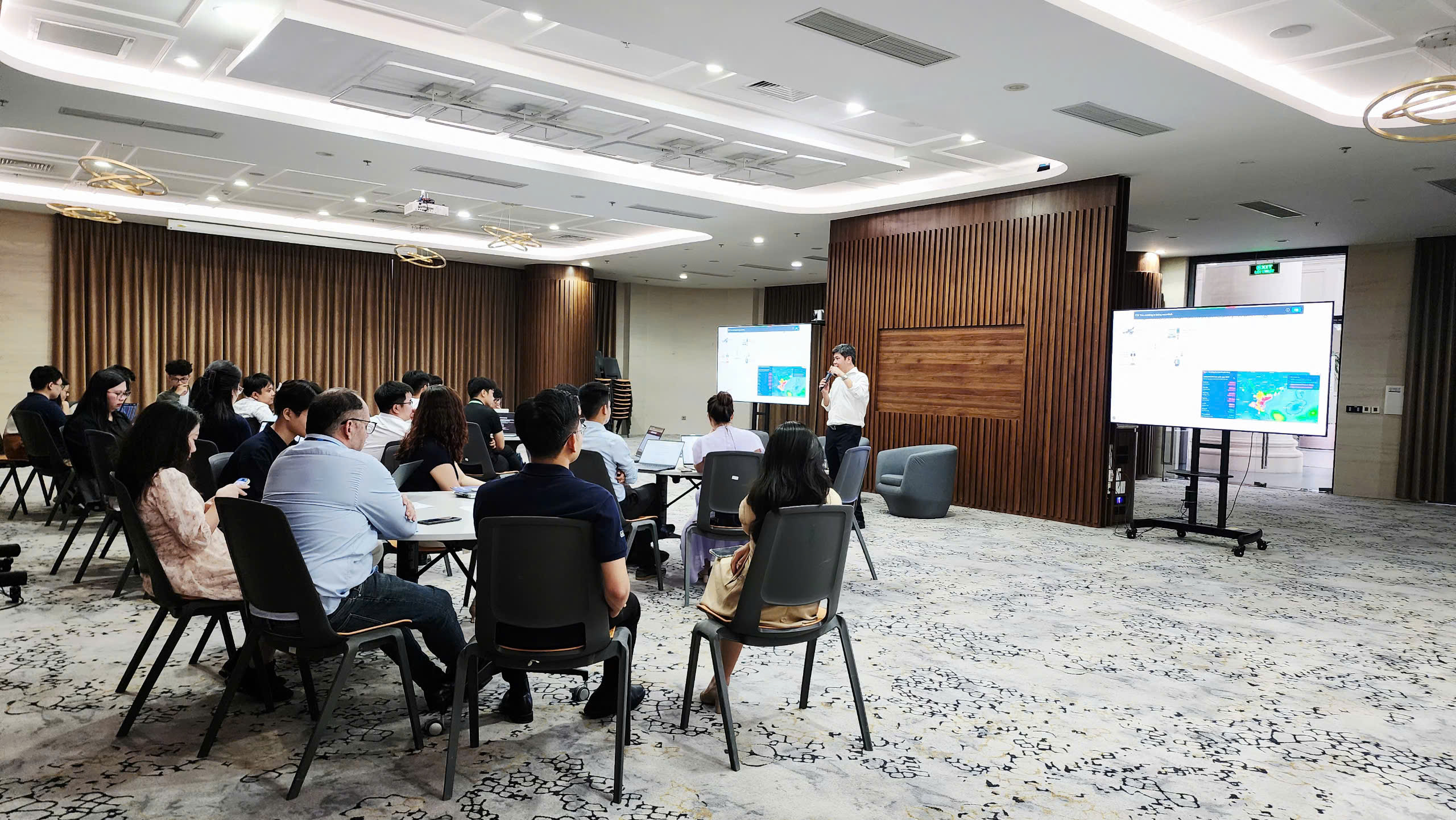
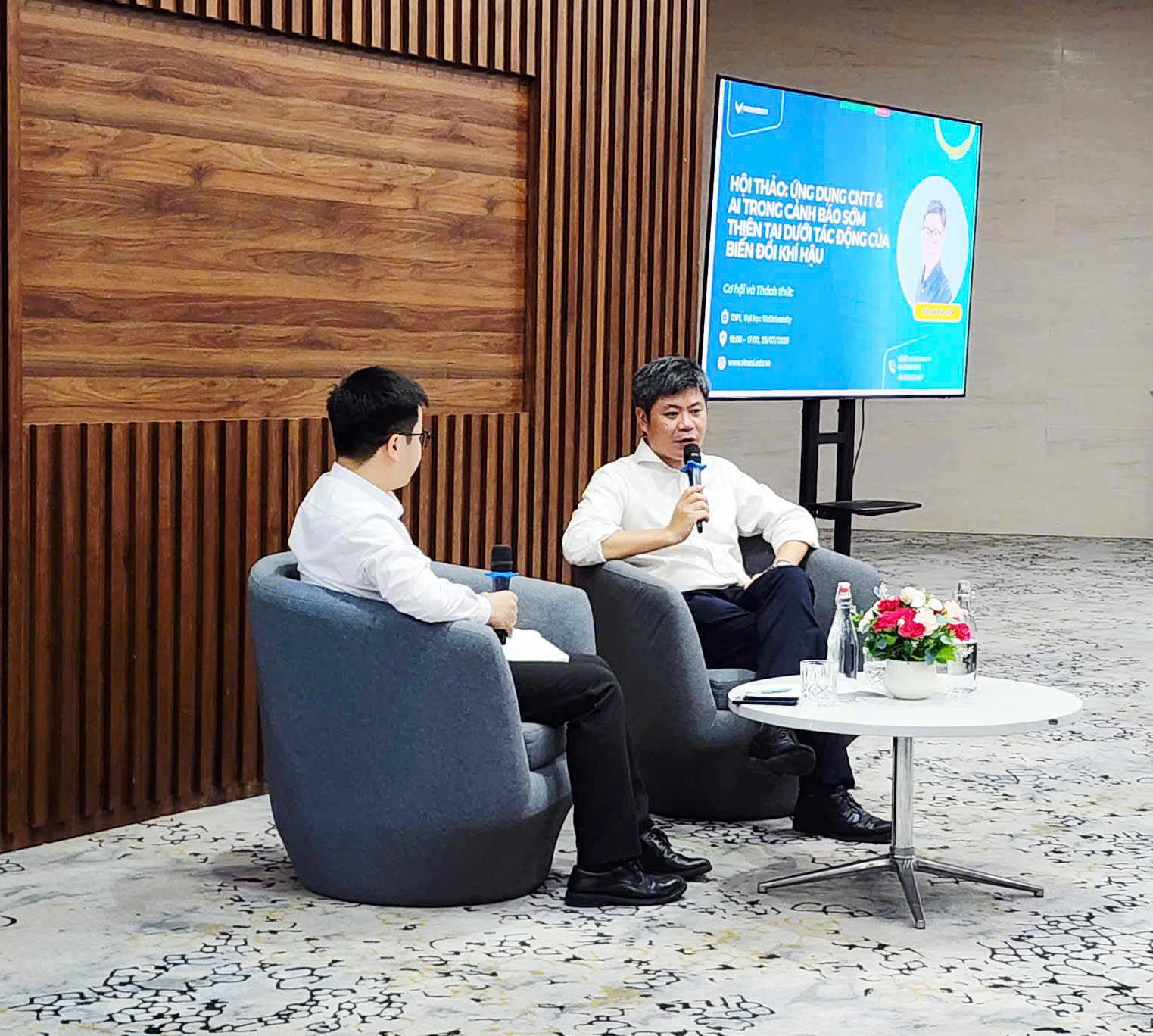
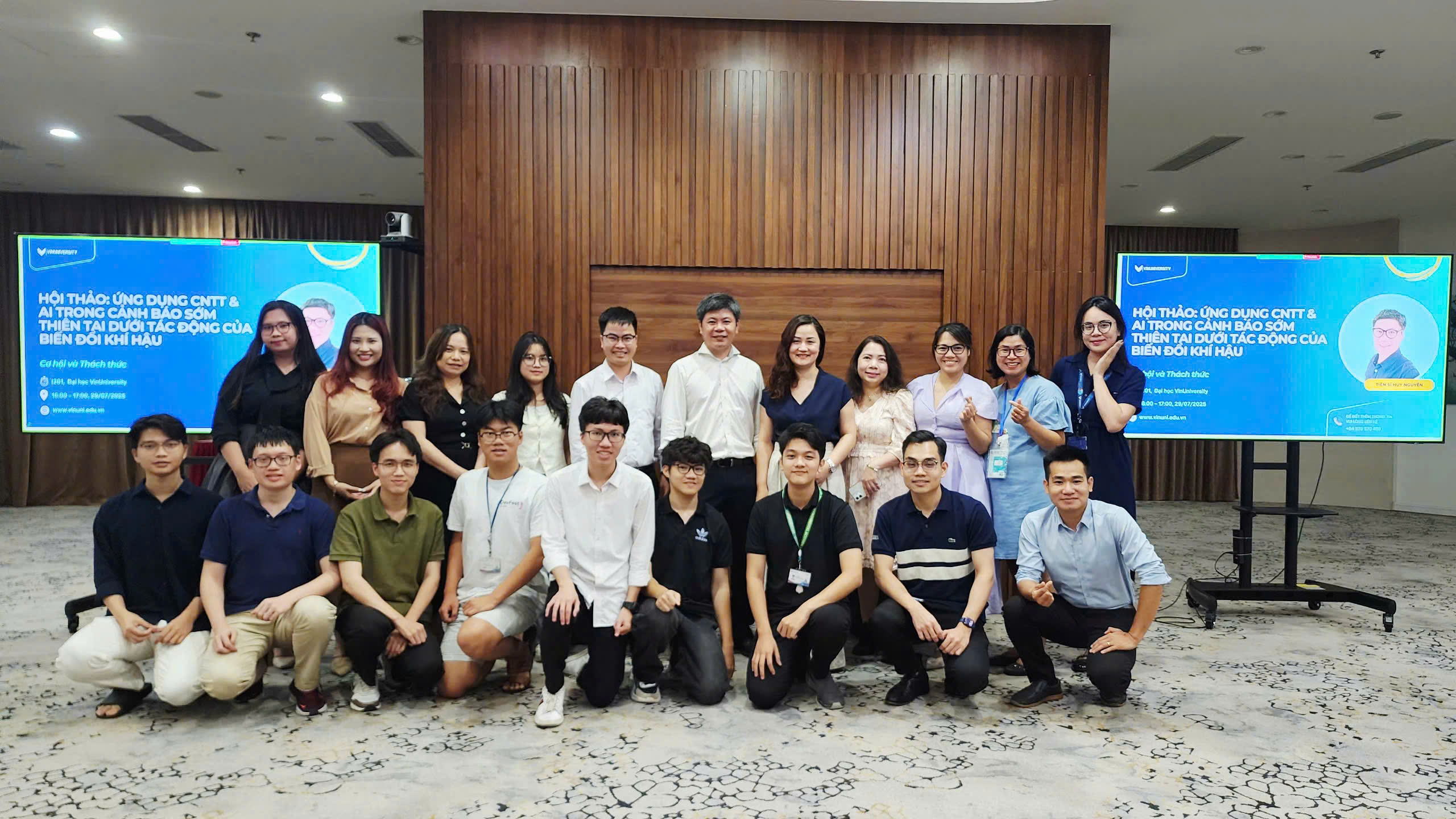
SOME MEMORABLE MOMENTS FROM THE EVENT
![[Job opportunity] Research Management Advisor](https://vinuni.edu.vn/research/wp-content/uploads/2026/03/banner-768x354-1-300x138.jpg)
![[JOB OPPORTUNITY] RESEARCH COLLABORATOR OFFICER (SERVICE CONTRACT)](https://vinuni.edu.vn/research/wp-content/uploads/2026/03/jan-3.-2026-300x200.jpg)
![[Job opportunity] Finance Support Officer](https://vinuni.edu.vn/research/wp-content/uploads/2025/12/DSF3880-300x207.jpg)