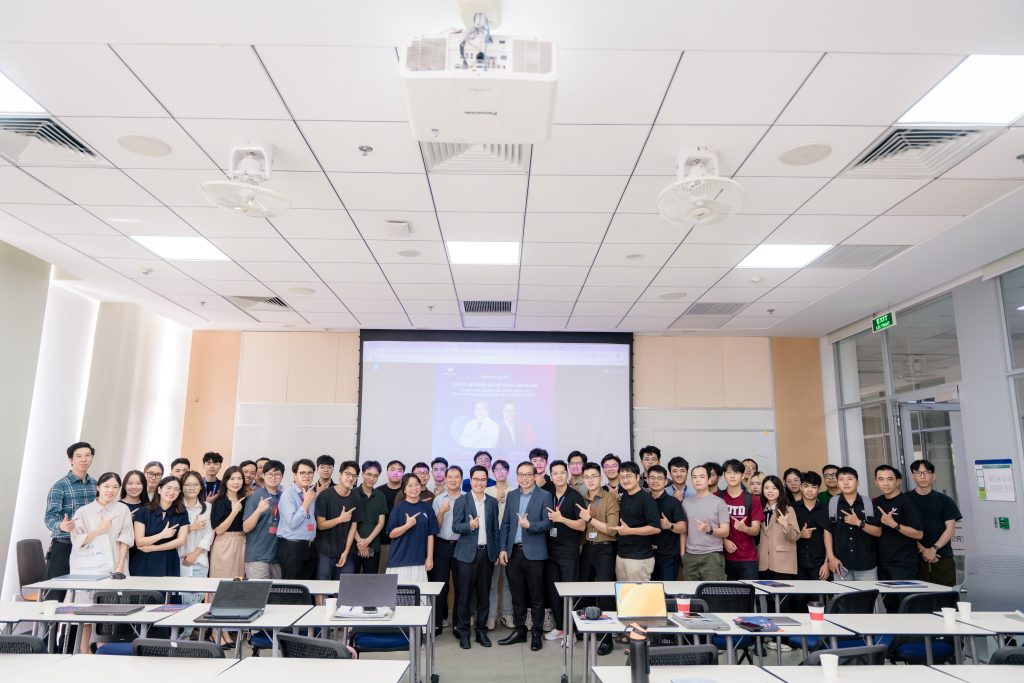
[RECAP] Seminar: “From Data to Clinical Decisions: How AI is Revolutionizing Diagnosis and Treatment in Modern Medicine”: When Data, Technology, and Medicine Come Together to Shape the Future of Healthcare in Vietnam

Opening the program, Dr. Pham Huy Hieu presented an overview of VinUni’s digital health research ecosystem, where AI is being developed as a core infrastructure for the future of healthcare. According to Dr. Hieu, the ultimate goal of these efforts is to create trustworthy AI — systems that can explain, validate, and collaborate with clinicians in every decision-making process. “AI will not replace humans,” he emphasized, “but it will help doctors make faster, more accurate decisions — and sometimes uncover answers that medicine has yet to reveal.”
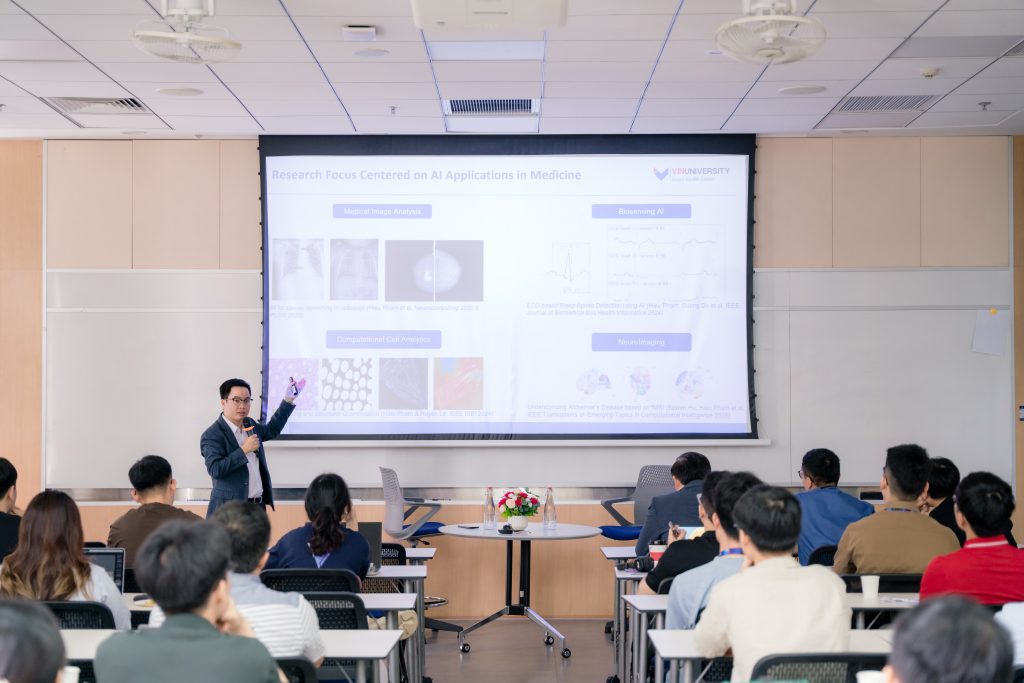
Dr. Hieu then guided the audience through the journey of bringing AI “out of the laboratory and into real life” with a series of research projects being conducted at VinUni. In early disease detection, his team is developing a stroke detection system using only facial and voice data — a model currently being tested with real-world datasets. In cellular analysis, the Virtual Staining project, in collaboration with Seoul National University, enables digital staining of microscope images using GAN and Latent Diffusion Models, helping to shorten diagnostic workflows and reduce research costs. Meanwhile, the Cardiac Digital Twin and Edge AI for Maternal Health projects are introducing new approaches in cardiology and obstetrics — from simulating 4D heart motion for improved diagnosis to creating wearable AI devices for continuous fetal heart monitoring and early anomaly detection.

A highlight of Prof. Dung’s talk was the introduction of “Health Avatar”, a visionary project being developed by Vinmec — a digital twin of each individual within the modern healthcare ecosystem. The Health Avatar is envisioned as a personalized smart health assistant, capable of continuously updating and reflecting one’s physical condition in real time. The system integrates data from electronic medical records, wearable devices, biosensors, mobile applications, and even smart vehicles, creating a holistic and “living” health profile. Through this, users can receive early alerts about abnormal health indicators, personalized check-up or test recommendations, periodic health reports sent directly to their doctors, and automatic emergency notifications to hospitals or family members when necessary.
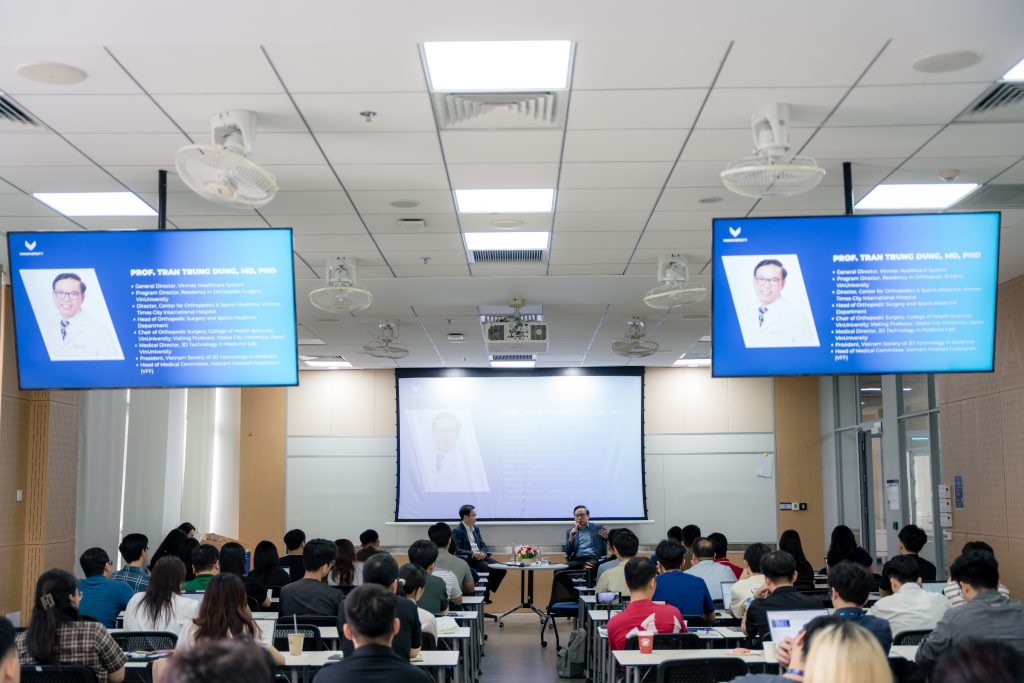
In the long run, the Health Avatar will not only empower individuals to proactively manage their own health but will also contribute to developing a valuable national health data resource for research, forecasting, and policymaking — moving toward a smart, sustainable healthcare ecosystem where prevention is as vital as treatment.
If you missed this seminar, don’t forget to follow VinUniversity’s Research website to stay updated on upcoming sessions in The Research Excellence Series — featuring cutting-edge topics and distinguished guest speakers from Vietnam and around the world.
![[Job opportunity] Finance Support Officer](https://vinuni.edu.vn/research/wp-content/uploads/2025/12/DSF3880-300x207.jpg)