
[RECAP] GENDER DIFFERENCES IN HEALTHCARE UTILISATION – EVIDENCE FROM UNEXPECTED ADVERSE HEALTH SHOCKS
On November 19, the seminar on “Gender Differences in Healthcare Utilisation – Evidence from Unexpected Health Shocks” by Assoc. Prof. Seetha Menon, an applied economist from the University of Southern Denmark, attracted faculty, researchers, and students interested in health economics, public health, behavioral science, and data-driven policy insights.
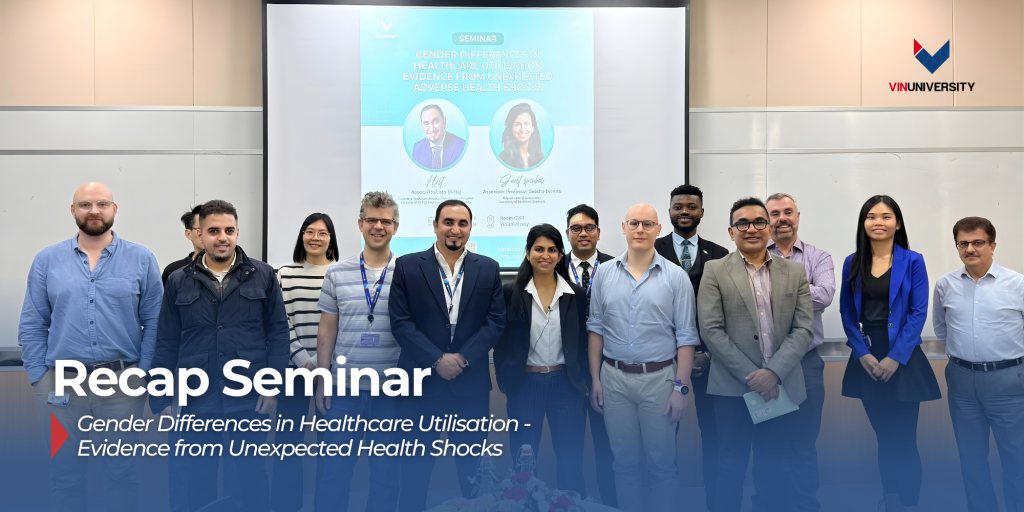
The talk began by exploring the issue of the male – female health – survival paradox: globally, women live longer than men by approximately five years yet consistently report poorer health at older ages. Despite decades of research, the answer remains open. The empirical research setting was Denmark, where healthcare is universal and largely free. Denmark’s comprehensive national registry data allows researchers to track individual-level healthcare behaviors over long periods, offering a uniquely powerful dataset for causal inference.
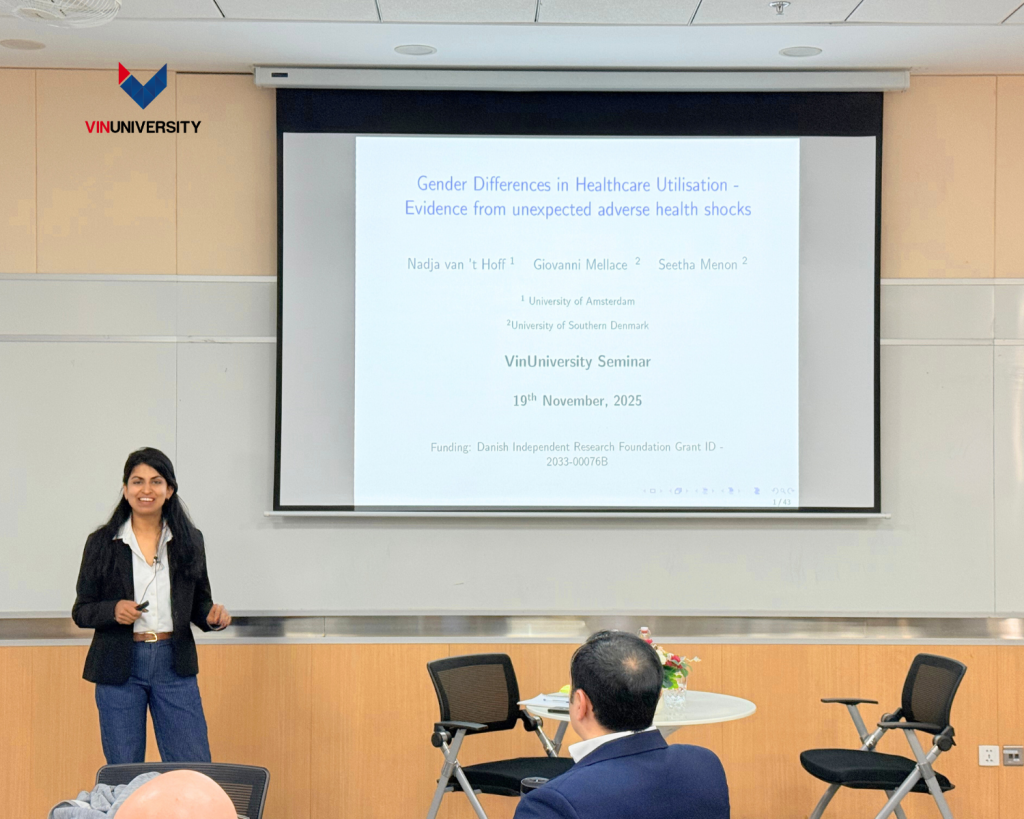
Using a staggered Difference-in-Differences design, Assoc. Prof. Menon and her co-authors examined how individuals aged 50–70 changed their behavior after experiencing a health shock. They focused on measurable outcomes, including General Practitioner (GP) visits, statin uptake, hospitalization days, and healthcare expenditures. Surprisingly, the study finds that men consistently increase their healthcare use more than women for up to three to five years after the event.
Specifically, men showed a larger and more persistent increase in GP visits and statin consumption, even though women generally report poorer health and live longer. These behavioral differences could not be explained by differences in shock severity, survival rates, income, or gender-specific access barriers, suggesting that underlying behavioral factors or provider-side factors may be influencing post-shock care.
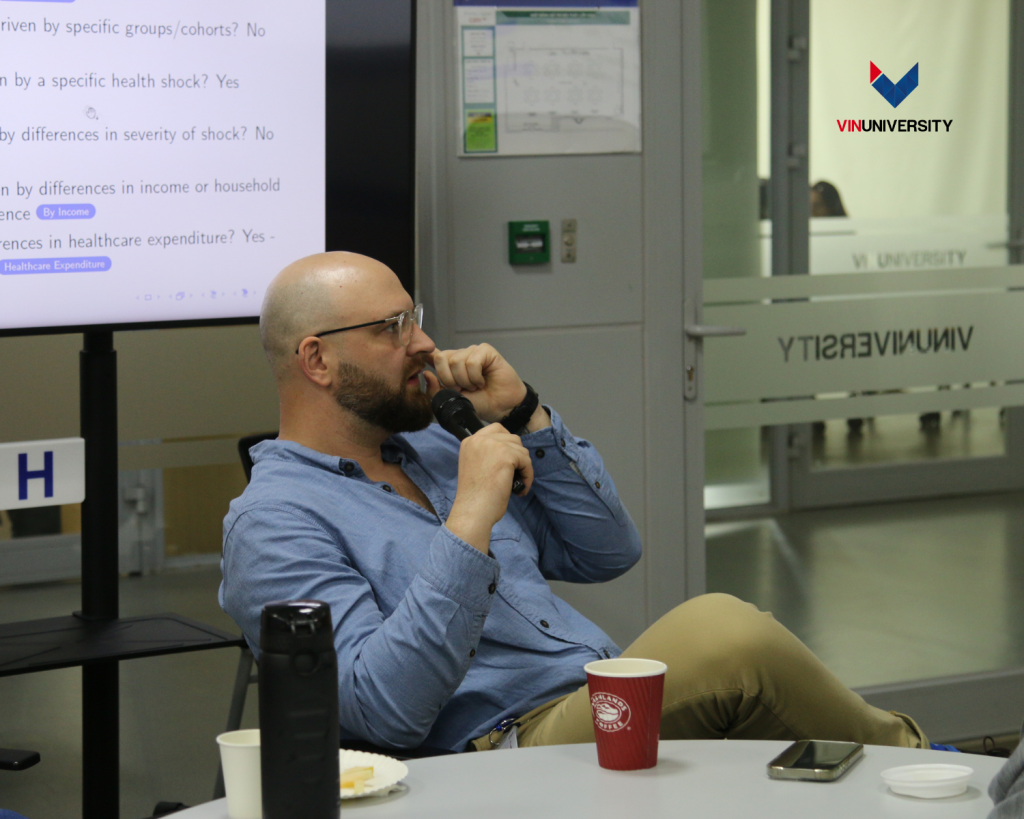
The lively Q&A that followed raised questions about doctor–patient gender concordance, cross-country applicability, and the role of behavioral norms in shaping care-seeking patterns. Assoc. Prof. Menon emphasized that while Denmark provides an ideal environment to isolate behavioral effects, similar or stronger gender gaps may exist in countries with greater structural inequalities. The research concluded that even in gender-equal, universal healthcare systems, men and women respond differently to the same medical events, meaning that uniform policies may fail to close treatment gaps.

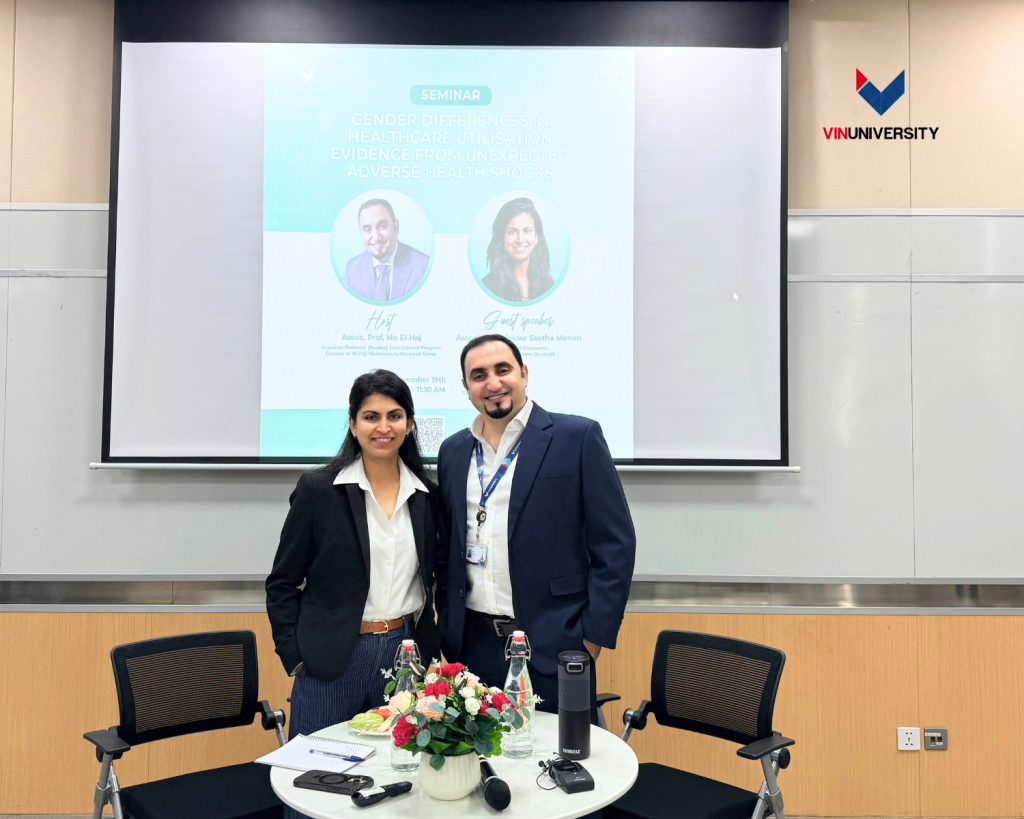
The seminar provided an engaging and evidence-rich discussion, sparking interest in future collaboration between VinUni researchers and Assoc. Prof. Menon’s research team.
VinUni extends its sincere thanks to Assoc. Prof. Menon for an insightful and inspiring talk with the community of researchers and medical students.
![[Job opportunity] Research Management Advisor](https://vinuni.edu.vn/research/wp-content/uploads/2026/03/banner-768x354-1-300x138.jpg)
![[JOB OPPORTUNITY] RESEARCH COLLABORATOR OFFICER (SERVICE CONTRACT)](https://vinuni.edu.vn/research/wp-content/uploads/2026/03/jan-3.-2026-300x200.jpg)
![[Job opportunity] Finance Support Officer](https://vinuni.edu.vn/research/wp-content/uploads/2025/12/DSF3880-300x207.jpg)