How Wearables Are Changing Cancer Care in Vietnam
By Ngan Nguyen—Project Coordinator and Scientific Assistant | Hanoi, August 2025
Cancer care is often associated with chemotherapy sessions, hospital visits, and specialist consultations. But what if much of the healing journey could happen at home—with a wristband, a smartphone, and a thoughtful digital companion?
In Vietnam, a team of researchers and clinicians is making this vision a reality through the Cancer Wellness Program (CWP). Their study, recently published in Future Science OA, evaluates the real-world use of a novel mobile app called the i-CanManage Smart App – a tool designed to integrate Fitbit wearable data with personalized health education and clinician oversight. The goal is to provide comprehensive, connected care using digital technology—empowering patients to take charge of their recovery and life after cancer.
Why CWP Started
Cancer patients face more than physical pain from surgery or treatment. Many experience severe anxiety, depression, and the constant fear of relapse. In Vietnam, large-scale physical and mental health support for cancer survivors remains a challenge.
Three years ago, Dr. Huyen Nguyen, Assistant Professor at VinUniversity’s College of Health Sciences, launched the Cancer Wellness Program with support from the Australian Women’s Wellness Research Program and the VinUni–Illinois Smart Health Center (VISHC).
In brief, i-CanManage is a mobile health platform that integrates data from Fitbit wearable devices with patient education and clinician oversight. The system collects and analyzes both physical and psychological health data, enabling healthcare providers to deliver tailored recommendations on lifestyle and behavior adjustments to support recovery and long-term health management.
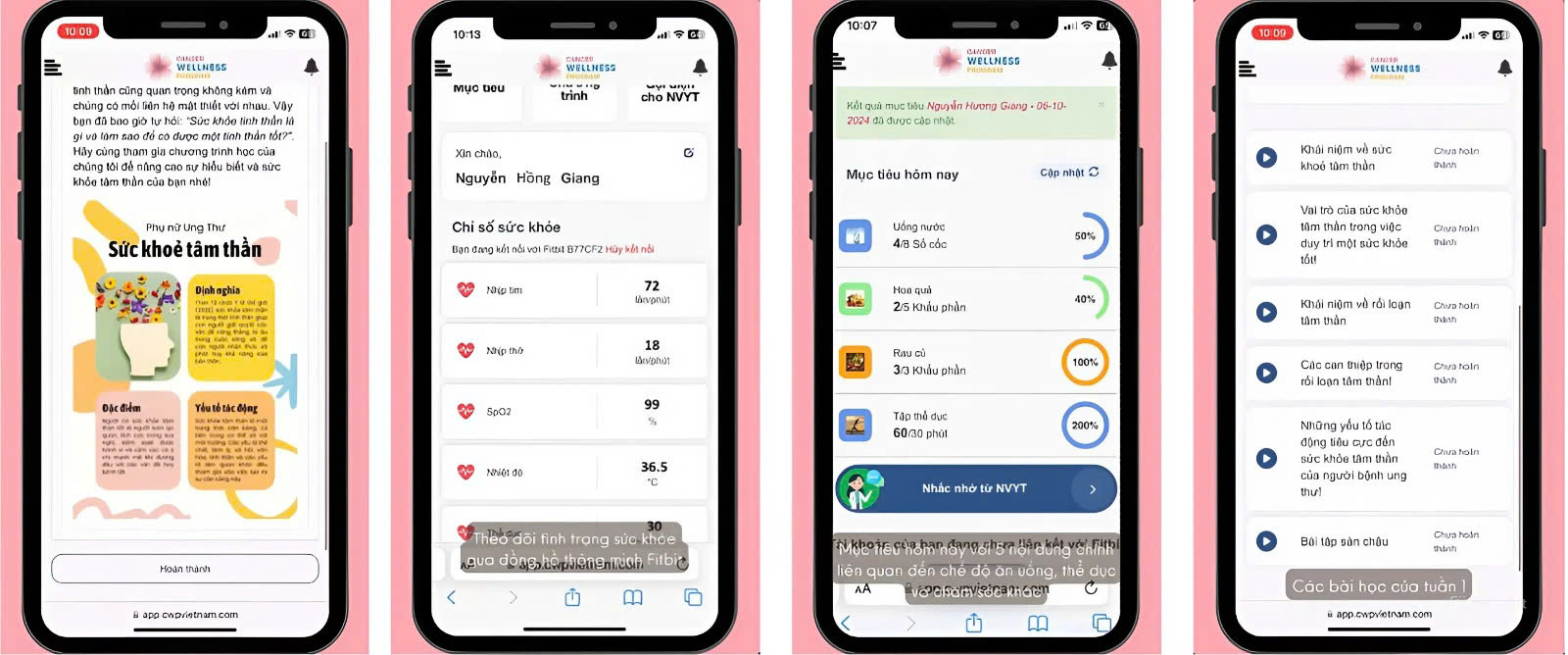
Figure 1: i-CanManage Smart App display
Core Features
The i-CanManage Smart App platform offers a fresh approach to long-term cancer management. At its core, it combines:
- Wearable health tracking: Continuous monitoring of step count, heart rate, sleep quality, oxygen saturation, and other metrics via Fitbit devices.
- Clinician dashboard: Data visualization tools for healthcare providers to track patient trends, identify risks, and adjust care plans.
- Patient dashboard: A user interface displaying individual health metrics, progress toward goals, and educational resources.
- Education platform: Structured learning modules covering symptom management, nutrition, physical activity, and mental well-being, delivered through text, video, and infographics.
- Secure communication: Two-way messaging between patients and clinicians for timely updates and support.
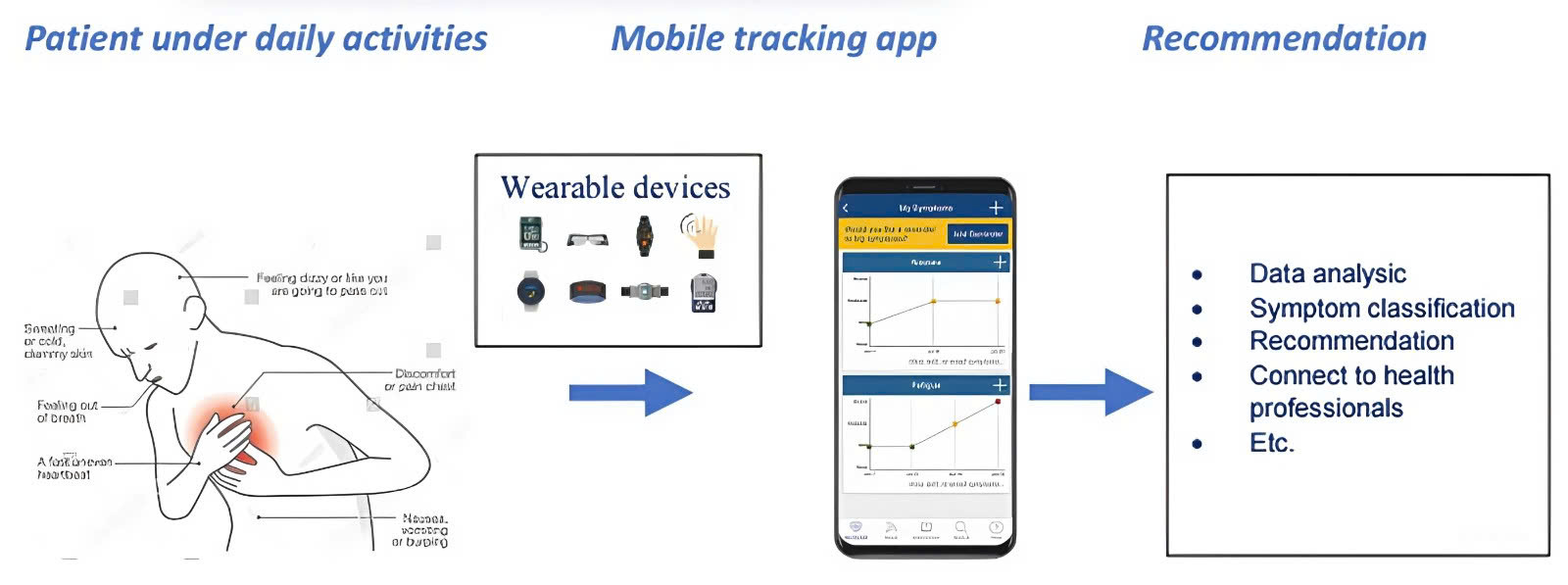
Figure 2: Illustration of the i-CanManage Smart App
Implementation and Feedback
The platform was evaluated in a study involving 15 healthcare providers in Vietnam. Feedback indicated that the system’s data visualization features were effective in presenting patient health information in an accessible format. Providers reported that integrating wearable data with educational content could facilitate more personalized patient care.
However, several challenges were identified, including limited connectivity in rural areas, digital literacy barriers among older patients, and additional workload for clinicians incorporating the system into existing workflows.
Ongoing Development
To address these issues, planned enhancements include developing offline functionality for use in areas with unstable internet access, localizing educational content and interface design to improve accessibility, and introducing workflow-integration features to reduce the administrative burden on healthcare providers.
What’s Next?
The Cancer Wellness Program and i-CanManage Smart App mark a significant step in integrating digital health into cancer care in Vietnam. By combining wearable technology, patient education, and clinician monitoring, it addresses key aspects of recovery and long-term well-being. With planned enhancements in accessibility, connectivity, and workflow integration, the program has the potential to expand nationwide and serve as a scalable model for technology-assisted cancer care in similar healthcare settings.
For more information:
Full PDF version of the paper can be accessed at the following link: https://www.tandfonline.com/doi/full/10.1080/20565623.2025.2541522#abstract
Contact:
Principal Investigator Dr. Nguyen Thi Hoa Huyen. Email: huyen.nth@vinuni.edu.vn
Co-Principal Investigator Dr. Pham Huy Hieu. Email: hieu.ph@vinuni.edu.vn
![[Job opportunity] Finance Support Officer](https://vinuni.edu.vn/research/wp-content/uploads/2025/12/DSF3880-300x207.jpg)