

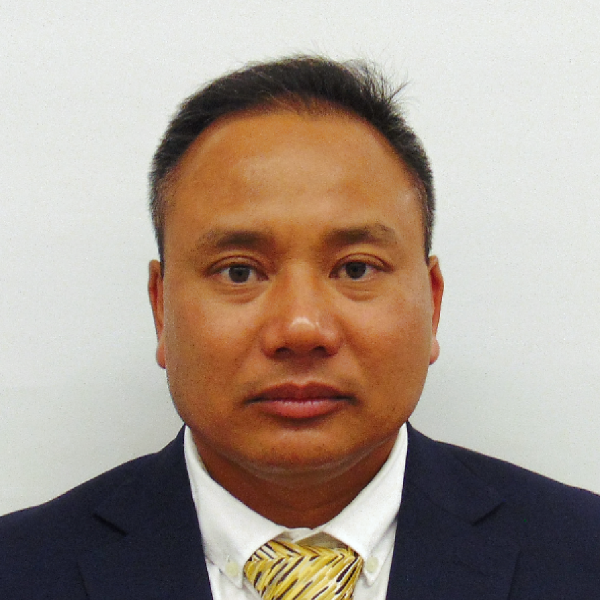
Nguyen Van Thang, PhD
College of Health Sciences
Assistant Professor
Biography
Dr. Thang earned his D.V.M. from Hanoi University of Agriculture, an M.S. in Molecular Biology from KU Leuven, and a Ph.D. in Immunology from MD Anderson Cancer Center. He completed postdoctoral training at Caltech under the mentorship of Dr. Raymond Deshaies. Previously, Dr. Nguyen held several academic positions, including Lecturer at Hanoi University of Agriculture and Assistant Research Professor at the University of Missouri.
Dr. Thang’s research tackles fundamental biological questions with immediate clinical impact in cancer, inflammation, and neurodegenerative diseases. His laboratory focuses on three core aims:
1. Investigating the molecular mechanisms and regulatory control of the CRL4CRBN–USP15 pathway in cancer.
2. Developing potent, selective USP15 inhibitors as potential therapeutics for cancer.
3. Uncovering the CRL3Gigaxonin–USP15 pathway that governs neurofilament degradation in neurodegenerative disorders.
In addition, Dr. Thang is advancing next-generation molecular glues and PROTACs that exploit CRBN and newly discovered E3 ubiquitin ligases to achieve precise degradation of previously untargetable oncogenic and pathogenic proteins.
Previously, Dr. Thang received an NIH/NIGMS R01 funding to investigate the CRL4CRBN–USP15 pathway. He had received both the Leukemia & Lymphoma Society Fellow Award and the International Myeloma Foundation’s Brian D. Novis Senior Research Award. His research has been published in prestigious journals such as the Proceedings of the National Academy of Sciences (PNAS), Molecular Cell, and the Journal of Experimental Medicine.
• AI-driven discovery of small-molecule inhibitors
• Targeted protein degradation
• Ubiquitin-dependent regulation of long-lived proteins in cancer and neurodegenerative diseases
• Ubiquitin-mediated signaling pathways as therapeutic targets across cancer, inflammatory, cardiovascular, and neurodegenerative disorders
• Modern drug discovery
• Cancer biology: ubiquitin signaling and targeted protein degradation
• Immunology: innate and adaptive immunity
• Molecular and cell biology: protein degradation pathways
• Neurodegenerative Disease Mechanisms and Therapeutic Strategies
1. Hyoung-Min Park, Ly Le, Thao T. Nguyen, Ki Hong Nam, Alban Ordureau, J. Eugene Lee, and Thang Van Nguyen. The CRL3gigaxonin ubiquitin ligase–USP15 pathway governs the destruction of neurofilament proteins. Proc Natl Acad Sci U S A. October 30, 2023. PMID: 37903270 (IF 9.4, Q1).
2. Thang Van USP15 antagonizes CRL4CRBN-mediated ubiquitylation of glutamine synthetase and neosubstrates. Proc Natl Acad Sci U S A. 118(40): e2111391118. PMID: 34583995. (IF 12.8, Q1).
Selected Media Coverage: Research discoveries from Dr. Nguyen’s laboratory have received broad international media attention and have been featured by major scientific news outlets, medical journals, and newspapers worldwide.
U.S National Invited Commentary & Clinical Research Dissemination: Invited by Vanessa Ira, Managing Editor of Multiple Myeloma Today, to author a feature article highlighting translational discoveries from our 2021 PNAS study on USP15-mediated immunomodulatory drug (IMiD) resistance in multiple myeloma and its implications for precision medicine. Multiple Myeloma Today serves a specialized readership of more than 12,000 U.S.-based hematologists and oncologists, underscoring the national clinical relevance and dissemination impact of this work. Received an invited-author honorarium for expert scientific commentary (2021).
This work was further recognized through invited presentations at the Keystone Symposia on Ubiquitin Biology and Targeted Protein Degradation (Vancouver, Canada, 2022) and the 3rd International Conference on Cell and Experimental Biology (Boston, USA, 2022).
International Scientific and Medical Media
- EurekAlert! “Researcher discovers key gene responsible for cancer drug resistance”
https://www.eurekalert.org/news-releases/931166 - ScienceDaily: “Researcher discovers key gene responsible for cancer drug resistance”
https://www.sciencedaily.com/releases/2021/10/211012102700.htm - Ecancer: “Researcher discovers key gene responsible for cancer drug resistance”
https://ecancer.org/en/news/21095-researcher-discovers-key-gene-responsible-for-cancer-drug-resistance - Medical Xpress: “Key gene responsible for cancer drug resistance identified”
https://medicalxpress.com/news/2021-10-key-gene-responsible-cancer-drug.html - Belgian Journal of Medical Oncology (BJMO): “Reason for resistance to immune drugs found in blood cancers”
https://www.bjmo.be/reason-for-resistance-to-immune-drugs-found-in-blood-cancers/ - Bioon (China)
https://news.bioon.com/article/6791818.html - University of Missouri School of Medicine News: “Researcher discovers key gene responsible for cancer drug resistance”
https://medicine.missouri.edu/news/researcher-discovers-key-gene-responsible-cancer-drug-resistance - GenScript News
https://www.genscript.com/reference_peer-reviewed_literature_76753.html
Vietnamese Press Coverage
- Thanh Niên Newspaper: “Nghiên cứu đột phá về ung thư của nhà khoa học Việt”
https://thanhnien.vn/nghien-cuu-dot-pha-ve-ung-thu-cua-nha-khoa-hoc-viet-post1391752.html - Doanh Nhân Plus: “Nguyễn Văn Thắng phát minh đột phá có tác dụng chữa trị ung thư”
https://doanhnhanplus.vn/nguyen-van-thang-phat-minh-dot-pha-co-tac-dung-chua-tri-ung-thu-573846.html
3. Atish Mohanty, Natalie Sandoval, An Phan, Thang V Nguyen, Robert W Chen, Elizabeth Budde, Matthew Mei, Leslie Popplewell, Lan V Pham, Larry W Kwak, Dennis D Weisenburger, Steven T Rosen, Wing C Chan, Markus Müschen, Vu N Ngo. Regulation of SOX11 expression through CCND1 and STAT3 in mantle cell lymphoma. Blood 133, 306-318, 2019. PMID: 30530749. (IF 17.5, Q1).
4. Thang Van Nguyen, Jing Li, Chin-Chun (Jean) Lu, Jennifer L. Mamrosh, Gang Lu, Brian E. Cathers and Raymond J. Deshaies. P97/VCP promotes degradation of CRBN substrate glutamine synthetase and neosubstrates. Proc Natl Acad Sci U S A. 114: 3565-3571, 2017. PMID: 28320958. (IF 9.5, Q1).
This study was recognized as a key scientific contribution in the portfolio of Dr. Raymond Deshaies upon his election to the National Academy of Sciences.
5. Thang Van Nguyen, J. Eugene Lee, Michael J. Sweredoski, Seung-Joo Yang, Seung-Je Jeon, Joseph S. Harrison, Jung-Hyuk Yim, Sang Ghil Lee, Hiroshi Handa, Brian Kuhlman, Ji-Seon Jeong, Justin M. Reitsma, Chul-Seung Park, Sonja Hess, and Raymond J. Deshaies. Glutamine triggers acetylation-dependent degradation of glutamine synthetase via the thalidomide receptor cereblon. Molecular Cell 61: 809-820, 2016. PMID: 26990986. (IF 14.7, Q1).
Highlighted Publication and Editorial Recognition
- Featured Article in Molecular Cell; highlighted in an accompanying Preview.
- Selected for Molecular Cell “Meet the Author” editorial interview
- Highlighted in Editors’ Choice in Science Signaling.
6. Thang Van Nguyen, Pornpimon Angkasekwinai, Hong Dou, Feng-Ming Lin,Long-Sheng Lu, Jinke Cheng, Y. Eugene Chin, Chen Dong, and Edward T.H. Yeh. SUMO-specific protease 1 is critical for early lymphoid development through regulation of STAT5 activation. Molecular Cell 45: 210-221, 2012. PMID: 22284677. (IF 15.3, Q1).
- Featured in EurekAlert press release
- Medindia News
- Highlighted in a JAK-STAT commentary on SENP1/STAT5 regulation.
7. Thang Van Nguyen, Nahum Puebla-Osorio, Hui Pang, Melanie E. Dujka, and Chengming Zhu. DNA damage induced cellular senescence is sufficient to suppress tumorigenesis: a mouse model. Exp. Med. 204: 1453-1461, 2007. PMID: 17535972. (IF 15.6, Q1).
- Selected for reprinting in Journal of Cell Biology in June 4, 2007, doi: 10.1083/JCB1775OIA13
- Highlighted in Cancer Biology & Therapy (6:8, 1182-1183, DOI: 10.4161/cbt.6.8.4712) by Andrei L. Gartel (2007) p21WAF1/CIP1 may be a tumor suppressor after all.
8. Nguyen, T. V. (Patent, 2024). Methods of Using USP15 Inhibitors. U.S. Patent Application No. 18/690,470. Filed June 11, 2024.
Complete list available at PubMed Bibliography: https://www.ncbi.nlm.nih.gov/myncbi/1vCzckuZS0nYN4/bibliography/public/
• 1997: D.V.M., Hanoi University of Agriculture, Vietnam
• 2003: M.S. Molecular Biology, KU Leuven, Belgium
• 2011: Ph.D. Immunology, The University of Texas MD Anderson Cancer Center, USA
• 2018: Postdoctoral Fellow, California Institute of Technology (Caltech), USA
• 2023 NIH/NIGMS R01 Principal Investigator
• 2013 Fellow Award, Leukemia and Lymphoma Society
• 2013 Brian D. Novis Research Award, International Myeloma Foundation
• 2006 Vivian L. Smith Award for OuT.Standing Young Immunologist, UT – MD Anderson Cancer Center
• 2004 Vietnam Education Foundation (VEF) Fellowship for Ph.D program
• 2001 Vietnamese Government Scholarship for master program
• 1997 VIFOTEC prize (Vietnam Fund for Supporting Technological Creations)
• 1997 First Class Honors, Hanoi University of Agriculture, Vietnam
